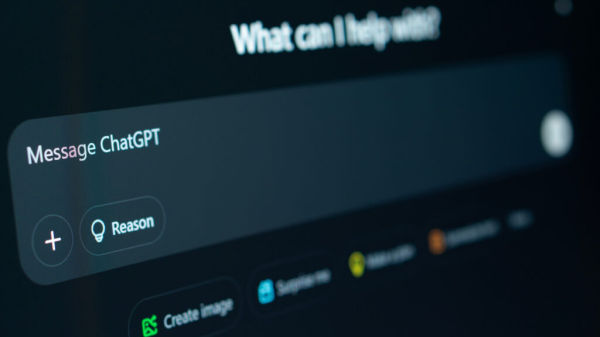
ChatGPT burst onto the scene at the end of 2022. Its introduction took the concept of AI from something that seemed to lie perpetually just beyond technology’s horizon to a reality that anyone with a computer could access. Since then, the platform has grown exponentially, and as of July 2025, it was receiving 2.5 billion global prompts daily, of which about 330 million were from the US.
However, despite its undoubted usefulness, ChatGPT isn’t without its flaws. For instance, there are certain things that you should never tell ChatGPT. It’s also a bad idea to treat every ChatGPT reply as gospel. To confirm this, you don’t need to look any further than the chatbot itself. Displayed at the bottom of every chat is a disclaimer that admits ChatGPT can make mistakes and that important info should be checked.
This disclaimer is easy to overlook, but it’s also the key to using ChatGPT effectively for research. The quality of its output is heavily shaped by how clearly a task is defined, what constraints are set, and what context is given. In computing terms, the need to provide quality input to receive the desired output is nothing new — GIGO (Garbage In, Garbage Out) is a concept that has existed since the dawn of computing.
GIGO is still relevant in the AI age. This is a good point to remember when using ChatGPT as a research tool; the quality of a prompt can make the difference between a useful response and one that should be consigned to the digital garbage bin.
Use prompts to surface uncertainty and not hide it
Bob Sharp/Read
The text “ChatGPT can make mistakes” is displayed at the bottom of each ChatGPT chat. What could easily be added to this disclaimer are the words — and how! For instance, in one case, an attorney used fake case references in court that had been supplied by ChatGPT and included in his filing. Even a great prompt can’t guarantee the accuracy of ChatGPT’s response. But a cleverly constructed prompt can encourage transparency — forcing the model to slow down, flag uncertainty, and distinguish between solid ground and educated guesswork. For research work, improving the accuracy of responses can save time and prevent potentially calamitous errors.
This ability to present false, incomplete, or disputed information with confidence is one of the biggest pitfalls with all LLM-based chatbots, including ChatGPT. This is simply a result of how LLMs work, and the danger is that confident-sounding answers can easily slip into notes and outlines, and cause problems later when the claims don’t hold up. Prompts that explicitly ask ChatGPT to separate facts from uncertainty won’t eliminate this completely, but they can expose weak points early.
The key is not to ask ChatGPT to be right, but to ask it to be clear about what it knows, what it assumes, and where its limits are.
Use prompts to define scope before research sprawl sets in
One of the easiest ways to lose time in research is to drift too far off topic. By starting too broadly, without clear boundaries, it’s easy to slip into adjacent topics that might be interesting, loosely relatable, or just get taken down a long road that leads to a dead-end. Often, by the time you realize you’ve strayed, a lot of time has been wasted for very little return.
This is especially relevant when researching complex or technical topics where there are a multitude of research angles available, and many are not relevant. The point here is to avoid general prompts that allow ChatGPT an open book on the subject. Rather, the prompt should be designed to set boundaries that encourage ChatGPT to prioritize the essential, identify what else could be relevant, and what you can forget about.
The goal isn’t to restrict the research to within a “ring-fenced” set of criteria, but to establish a scope and context that allows the chatbot to keep the research relevant. It’s also worth noting that with any of these prompts, it’s always important to avoid giving online AI tools your personal information.
Use prompts to stress-test conclusions before committing to them
Research is something that usually has a goal, and often it’s when this goal nears that a lot of research time can be wasted. Even if you’ve ensured that all your prompts to get here have forced ChatGPT to be transparent and focused, the conclusion is often a tentative one, at least initially. But, even armed with a tentative conclusion, it can be tempting to move straight into outlining or writing — only to discover that a key assumption is plain wrong, an important caveat was missed, or a counterargument wasn’t “accounted” for.
For a researcher, discovering something unexpected at this late stage can undermine the foundations of hours of research and send them sobbing to the coffee machine to refuel for the rewrite. Importantly, this is not a prompt that you run once at the end of the project with your fingers crossed. To be useful, this is a prompt that can be used at any point in a chat where you want to reinforce an emerging conclusion.
The point of this prompt is to get ChatGPT to act as a sceptic and test your research for integrity (always bearing in mind that there are certain things you should never ask ChatGPT).
Ask ChatGPT to highlight what’s missing
Another situation that can send you sobbing towards the coffee pot is to discover, late in the game, that something important was never addressed. Research gaps often exist not because the information was hard to find, but because it wasn’t obvious that it was missing in the first place. Sometimes, the momentum of research propels us toward a goal without noticing everything of relevance on the way. This prompt uses ChatGPT to identify these research gaps and save you the time of filling them in later.
This is especially common when a topic feels well understood. In these situations, a false sense of confidence can leave us “blinkered,” and this can lead to research that tends to reinforce what we know rather than uncover what we don’t. Again, this is a prompt that can be used at any time in the research process, and as often as you feel the research necessitates. This prompt can also be used to make sure that your research remains focused and relevant to the topic. Although in this case it’s more about shifting this focus from what you’ve covered to what you should have covered.
Used early enough (and reapplied as required), this kind of prompt can make sure your research efforts are free from blind spots.
Using ChatGPT as an editorial assistant
Hopefully, you’ve gotten to the draft conclusion stage without too many treks to the coffee pot, and now your research project is ready for the final polish. At this stage, ChatGPT can be useful as a final editorial pass. This is not a simple spelling and grammar check; any old word processor can do that these days. Rather, you can use ChatGPT to test the work as a whole and make sure the argument actually holds together. This can save time just by making sure the structure and content of the work are correct before the final edit and presentation.
When given a complete draft, it can highlight claims that aren’t properly supported, point out where reasoning rather than evidence is driving the conclusion, and flag areas where more explanation could be beneficial.
Importantly, this shouldn’t be treated as a fact-checking exercise (ChatGPT can make mistakes, remember), but as a second set of eyes that can read the work linearly and critically. It can be a good idea to use this prompt in a separate chat from the original research. This avoids ChatGPT carrying forward earlier assumptions, tentative conclusions, or other unwanted baggage from the research stage — although running the prompt in the original research chat is also useful, and gives an opportunity to double-check the results.