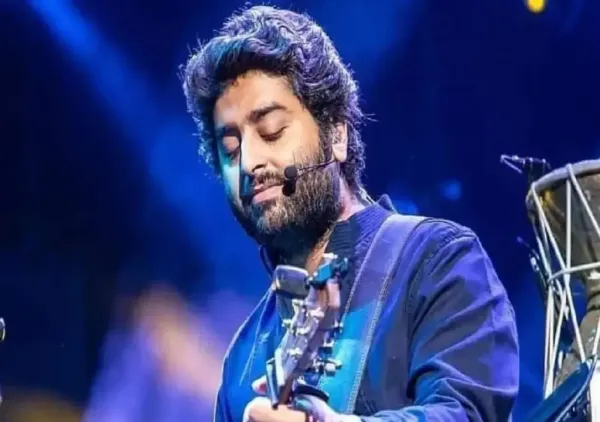
Mumbai: Arijit Singh’s sudden decision to retire from playback singing has sent shockwaves across Bollywood and the Indian music industry, leaving fans stunned and industry insiders reflective. Widely regarded as the voice of a generation, Arijit has dominated Hindi film music for over a decade, delivering chart-topping songs, selling out concerts across continents, and becoming an almost indispensable presence in mainstream cinema. His announcement, made on Tuesday via social media, marks the end of an era in Bollywood playback singing.
In his statement, Arijit confirmed that he would no longer accept any new playback singing assignments, though he will honour projects already signed. Instead, he plans to devote himself to Indian classical music, independent performances, and a more personal, introspective musical journey.
A decision years in the making
While the announcement came as a shock to many fans, those familiar with Arijit’s interviews and public reflections say the decision was not entirely unexpected. Over the years, the singer has repeatedly spoken about his discomfort with fame, identity, and the commercial structures of the music industry.
In a 2023 interview with The Music Podcast, Arijit candidly described a phase in his life when fame became emotionally overwhelming. He revealed that he began to feel disconnected from his own identity, to the point where even hearing his name irritated him.
“There was a time when I used to associate with my name — Arijit Singh. But as I grew up, there came a point when hearing my name would annoy me,” he said. “I realised that my name is not me anymore. It’s a perception people have created about me.”
He explained that the distance between his public persona and private self became so stark that people close to him stopped addressing him by his stage name altogether.
‘I couldn’t even listen to my own songs’
Arijit also revealed that his struggle extended to his own music. At one point, he was so disturbed that he avoided listening to his own songs entirely.
“There was a time when I even got irritated listening to my own songs. Nobody would play my songs when I was at home,” he said, adding that he later learned to emotionally detach rather than react with irritation.
These statements, now resurfacing after his retirement announcement, offer insight into the psychological toll of sustained stardom and relentless public attention.
Criticism of the music industry
Beyond personal struggles, Arijit has long been vocal about systemic issues within the Indian music industry, particularly around compensation and fairness. Despite being one of the highest-paid singers of his generation — reportedly charging up to ₹2 crore per performance — he consistently highlighted how most artists remain underpaid and exploited.
“This entire business is conducted on the back of artists,” he had said. “If everyone feels it’s not fair, then something is wrong.”
He criticised the lack of transparency in verbal contracts, pointing out how discussions about work, output, and payment often change midway through projects, to the disadvantage of artists.
“Something is discussed, the work becomes something else, and the payment turns into something entirely different,” he explained.
‘That’s how you kill an artist’
Arijit spoke passionately about how such practices damage creative spirits. He described how many artists become so immersed in their work that they stop tracking time, effort, and compensation — only to realise later that their labour was undervalued.
“When the payment turns out to be less than promised, that’s when you kill an artist,” he said, adding that the selfless relationship between an artist and their art is often manipulated.
He also highlighted the constant stress artists face about financial security, noting that many are forced to compromise simply to survive.
Turning towards classical music
In his retirement announcement, Arijit made it clear that he is not stepping away from music altogether. Instead, he is choosing to reconnect with its roots. His focus will now shift to Indian classical music, independent gigs, and projects driven by personal fulfilment rather than commercial expectations.
“Hello, Happy New Year to all,” he wrote. “I am happy to announce that I am not gonna be taking any new assignments as a playback vocalist from now on. It was a wonderful journey.”
Industry observers believe this move reflects a broader desire among artists to reclaim creative autonomy in an increasingly commercialised ecosystem.
Conclusion
Arijit Singh’s retirement from playback singing marks a defining moment for Bollywood music. While his absence will leave a void that is difficult to fill, his decision has also sparked important conversations about artistic identity, mental well-being, and fairness in the creative industries. As he embarks on a quieter, more introspective musical path, fans may no longer hear his voice in cinema halls, but his influence on Indian music is likely to endure for generations.
Contact to : xlf550402@gmail.com
Copyright © boyuanhulian 2020 - 2023. All Right Reserved.