Supreme Court : has overturned a conviction handed down by the Meghalaya High Court in a 2006 murder case, ruling that confessional statements unsupported by independent evidence cannot justify a finding of guilt. The decision restores the trial court’s earlier acquittal of the accused, Bernard Lyngdoh Phawa, bringing an end to a prolonged legal battle that spanned nearly two decades.
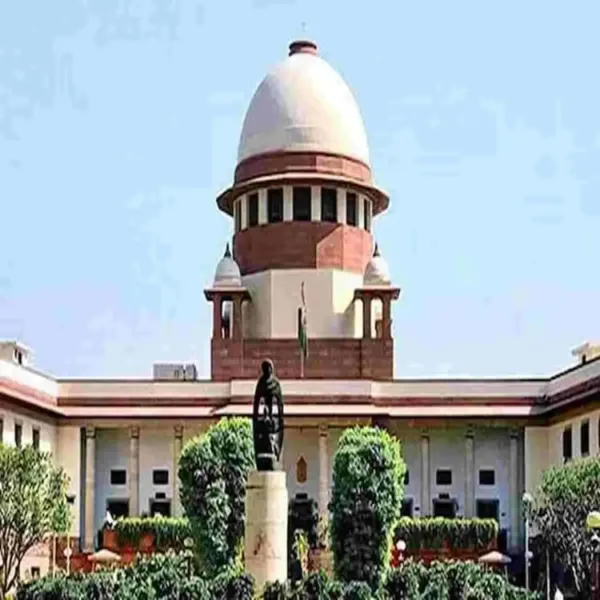
Apex Court Bench and the Appeal
A Division Bench of the Supreme Court of India comprising Justice Sanjay Kumar and Justice K. Vinod Chandran allowed the criminal appeal filed by Phawa. The judges agreed with the trial court’s assessment that the prosecution had failed to establish a complete and credible chain of evidence against the accused.
In its ruling, the Bench underscored that confessional statements, when standing alone, are insufficient to sustain a conviction. The judges observed that there was no supporting material or surrounding circumstance that could reliably link the accused to the crime.
Concerns Over Confessional Statements
Senior counsel Ajay Sabharwal, appearing for the appellant, argued that the prosecution’s case leaned almost entirely on alleged confessions that were never corroborated by independent evidence. He submitted that several of these statements were either inconsistent, later retracted, or exculpatory in nature, diminishing their evidentiary value.
The defence further pointed out that the confessions could not be treated as reliable, particularly in the absence of material proof connecting the accused to the alleged acts. The Supreme Court accepted these arguments, noting that criminal convictions must rest on evidence that meets the standard of proof beyond reasonable doubt.
Failure of the ‘Last Seen’ Theory
The prosecution had attempted to rely on the “last seen” theory, claiming that the victim was last observed in the company of the accused shortly before his disappearance. However, the apex court found that this theory was not supported by credible testimony or documentary evidence.
The judges held that, without reliable proof placing the accused with the victim at a crucial time, the “last seen” argument could not be used to infer guilt, especially in a case based on circumstantial evidence.
Recovery and Forensic Evidence Under Scrutiny
The court also examined the prosecution’s claims regarding recoveries and seizures, including a rope allegedly used in the killing and certain personal belongings of the victim. It found that these recoveries were not proved in accordance with law and lacked a clear evidentiary link to the accused.
Medical evidence, too, did not conclusively support the prosecution’s theory. While the post-mortem report suggested death due to asphyxia, the doctors involved acknowledged that suicide by hanging could not be ruled out, leaving room for reasonable doubt.
Background of the 2006 Case
The case dates back to 2006, when a college student in Meghalaya was reported missing and later found buried in a graveyard. Police arrested two of his friends, alleging murder, destruction of evidence, and the making of ransom calls. Notably, one of the accused was already in custody when the alleged ransom calls were said to have been made, raising further questions about the prosecution’s narrative.
The trial court, after evaluating the evidence, found the investigation to be incomplete and the case riddled with gaps, leading to an acquittal. This decision was later reversed by the Meghalaya High Court, which convicted the accused, prompting the appeal before the Supreme Court.
Final Verdict and Release Ordered
After a comprehensive re-examination of the record, the Supreme Court concluded that the evidence relied upon was unreliable and that the investigation suffered from serious deficiencies. The apex court set aside the High Court’s judgment, acquitted both accused, and directed their immediate release.
The appellant was represented before the court by Ajay Sabharwal, assisted by Advocate-on-Record Prabhas Bajaj.
Contact to : xlf550402@gmail.com
Copyright © boyuanhulian 2020 - 2023. All Right Reserved.