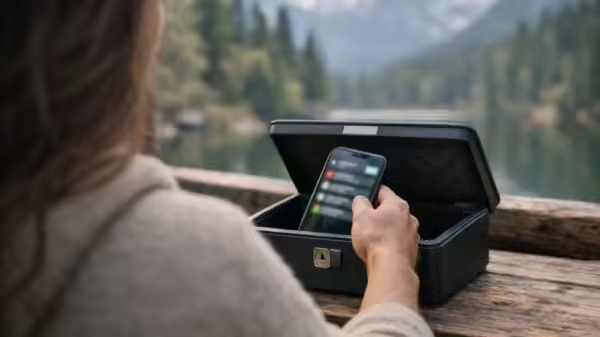
What’s the first thing that pops up in your mind when you read or hear that a few people pay hefty amounts to keep themselves away from their phones? You may wonder why anyone would spend money on something that could be easily done on their own – simply switching off the phone or putting it away could seem like a simple solution. However, in parts of Europe and the United States, a new trend is gaining attention, with people paying to keep themselves away from constant digital noise.
Instead of scrolling through social media or checking messages all day, some people are paying to disconnect completely, even for several days at a time. These experiences are often called digital detox retreats, which let participants lock away their phones and stay offline in exchange for a fee.
Why do people do this?
Add Zee News as a Preferred Source
Many people and travelers admit that they check their phones several times a day, even when it is not necessary. With world news, work messages, social media alerts, and endless apps demanding attention, people say they often feel stressed or distracted. Digital detox experiences are designed to help people step away from this constant stimulation and focus on real-life activities.
One popular version of this trend is the luxury digital detox holiday. At some resorts and retreat centers in Mexico and New York, travelers opt to pay thousands of dollars to have their phones taken away or locked away by staff for the duration of their trip. No Instagram. No emails. Just peace, nature, and calm.
(Also Read: Drawer full of old tech gadgets? You’re not alone: Check 5 simple ways to clean this like a pro)
How detox retreats work?
At many of these retreats, participants hand over their phones and devices as soon as they arrive. Some places even lock them in safes, making it impossible to reconnect until the retreat ends. Guests stay in quiet cabins or scenic locations with no Wi-Fi or mobile service. The idea is to force a break from screens so people can rest, engage in outdoor activities, or spend uninterrupted time with companions.
Other types of offline experiences include organized group events in major cities. For example, social meet-ups in London and other European cities have attracted thousands of people willing to leave their phones at the door and enjoy board games, conversations and real-world connections without screens.
Growing popularity
Experts say this trend reflects a larger shift in how people think about technology. Rather than rejecting digital tools completely, many users want the option to use them more mindfully, reducing screen time and stress while boosting real-life engagement. Some travelers find that being offline for a few days refreshes their perspective and helps them return to their routines with better balance.
From smartphone-blocking apps to weekend-long retreats, the digital detox movement is expanding fast. According to reports, this trend is gaining popularity in many other parts of the world as well.
Contact to : xlf550402@gmail.com
Copyright © boyuanhulian 2020 - 2023. All Right Reserved.