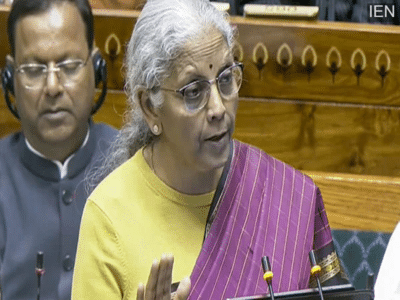
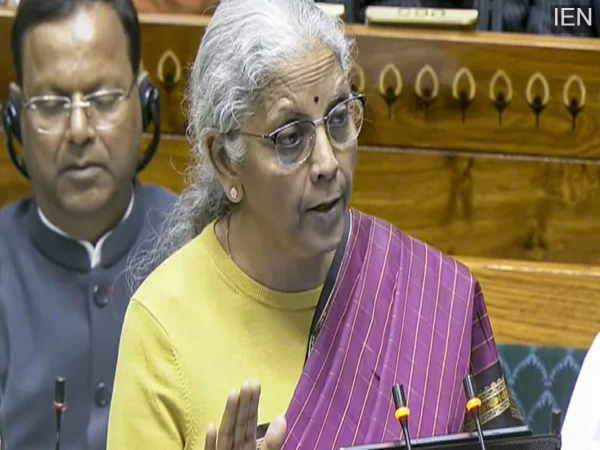
Finance Minister Nirmala Sitharaman presented the Union Budget 2026-27 in Parliament today. Millions of taxpayers across the country were closely watching the budget speech, hoping for relief in income tax slabs, exemptions, and rebates. However, the government did not announce any changes in the existing income tax slab structure, which left many salaried individuals disappointed.
Soon after the key announcements, the stock market reacted negatively. The Sensex witnessed a sharp fall of over 2,200 points as investor sentiment weakened following an increase in the Securities Transaction Tax (STT) and the absence of tax relief measures.
No Revision in Income Tax Slabs
Despite high expectations from middle-class taxpayers, the Finance Minister confirmed that there will be no modification in income tax slabs for the financial year 2026-27. Existing provisions related to exemptions, rebates, and return filing rules will largely remain unchanged.
Tax experts had anticipated possible revisions to boost disposable income and consumption. However, the government chose to focus more on fiscal discipline and sector-specific reforms rather than personal tax relief.
Market Reaction: Sensex Falls Over 2,200 Points
The stock market reacted strongly to the budget announcements. The most significant trigger was the hike in Securities Transaction Tax (STT) from 0.1% to 0.15%. This move increased transaction costs for traders and investors, leading to heavy selling pressure.
Banking, IT, and metal stocks witnessed major losses during trading hours. Market analysts believe that investors were expecting pro-growth tax measures, and the lack of clarity on tax benefits caused disappointment.
Major Announcements from Budget 2026
Apart from income tax decisions, the Finance Minister made several key policy announcements:
-
Relief on Cancer Medicines:
The government announced exemption from basic customs duty on 17 essential cancer drugs. This step aims to make treatment more affordable for patients suffering from life-threatening illnesses. -
Support for SEZ Units:
Manufacturing units operating in Special Economic Zones (SEZs) will be allowed to sell a limited portion of their products in the domestic market at concessional duty rates as a one-time measure. -
Boost to Defence Sector:
Basic customs duty relief will be provided for defence equipment and technology imports, reducing costs and strengthening domestic defence manufacturing. -
Battery and Solar Industry Support:
Customs duty exemption was extended to capital goods used in lithium-ion battery production and sodium antimonate used in solar glass manufacturing. -
Export Incentives:
The duty-free import limit for inputs used in marine product exports has been increased from 1% to 3% of last year’s export value.
Political Reactions
BJP MP Dinesh Sharma described the budget as a “foundation for long-term economic growth.” He stated that the government has maintained fiscal discipline and ensured balanced development across multiple sectors. According to him, the budget focuses on affordability, infrastructure, and industrial growth.
Impact on Taxpayers and Investors
The absence of income tax slab changes may affect household budgets, especially for salaried and middle-income groups. Experts suggest that while the government did not provide direct tax relief, it focused on healthcare, defence, and renewable energy sectors to support long-term economic stability.
For investors, the hike in STT raised concerns about higher trading costs. Market participants are now closely monitoring inflation data, global cues, and policy implementation in the coming weeks.
Conclusion
Budget 2026 delivered major announcements for healthcare, exports, and manufacturing but failed to meet expectations on personal income tax reforms. The stock market’s sharp decline reflected investor disappointment over higher transaction taxes and lack of tax slab revisions.
As the financial year unfolds, attention will now shift to how these policies impact growth, employment, and market stability in the coming months.
Contact to : xlf550402@gmail.com
Copyright © boyuanhulian 2020 - 2023. All Right Reserved.