Highlights
- Quantum internet uses qubits and entanglement to achieve secure communication based on physics, not encryption.
- It is not faster broadband — it’s a parallel network layer for trust, authentication, and verification.
- Governments and institutions are actively building first quantum networks, with long-distance scaling still challenging.
- Quantum repeaters and satellites are key technologies for expanding networks beyond local areas.
Every couple of decades, a new technology appears that not only enhances the current systems but also leads humans to reconsider the very basics of those systems. The internet was one such leap. Quantum internet might be the next.
As much as the internet does not promise faster downloads or more stable video calls like quicker broadband or next-generation wireless networks. Rather, it offers something very radical: communication that is secure against eavesdroppers not by the complexity of the mathematical algorithms but by the laws of physics.
In an era characterized by cybersecurity threats, concerns about surveillance, and the impending arrival of quantum computers that could easily break the encryption used today, the quantum internet is presented as a necessity rather than an upgrade.
What Is the Quantum Internet Really?
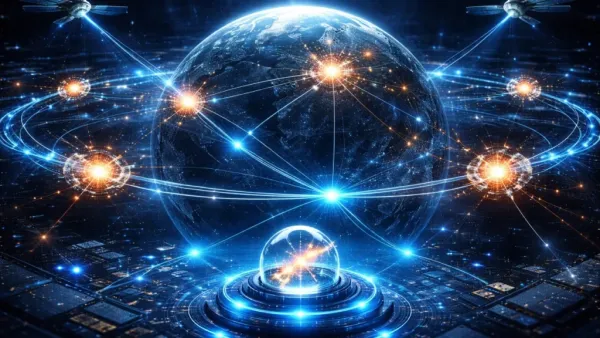
In basic terms, a quantum internet is a network that applies quantum states for the purpose of transmitting information to far-off points. It does not send bits, zeros, and ones but works with qubits instead, which can be in different states at the same time and also intertwined with each other.
Entanglement is the most important aspect. If two particles are entangled, then the condition of one particle will immediately be linked to the condition of the other, regardless of the distance between them. This does not facilitate faster-than-light communication in the standard way, yet it permits something that can be considered even more powerful: communication that is unconditionally verified.
In a quantum network, every attempt to steal or distort the message alters the quantum state, thus exposing the intruder at once.
This feature differentiates quantum internet from traditional networks, where the security of data is based on encryption, and sometimes, this encryption can be broken.
Why Quantum Internet Is Not “Faster Internet”
One of the most common misunderstandings about quantum internet is that it will be a quicker version of the existing internet. This is not true, at least not in the way most people think. Quantum networks are not for online streaming, browsing, or social media. Classical data will be the only type of data traveling through optical fibers, satellites, and wireless links. The quantum internet, on the other hand, plays the role of a secure control and verification layer.
Instead of viewing it as a primary internet, consider it to be a parallel nervous system that is employed for authentication, encryption key exchange, distributed computing coordination, and ultra-secure communication. In that sense, its worth is in trust, not in quantity.
Entanglement-Based Communication and Security
Entanglement-Based Communication and Security Quantum key distribution (QKD) is the most obvious and immediate use of a quantum internet. Actually, QKD does not utilize encryption keys generated mathematically; on the other hand, it engages quantum states to share keys between two users. A third party will not be able to do anything if it tries to eavesdrop; the quantum state will collapse, thus notifying both the sender and the receiver. There is no need to detect hacking after the fact; intrusion becomes physically impossible to hide. This causes a switch in the whole cybersecurity scenario from a probabilistic to a deterministic one.
The security narrative is now no longer “making attacks difficult” but rather “making them detectable by design.” This distinction is very important in a scenario where quantum computers are posing a severe threat to the current cryptography. Governments and the Quantum Arms Race. The quantum internet is not consumer-driven; it is geopolitics that drives it. Governments are aware that whoever owns the quantum communication infrastructures will be able to make use of them in defense, intelligence, finance, and diplomacy.
Consequently, several regions have started to develop national quantum networks that are already under construction. The first networks are connecting government buildings, research labs, and data centers, as well as other financial and commercial institutions. These networks are experimental, limited in area, and super expensive, but they are alive as ‘proof of concept’. This scenario resembles that of the classical internet, which began as a defense research network long before becoming available to homes.
The Role of Quantum Repeaters and Infrastructure Challenges
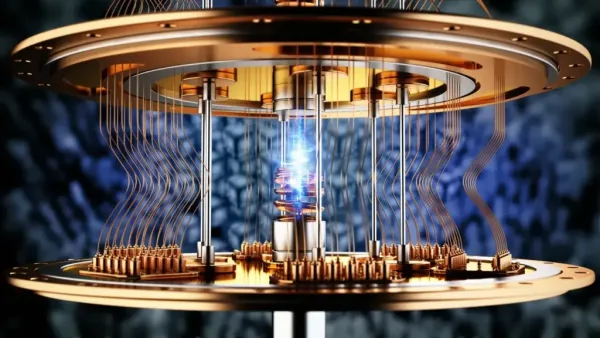
One major technical obstacle that the quantum internet still has to deal with is distance. Quantum states are very delicate. They get less quality because of noise, loss, and interference, especially over lengthy fiber-optic cables. The traditional internet handles this issue by amplifying the signal. On the other hand, quantum signals cannot be amplified without obliterating the information they carry.
Entangled particles, this is the key concept behind quantum repeaters to restore the lost connection without measuring or copying the quantum state. The construction of dependable, scalable quantum repeaters is among the most challenging engineering problems in the field.
Quantum networks will be local networks instead of global ones until this problem is solved.
Satellite-Based Quantum Communication
Researchers have a new approach to communicate with quantum signals by using satellites, thus overcoming the distance limit imposed by terrestrial networks.
The use of the sky has less interference than the distribution of the entangled photons through ground-based fibre. The first tests between the two continents of the quantum key exchange using satellites have already been successfully conducted. The results of these tests imply that a worldwide quantum network might eventually consist of ground fibre networks fused with orbital relays. Even though this hybrid structure resembles that of the present internet, which is composed of undersea cables, satellites, and terrestrial infrastructure, the technology is at a much more fragile level.
What Would Quantum Internet Enable?
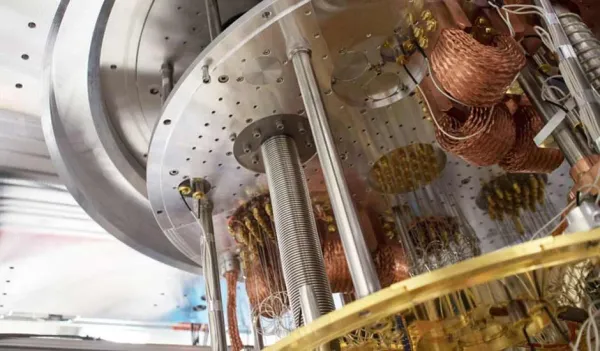
Quantum internet would not just mean secure communication; it could also offer new features.
The capacity of multiple quantum processors to function as one large system, thus, the total computational power would be overwhelmingly increased, would be the case of quantum computing conducted in a distributed manner. This could positively impact research in the areas of materials science, drug discovery, and climate modelling, and so on.
Quantum sensing networks are likely to uncover new dimensions of precision and accuracy in certain measurements to the extent of several kilometers or kilometers. These connections could significantly enhance or give rise to what are already the key areas to navigation, geological monitoring, and space observation.
The most striking aspect, perhaps, is that the quantum internet guarantees communication verifiability. Verification could be done at the physical level for identity, money transfer, and data honesty, thus lessening the dependence on trust in the respective organizations or platforms.
What This Means For Privacy And Surveillance
The quantum internet is a double-edged sword. It is the silent announcement that the privacy issue will be solved, at least for the time being. Unbreakable and unmonitored channels are the only secure ones. Still, on the other hand, only the high-ranking governments and the largest organizations will be able to use the quantum network in the beginning.
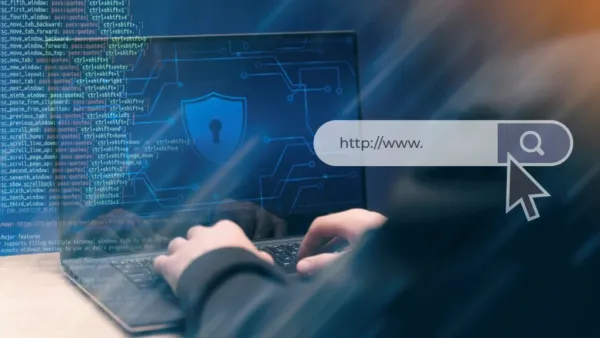
This creates an ethical dilemma. Will quantum-secure communication be available for all, or will it be a case of having a privileged capability? Will the general public be guarded against the watchful eye of the government, or will the latter have the power to monitor the secure communication channels more closely?
There is nothing wrong with the technology. The manner in which it impacts society will be determined by governance, regulation, and access.
How Much Time Will It Take for Quantum Internet to Be a Reality for the Average User?
Quantum internet, although a lot of headway has been made, is still a long way off in terms of consumer use.
The hardware is complicated, delicate, and costly. It demands very precise conditions and specialized environments for maintenance. Even the most optimistic forecasts suggest that it will take decades to reach the point of widespread adoption.
However, history teaches us that fundamental technologies tend to mature silently and then become widespread. The classical internet infrastructure was there for years before desktop computers and smartphones made it indispensable to daily life.
The initial advantage of the quantum internet will be in its application to critical systems. Its wide-ranging impact will be slow and gradual.
A Shift in How Communication Is Defined Worldwide
The quantum internet changes the game in terms of communication. It proposes that it is possible to share information with strict integrity and not just through encrypted secrecy, which is the traditional paradigm.
This shift could radically change the way different cultures and societies treat trust in voters, financial transactions, and governments, and even in what they consider true or false knowledge.
Instead of the coming systems asking the question: “Can this be hacked?”, the question will be asked: “Has this been observed?” This is a change that is subtle but very profound.
Conclusion: Not Faster, But Deeper
Quantum internet will not make communication over the web more rapid or exciting. Rather, it will make the communication more reliable. The first impact that this development will have will be hardly noticeable by most users, as it will be concealed in the very foundations of security and verification.
But eventually, it might alter global communication in a manner much deeper than merely increasing bandwidth. The ultimate advantage that quantum internet can offer is not speed but surety, a network where the truth can be proved physically. And in a world that is digital and increasingly filled with disputes, that might be the most invaluable upgrade of all.
Contact to : xlf550402@gmail.com
Copyright © boyuanhulian 2020 - 2023. All Right Reserved.