Highlights
- Smart kitchen gadgets deliver real value when they reduce cooking time, improve consistency, or enable hands-off monitoring.
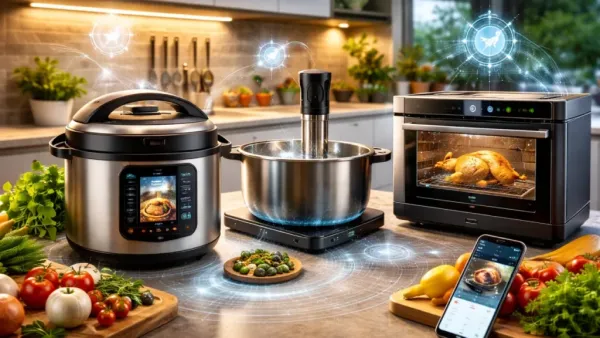
- Instant Pot, Anova sous-vide, and smart ovens highlight where connected cooking genuinely helps—and where it can overpromise.
- Software longevity, service availability, and household routines matter more than novelty AI features.
- Adoption varies globally due to power reliability, internet access, pricing sensitivity, and cultural cooking habits.
The kitchen is definitely the most common place nowadays where the IT and lifestyle crossroads are located. Over the last ten years, the smart cooking tools are no longer considered as luxurious items to be owned only by high-tech enthusiasts; rather, they have become everyday kitchen helpers that change the whole scenario through their functionalities: they keep track of food safety, provide uniform quality regardless of the cooks’ skill, lessen the time needed for meal prep, and link users to the digital world at large.
However, adoption rates vary: the food cultures, the living arrangements in cities, the availability of electricity and internet, and the consumers’ sensitivity to price are factors that determine which devices will be popular in which market. The focus of this paper is on the main categories of devices that are driving the smart cooking trend worldwide, the selection of the most acclaimed products, and their pros and cons measured through cross-comparison.
From connectivity to culinary assistance
One can classify smart kitchen appliances into several categories depending on their functions. The main goal of connected multi-cookers and pressure cookers is to combine different processes and cut the time needed for cooking basic meals. Temperature control devices like immersion circulators (sous vide) and smart thermometers are aimed at very precise cooking and making it possible to repeat the same results. Countertop “smart ovens” utilise a mixture of convection, air-frying, and either computer vision or app-driven presets to carry out the complex tasks already done before the invention of the machines.
Flagship products that have defined categories
The Instant Pot series continues to be the most prominent representative of the internet-connected multi-cooker class. Initially, a time-saving combination of pressure-cooker, slow-cooker, and sauté pan, now Wi-Fi-enabled models with app regulation and extended presets are already included. Reviewers and consumer testing organisations have consistently mentioned the Instant Pot’s capacity to facilitate routine cooking tasks and its wide variety of recipes and accessories. These are the most common reasons it is recommended for families with busy schedules that want predictable results without professional training. Meanwhile, third-party testing indicates compromises: the general-purpose design may give inconsistent outcomes for tender vegetables, and some people prefer dedicated appliances when accuracy is the key point.
Sous-vide immersion circulators have migrated from professional kitchens into mainstream homes largely because of brands that combined robust temperature control with accessible software. Anova Culinary’s immersion circulators are frequently cited as benchmarks in both enthusiast and expert reviews; testing organisations have praised certain Anova models for delivering steady, accurate temperatures at reasonable price points, making precision cooking approachable for home cooks who wish to replicate restaurant techniques. Yet critics note that sous vide requires additional equipment (vacuum sealing or reliable bagging methods) and that the method lengthens total cook time, making it less suitable for every evening meal in time-pressured households.
The “smart oven” sector has received a big push from devices equipped with sensors, cameras, and app intelligence that can either take complete control of the cooking process or just keep an eye on it. June Oven, among the earlier entrants, which popularised the concept of camera-assisted food recognition and automated cook cycles, remains a frequently mentioned product in reviews as a trailblazer, though retrospective reviews highlight its high price and varying usefulness to buyers who are not willing to spend a lot.
Not long ago, the leading producers have unveiled ovens that fuse together AI features and in-oven cameras, providing either the less expensive or the better-integrated choices from the well-known brands. These changes signify that the smart-oven area is already going through the main appliance design process from the luxury of a few to the habitual use by many.
The major appliance makers have stepped up their participation in trade events and introduced new product lines. The years 2026 and 2027 saw LG and Hisense, among others, present at the CES, ovens and refrigerators equipped with cameras, richer AI recipe assistance, and ecosystem integrations. These features show how the intelligence is migrating from the gadget on the countertop to the kitchen architecture with built-in features.
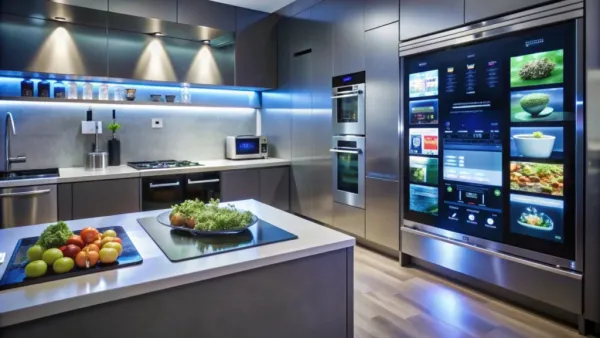
Families desiring hands-off convenience are being sold such devices based on three main features, which are inventory awareness, guided cooking, and energy-aware preconditioning. The downside is that the incorporation of such technologies results in greater reliance on cloud services and also brings up the issue of software support and data privacy for the long term, which is a concern that is not without grounds.
Comparative assessment: where smart devices really make a difference
The smart cookers come out as the smartest kitchen appliances by lessening the cognitive load and cutting down the time spent on the menial tasks. Instead, braising, stews, and cooking rice and legumes with pressure are cases where using automated cooking and timing, plus sealed cooking, are out of the management and manual methods. Sous-vide machines provide the most value in areas where the most and the best hybrid technology comes to play—lean proteins and desserts that are sensitive to temperature; however, they are not so decisive in everyday fast cooking.
Smart ovens and camera-assisted devices will depend on the users’ routines: the capabilities of those who bake often or take advantage of the remote supervision (e.g., working families or those overseeing baking in communal housing) will decide the ability to watch and change cooking from afar; for infrequent buyers, the added expense and dependence on app ecosystems can outweigh the functional benefits. The buying guides and product tests prepared by trustworthy sources are still the most useful resource for consumers who are weighing such trade-offs.
Limitations, equity concerns, and non-technical barriers
The technological sophistication cannot be expected to eliminate the broader limitations. In many international markets, the smart gadgets’ utility is limited by erratic power supply or slow internet, high initial cost in relation to local incomes, and the cultural significance of fresh wet-market shopping that prefers daily shopping and cooking right away instead of long automated processes. In addition, the cycle of software updates and cloud reliance comes with appliance obsolescence concerns: a pricey smart oven may lose its usefulness if the manufacturer stops support after just a few years of usage. Besides, privacy and data governance aspects must be considered: the devices that perform scanning or inventorying of homes
Contact to : xlf550402@gmail.com
Copyright © boyuanhulian 2020 - 2023. All Right Reserved.