Semiconductors – Major international financial institutions have slightly raised their expectations for South Korea’s economic performance this year, encouraged by signs of renewed strength in the global semiconductor market. Analysts believe the improved outlook reflects growing demand for advanced chips, which remain a key pillar of South Korea’s export-driven economy.
Investment Banks Adjust Growth Expectations
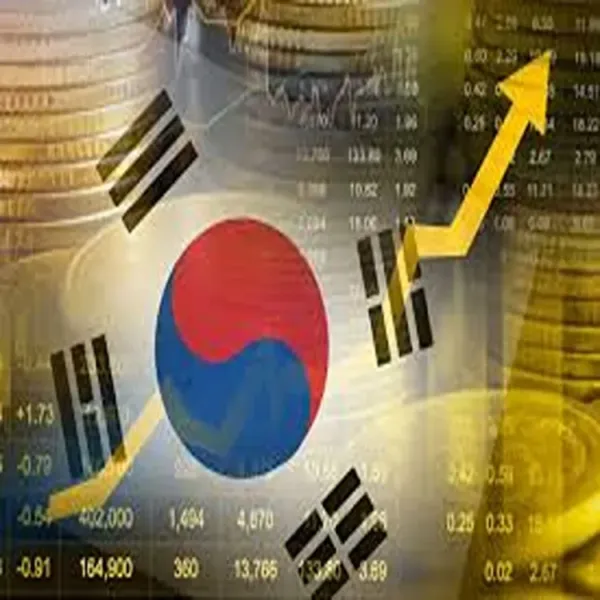
A recent assessment released by the Korea Center for International Finance showed that eight leading global investment banks now expect South Korea’s economy to grow by an average of 2.1 percent in 2026. The figure marks a modest increase compared with projections released a month earlier, signaling improving confidence among global financial observers.
The revised estimate surpasses the outlook from the country’s central bank, which has predicted growth at 1.8 percent. It also stands slightly above the South Korean government’s official projection of 2 percent. The stronger forecasts suggest that external demand, particularly in the technology sector, could play a decisive role in supporting economic expansion.
Semiconductor Exports Drive Optimism
Several investment banks highlighted semiconductors as the primary driver behind the improved projections. One global financial institution raised its growth forecast to 2.4 percent, citing expectations that semiconductor export growth could more than double in the coming year. Analysts anticipate export growth in this sector to reach approximately 54 percent, compared with about 22 percent recorded in the previous year.
Another major financial group also increased its estimate, noting that sustained global demand for high-performance chips, used in artificial intelligence systems and data processing infrastructure, is likely to support industrial output and trade earnings. Meanwhile, some institutions maintained their earlier growth forecasts, suggesting cautious optimism amid uncertainties in the global economic environment.
Mixed Views Among Financial Institutions
Not all financial organizations shared the same level of confidence. One global investment bank slightly lowered its growth estimate, pointing to potential risks affecting non-technology sectors. Some analysts warned that industries outside the semiconductor supply chain could face challenges due to evolving global trade conditions and changing tariff policies, particularly those linked to the United States.
Despite these concerns, many economists believe the semiconductor cycle may remain stronger and more resilient than previously expected. The continued global transition toward digital infrastructure, cloud computing, and advanced electronics is widely viewed as a stabilizing force for South Korea’s manufacturing sector.
Government Support for Automotive Innovation
Alongside strong performance in semiconductor exports, South Korea is also taking steps to strengthen its automotive industry. The Ministry of Trade, Industry and Resources announced a financial support package worth approximately 464.5 billion won for the domestic automobile sector. The initiative aims to help companies maintain competitiveness in next-generation vehicle technologies.
Government officials stated that a significant portion of the funding will be directed toward research and development of core automotive technologies. These include autonomous driving systems, advanced electronic vehicle components, and hydrogen-powered transportation solutions, all of which are considered essential for the future mobility market.
Record Auto Exports Strengthen Industry Confidence
The support plan follows a year in which South Korea recorded its highest-ever automotive export value, reaching approximately 72 billion US dollars. The achievement came despite global trade challenges, including tariff measures that affected certain export categories.
Authorities also highlighted the role of a public-private partnership established last year to accelerate development in autonomous driving technology. The collaboration is expected to lead several research projects and strengthen the domestic supply chain for emerging vehicle technologies.
Balancing Opportunities and Global Risks
Economic experts note that while South Korea’s reliance on high-technology exports presents significant growth opportunities, it also exposes the country to fluctuations in global demand. However, the current semiconductor upcycle, combined with strategic investments in automotive innovation, is expected to help maintain economic stability in the near term.
Policy planners and financial analysts continue to monitor external trade developments, currency fluctuations, and geopolitical factors that could influence long-term economic prospects. For now, rising demand for advanced technology products remains a positive signal for the country’s economic outlook.
Contact to : xlf550402@gmail.com
Copyright © boyuanhulian 2020 - 2023. All Right Reserved.