Washington, Feb 5 (IANS) Warning that critical mineral supply chains have become tools of political coercion, the United States (US) convened 54 countries and the European Commission to overhaul the global market for strategic minerals and rare earths.
At the ministerial, the US announced the signing of 11 new bilateral critical minerals frameworks or memoranda of understanding. These include agreements with Argentina, Ecuador, Guinea, Morocco, Paraguay, Peru, the Philippines, the United Arab Emirates, and Uzbekistan.
The US said it has signed ten similar agreements over the past five months and completed negotiations with 17 additional countries. The frameworks are intended to help partners address pricing challenges, spur development, create fair markets, close gaps in priority supply chains, and expand access to financing, it said.
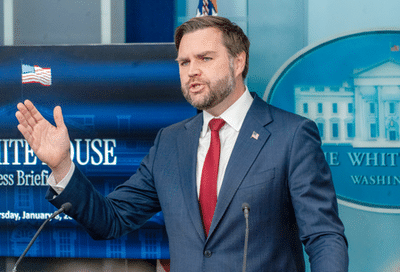
Secretary of State Marco Rubio, joined by Vice President J.D. Vance, Treasury Secretary Scott Bessent, Interior Secretary Doug Burgum, Energy Secretary Chris Wright, and U.S. Trade Representative Jamieson Greer, hosted the 2026 Critical Minerals Ministerial in Washington on Wednesday.
The meeting brought together 43 foreign and other ministers from across Africa, Latin America, Europe, the Indo-Pacific, and the Middle East.
India was among the participating countries, alongside major producers and consumers including Australia, Brazil, Canada, France, Germany, Japan, Saudi Arabia, South Korea, the United Kingdom, and the United Arab Emirates.
“Critical minerals and rare earths are essential for our most advanced technologies and will only become more important as AI, robotics, batteries, and autonomous devices transform our economies,” the U.S. fact sheet said. It warned that the market is “highly concentrated,” leaving it vulnerable to “political coercion and supply chain disruption.”
Rubio also announced the creation of the Forum on Resource Geostrategic Engagement, or FORGE, as the successor to the Minerals Security Partnership. FORGE will be chaired by South Korea through June and will coordinate policy and project-level cooperation to strengthen diversified, resilient, and secure critical mineral supply chains, according to a media release.
In a statement after the ministerial, the Trump administration stressed that governments alone cannot solve supply chain vulnerabilities. It highlighted the role of the private sector through initiatives such as Pax Silica, which focusses on investments in mining, refining, processing, recycling, and end-use applications.
On February 3, a day before the ministerial, U.S. officials brought together governments and private companies to discuss supply chain challenges and investment opportunities. During that meeting, Deputy Secretary Landau witnessed the signing of a memorandum of understanding between Glencore and the U.S.-backed Orion Critical Mineral Consortium related to a potential acquisition of assets in the Democratic Republic of the Congo.
The agreement aims to encourage greater U.S. investment in the DRC’s mining sector and promote secure, reliable, and mutually beneficial flows of copper and cobalt to the U.S.
The U.S. government said it has mobilised more than $30 billion in letters of interest, investments, loans, and other support for critical mineral projects over the past six months. It said these efforts have produced a multiplier effect by attracting private capital many times greater than government outlays.
A central pillar of the push is Project Vault, announced by President Donald Trump on February 2. The Export-Import Bank of the U.S. approved a direct loan of up to $10 billion for the initiative to establish a domestic strategic reserve for critical minerals.
--IANS
lkj/rad
Contact to : xlf550402@gmail.com
Copyright © boyuanhulian 2020 - 2023. All Right Reserved.