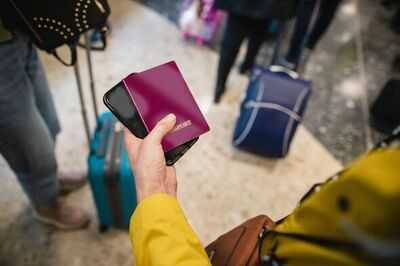
British citizens could face being turned away at the UK border from February 25, 2026, under stringent new travel regulations requiring additional documentation for entering the country.
From later this month, the UK will fully implement the Electronic Travel Authorisation (ETA) scheme for all travellers, including those from the EU, USA, and other visa-exempt countries, mandating digital permission to enter. The requirements apply to travellers arriving by plane, ferry, and Eurostar, with rigorous carrier checks in place. Whilst these measures won't impact most British citizens, those holding multiple citizenships could encounter difficulties.
Although individuals under the EU Settlement scheme or Leave to Remain scheme are exempt-with their foreign passports providing evidence of approved UK residency-dual-citizenship holders with different passports have been warned they may struggle to re-enter the UK if they overlook one crucial detail.
Following the Government's recent announcement of stricter enforcement of Electronic Travel Authorisation (ETA) and eVisa checks at passport control, an immigration lawyer has advised British citizens with dual-citizenships to conduct an essential verification before travelling abroad for holidays.
UK immigration lawyer and social media commentator, Skylar McKeith, has been sharing her expert advice for immigrants living in the UK and those wishing to move here.
She's amassed a large following by simplifying British immigration laws and outlining what's required under various circumstances, including travel.
"British citizens could be refused entry to the UK," she cautioned in her video, before delving into how British citizens might be impacted by the ETA regulations.
"From the 25th February, the UK will fully enforce its ETA system," Skylar clarified. "British citizens cannot apply for an ETA, so if you are a dual citizen and you travel on your non-UK foreign passport, you may be refused boarding."
As of 25 February 2026, visitors from 85 nationalities, including the United States, Canada, and France, who do not require a visa will not be permitted to legally enter the UK without an Electronic Travel Authorisation (ETA). The enforcement of these rules means that anyone wishing to visit the UK must have digital permission via either an ETA or an eVisa. Carriers will be verifying people prior to their journey.
While this may sound complicated, it essentially advises British residents with dual citizenship to carefully consider which passport they use for travel. Skylar continued to provide her top tips on how to navigate this situation.
"The solution is simple," Skylar said. "Travel on your British passport, or a foreign passport with a certificate of entitlement."
A Certificate of Entitlement (CoE) is an official document, usually a vignette placed in a foreign passport, which confirms an individual possesses the right of abode in the UK, permitting them to reside and work without limitations. Those who qualify can request these documents via the Government's website, with applications costing £589.
For those holding multiple passports, it's generally advisable to carry both during your travels as this provides greater flexibility for visa-free access. Additionally, you should always attempt to present your home nation's passport when entering or returning to that country.
Following the ETA's introduction in October 2023, over 13.3 million visitors have successfully obtained approval and enjoyed quicker, more efficient travel. The ETA has become an essential component of travel, including for those taking connecting flights who pass through UK passport control.
Contact to : xlf550402@gmail.com
Copyright © boyuanhulian 2020 - 2023. All Right Reserved.