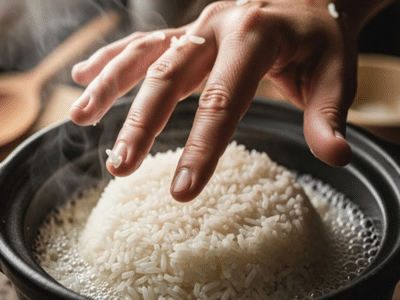
Tips to check for plastic rice: Rice is consumed daily in almost every household. Most people love eating rice, and it's used to prepare many different dishes. Pure, high-quality rice has a wonderful aroma when cooked and tastes delicious. However, nowadays, fake rice, which looks exactly like plastic, is also available in the market. People often can't distinguish between plastic rice and real rice. Many people buy 5 to 10 kilos of rice at a time. In such cases, you can identify real and fake plastic rice at home using these tricks.

If you've bought several kilos of rice at once and, after cooking, it feels very hard and plastic-like, be alert. It could be fake rice. When fake rice is cooked, a rubbery layer forms on top. This type of rice doesn't soften easily during cooking. Since it's made of plastic, it starts to melt.
Adulteration of food items is becoming increasingly common in the market, jeopardizing people's health. Nowadays, people also share many videos on social media showing adulteration in food products. So, if you suspect that the rice you bought is fake, you can identify real and fake plastic rice at home with a simple test.
If you think the rice looks shiny like plastic, try the water test. The simple methods described here won't magically prove the presence of plastic, but they can definitely help you identify bad, adulterated, or suspicious grains. Take a handful of rice. Put it in a bowl of normal water. Stir it with your fingers. According to this test, artificial grains float in water, but real rice sinks because plastic is lighter than water.
If most of the rice sinks in the water, it's normal and safe to eat. Any floating grains you see are usually broken or hollow; remove them. If a significant number of grains float, the rice quality may be poor.
Try burning a small amount of rice. Synthetic rice will react differently when exposed to or burned in a flame. The natural starch in real rice reacts differently. If the rice grains melt, curl, or emit a strong chemical odor when burned, it could indicate plastic adulteration. Real rice, when cooled and examined closely, leaves ash and turns black instead of leaving a sticky residue. It emits a roasted aroma. If a shiny layer melts and a strong artificial odor is released, do not consume the rice. Report it to your local food authorities.
Try cooking a small amount of rice. Put a small amount of rice in a pot and cook it on the stove. Do not add salt or oil. If it's plastic rice, it will form a rubbery layer on the surface. The plastic rice grains will remain hard during cooking.

After boiling, try pressing a single grain of rice between your fingernails or rubbing it against a hard surface to see if it breaks easily. Properly cooked rice usually flattens or spreads because its starch softens. Undercooked rice may remain hard. The quality of the rice, whether it's real or fake, also depends on its aroma, grain size, and whether it remains hard after cooking.
Contact to : xlf550402@gmail.com
Copyright © boyuanhulian 2020 - 2023. All Right Reserved.