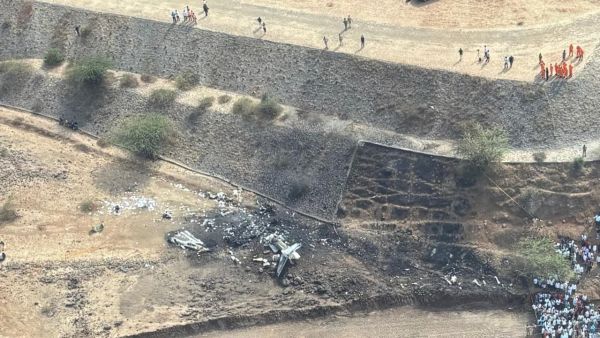
Following a fatal plane crash at Baramati, the Indian government has launched a nationwide safety audit of 400 uncontrolled airstrips. These facilities often lack formal air traffic control and regular monitoring, creating safety risks.
In the wake of the tragic plane crash near the Baramati airstrip on January 28 that claimed the life of Maharashtra Deputy Chief Minister Ajit Pawar and four others, the Government of India has initiated a comprehensive safety audit of roughly 400 uncontrolled airstrips across the country.

The move, driven by concerns over aviation safety standards at non controlled airports, marks a rare nationwide review of infrastructure gaps and operational oversight mechanisms affecting smaller landing facilities outside the typical regulatory framework.
Uncontrolled airstrips — often lacking formal air traffic control (ATC) towers, advanced navigational aids, and regular monitoring — are primarily used by private charters, political flights, flying schools, and business jets.
The Baramati accident, which occurred during a second attempted landing in low visibility conditions, brought intense scrutiny on these sites because pilots rely on visual cues and self coordination rather than standard ATC instructions.
Teams from the Directorate General of Civil Aviation (DGCA) have begun inspections focused on mapping out infrastructure, checking communication facilities, evaluating firefighting and rescue readiness, and testing coordination with local authorities.
Officials say many of these airstrips fall outside routine DGCA oversight, creating potential safety blind spots. The goal of the audit is to create uniform operational standards and bring these strips under a more structured safety umbrella.
Aviation experts stress that basic facilities such as windsocks, reliable weather reporting systems, CCTV surveillance, and regular monthly inspections could significantly improve safety at these remote sites without substantial cost. They argue that publication of accurate weather data and better local oversight can help pilots make informed decisions, especially in marginal meteorological conditions.
The Baramati crash has also underscored demands for stronger regulatory supervision and infrastructure upgrades. As the inspection drive gains momentum, authorities are expected to recommend essential reforms to enhance air safety at smaller facilities nationwide.
Contact to : xlf550402@gmail.com
Copyright © boyuanhulian 2020 - 2023. All Right Reserved.