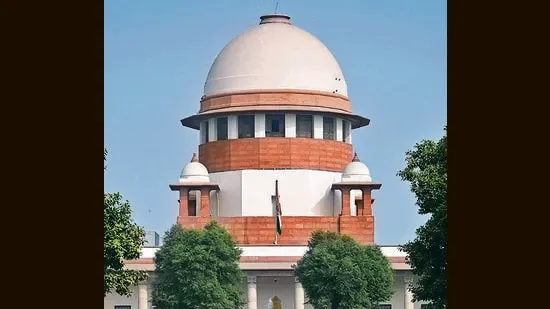
Can’t make bail conditional on monetary deposits: SC
The Supreme Court has held that the grant of bail or anticipatory bail cannot be linked to monetary deposits or similar financial conditions, terming the practice "very unfortunate" and cautioning courts against insisting on such stipulations as a precondition for liberty.
A bench of justices JB Pardiwala and KV Viswanathan made the observation while setting aside orders of the Jharkhand high court that had effectively made the grant of anticipatory bail conditional on the accused depositing over ₹9 lakh towards an alleged business liability.
The court underscored that bail decisions must be based strictly on the merits of the case and the governing legal principles, not on whether the accused is willing or able to deposit money or give undertakings. If a case for bail is made out, the court must grant it; if not, it must be refused, but conditional orders requiring payment have no place in bail jurisprudence, the bench said.
The present case arose from an FIR registered at Adityapur police station in Jharkhand in June 2023, alleging penal provisions pertaining to cheating and criminal breach of trust. The complainant claimed to be an unpaid seller in a commercial transaction involving the purchase of craft paper, alleging that an amount of ₹9,12,926.84 remained unpaid by the accused, a father-son duo.
After the sessions court declined anticipatory bail, the petitioners approached the high court, which passed two orders, first in January 2025 and again in November 2025, directing them to file affidavits showing proof of payment of the alleged outstanding amount, failing which their anticipatory bail plea would stand dismissed automatically.
Taking serious exception to this approach, the Supreme Court noted that the high court had acted in complete disregard of criminal jurisprudence and a binding precedent, particularly its July 2025 judgment in Gajanan Dattatray Gore Vs State of Maharashtra, where such practices were expressly prohibited.
"It is very unfortunate that despite this Court saying in so many words that grant of regular bail or anticipatory bail should not be subject to deposit of any amount, the High Court has insisted on payment of the alleged dues," the bench noted in its order last week.
Allowing the special leave petitions, the court directed that in the event of arrest, the father-son duo shall be released on bail on such terms and conditions as the investigating officer may deem fit, followed by furnishing of bail before the competent court.
Significantly, the Supreme Court also directed its order to be forwarded to the registrar general of the Jharkhand high court, with instructions to place it before the chief justice, signalling institutional concern over the continued recurrence of such orders despite clear directions from the apex court.
In Gajanan Dattatray Gore, the Supreme Court had categorically held that no trial court or high court shall grant bail -- regular or anticipatory, on the basis of undertakings or assurances to deposit money. The court had warned that such practices allow litigants to "take the courts for a ride," undermine judicial dignity, and lead to avoidable bail cancellations when undertakings are later breached.
Reiterating those directions, the bench emphasised that the "pay-to-bail" approach must stop, and courts across the country must decide bail pleas strictly in accordance with law, uninfluenced by financial considerations unrelated to the criminal process.
Contact to : xlf550402@gmail.com
Copyright © boyuanhulian 2020 - 2023. All Right Reserved.