
The NHS is to change how A&Es operate in an attempt to tackle the corridor care crisis in hospitals.
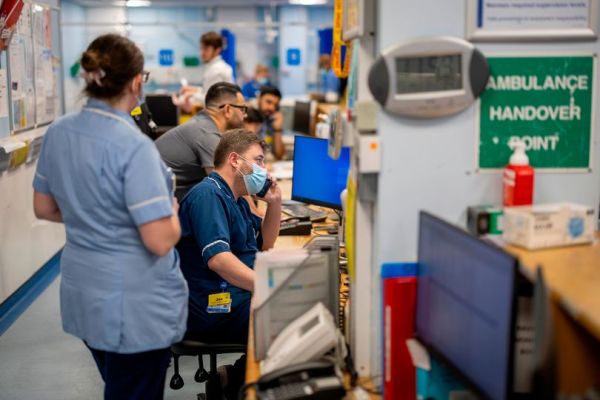
Emergency departments in England will open up dedicated areas for people who are likely to need "extended" care. NHS documents outline a plan to prioritise patients with the most urgent need while avoiding "overcrowding". It comes after corridors have become makeshift wards with patients waiting many hours on trolleys to be admitted. The change is aimed at making long waiting in emergency departments more bearable - particularly for the elderly for whom delays significantly increase the risk of death.
Older patients often live with multiple, complex health conditions so can take longer to diagnose. Patients will be identified so they can be safely monitored in extended emergency medicine ambulatory care areas (EEMACs) who are likely to be in A&E for between four and eight hours.
• A&E corridor crisis as patient ‘awake for three nights - it was horrendous’
• Wes Streeting says ‘it’s very hard to look parents like Jesy Nelson in the eye’ on SMA
The blueprint outlines how a "model emergency department" should work and will help thousands of patients to get faster emergency care. Medics will triage patients upon arrival in A&E and could redirect them to other same-day clinics if they are more likely to get seen quicker and treated appropriately there.
Health Secretary Wes Streeting said: "Too many patients are stuck waiting in overcrowded A&Es when they could be treated faster and more safely elsewhere. This new model will put senior clinicians at the front door, get people the right care in the appropriate place and free up A&E to focus on life-saving treatment."
NHS data shows patients who spent more than 12 hours in A&E are more than twice as likely to die within 30 days than those who are seen within two hours. The most elderly are more likely to have to endure the longest waits. It follows reports in a Royal College of Nursing report in 2024 of patients dying "under a pile of coats" and in similar circumstances in packed waiting rooms.
Upon arrival in A&E clinicians should offer specialist advice for children, the elderly, patients with mental health conditions and those receiving end-of-life care to make sure they are treated in the right place. Some patients could be redirected to urgent treatment centres, same-day emergency centres or dedicated extended care areas for children.
The Royal College of Emergency Medicine insists the key problems remain - a lack of hospital beds and a lack of sufficient social care to allow more patients to be discharged promptly. President Dr Ian Higginson, president of the Royal College of Emergency Medicine, said: "In isolation this document is unlikely to have a meaningful impact on reducing overcrowding given that it relates to only one piece of the jigsaw. Overcrowding and corridor care is ultimately driven by our inability to find beds for patients who need to be in hospital - this is because hospitals are full.
"Although it seems logical to start at the front door of hospitals, this is not really where the problem lies - we should be more concerned with how things are expected to look at the back door.”
The guidance is part of a plan to help hospitals reach the national target of 95% of A&E patients being admitted, transferred or discharged within four hours. This has not been met for almost a decade.
A&E waits got steadily longer during over a decade of Conservative governments before which waits over 12 hours were unheard of. By December 2019 some 2,356 patients waited longer than 12 hours on a trolley until a proper bed became available and by December 2025 it was 50,775 patients.
Julian Redhead, NHS England director of urgent and emergency care, said: "We are supporting hospitals to better manage their flow of patients in A&E and speed up care for patients. Many emergency departments are already prioritising care for the sickest patients, but this sets out how they can cut waiting times and triage patients who can be treated quickly and safely elsewhere."
Labour and NHS England have set an interim target of March 2026 for 78% of patients attending A&E to be admitted, discharged or transferred within four hours. Some 73.8% of patients in England were seen within four hours in A&Es last month.
Rory Deighton, acute and community care director speaking on behalf of the NHS Confederation and NHS Providers, said: "With demand for care continuing to grow, this guidance sets out some vital and innovative new ways of working that can provide better, faster and more appropriate emergency care - including to those who require special attention, such as the elderly, young children, and those in mental health crisis."
Contact to : xlf550402@gmail.com
Copyright © boyuanhulian 2020 - 2023. All Right Reserved.