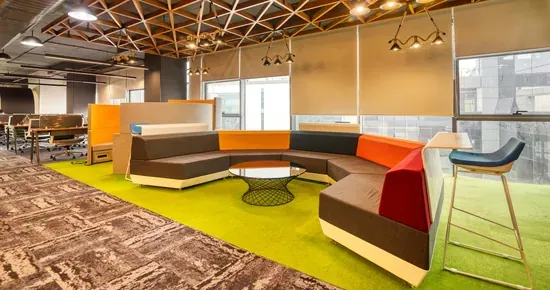
According to sources familiar with the matter, ride-hailing and electric vehicle company Ola has voluntarily given up more than 1.7 lakh square feet of leased office space in Bengaluru as part of a strategic decision to reset operations amid increased reliance on artificial intelligence (AI), automation, and cost-cutting measures. The move highlights how shifting business goals are redefining workplace requirements for technology-driven businesses in India’s largest IT group.
The gave up area covers around 1.12 lakh square feet at Prestige RMZ Startech in Koramangala, which covers the full 7th and 8th floors of Tower B and was formerly used by Ola for some call center and operational services. Monthly rent for this space was around ₹1.4 crore. Ola also handed up approximately 60,000 square feet at Infozone in Electronic City, which housed its Battery Innovation Centre.
According to industry sources, the release of office space was primarily due to internal consolidation and recalibration, not negative assessments of Bengaluru’s office market. With automation and artificial intelligence increasingly integrated into operational operations, Ola employs fewer personnel in traditional office jobs, particularly in previously manpower-intensive sectors such as customer service. According to sources, automating these activities has decreased the requirement for large-scale office infrastructure.
Context of Office Space Surrender and Operational Shifts:
Ola’s decision to trim its realty footprint comes amid broader changes within the company’s business landscape. The firm, which operates a ride-hailing platform and an electric vehicle business, has been dealing with a slowdown in electric two-wheeler demand. As a result, management has been realigning operational costs and recalibrating its workforce to focus on leaner, more efficient business models.
When Ola leased the Koramangala office space in April 2023, the company was in a growth phase, scaling up call centre operations and expanding several verticals rapidly. However, with several of these operational functions now automated using AI tools, the need for large physical office spaces has decreased. This has enabled the company to reduce recurring rental costs and optimise its cost structure.
The space vacated at Infozone, where the Battery Innovation Centre is located, represents a transition in the company’s R&D and innovation structures. According to sources, while the facility has strategic value, some of the leased space is no longer required since processes have been reduced. The empty floors of Prestige RMZ Startech have already been taken over by global consulting and technology firm Accenture, proving that demand for premium office space in Bengaluru remains strong, particularly in consulting and technology services.
Ola still maintains a significant presence in Bengaluru, occupying an estimated 427,000 sq ft at the Prestige Startech complex, which houses its corporate offices and major operations linked to Ola Electric and scooter businesses. The lease for this space was renewed last year for a five-year term until October 2030, underscoring the company’s ongoing commitment to the city even as it adjusts its overall footprint.
Industry Recalibration and Office Space Trends:
The decision by Ola to surrender office space parallels broader corporate trends where companies reassess real estate needs in the wake of hybrid work policies, automation and cost management pressures. While the global pandemic accelerated remote and hybrid work patterns, the integration of AI has only further reduced dependence on large office footprints for certain business functions.
Bengaluru, on the other hand, remains a hotspot for office leasing, and the whole market is booming. The city is still one of India’s top office markets, with record leasing activity in recent years driven by demand from Global Capability Centres (GCCs), IT enterprises, and consulting organizations. In 2025, the city achieved gross office leasing of 28.7 million sq ft, with GCCs accounting for approximately 63 percent indicating long-term confidence in office demand despite individual corporations reducing space.
Other prominent firms, including Morgan Stanley and Honeywell, have also committed to significant office leases in Bengaluru, highlighting that the entire market remains active and competitive even as companies like Ola optimise internally.Analysts believe that corporations are increasingly differentiating between key operational spaces that must be kept and non-essential leases that may be given up without disrupting critical business processes. This strategy is consistent with changing desires for hybrid work arrangements and the pursuit of cost reductions.
Implications for Ola and Corporate Real Estate Strategy:
For Ola, trimming its real estate footprint is part of a broader cost-cutting and operational efficiency strategy. The company has been undertaking workforce restructuring and pivoting toward automation and lean operations through 2024 and 2025, according to industry sources. Reducing office space is one element of this optimisation. This strategy also aligns with industry sentiments that as technologies such as AI and automation mature, companies will prioritise digital infrastructure and remote capabilities while rationalising physical assets. Businesses with extensive in-house customer support or administrative teams may find that their office requirements diminish over time.
Even if Ola’s real estate holdings have been reduced in some places, the company’s considerable office presence in Bengaluru indicates that it still sees the city as a key location for logistics, mobility innovation, and technological development. This sustained dedication is shown by its continued activities at the larger leased complex in Prestige Startech.It is anticipated that the trend of corporates making the most of office space will continue as they weigh the demands of talent hubs and collaboration against budgetary constraints and changing work schedules. Office space abandoned by one player is frequently swiftly taken up by another in areas like Bengaluru, where demand is still high, suggesting a strong and adaptable commercial real estate ecosystem.
For the time being, Ola’s recalibration shows how large technology and mobility companies are reconsidering physical footprints in response to automation, evolving demand, and economic realities – a trend that is expected to affect corporate real estate strategy across India’s main cities in the coming years.
Contact to : xlf550402@gmail.com
Copyright © boyuanhulian 2020 - 2023. All Right Reserved.