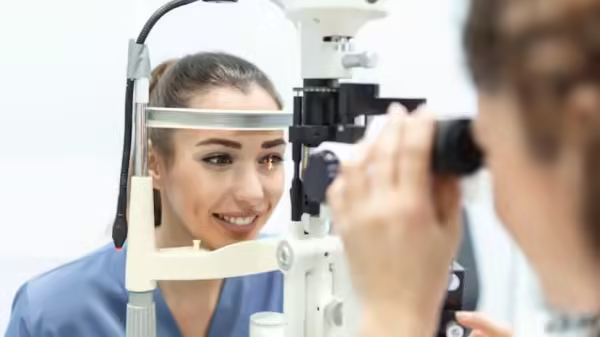
When people first notice changes in their vision, their initial reactions often delay proper treatment. One of the most common mistakes is ignoring early symptoms such as blurred vision, glare, eye strain or difficulty reading. These may indicate cataracts, glaucoma or retinal disease, conditions that progress silently if not evaluated in time.
Another widespread error is visiting optical shops for eye check-ups. Opticians can check spectacle power, but they cannot diagnose medical conditions. Serious problems like diabetic retinopathy, glaucoma, macular disease or retinal tears require detailed examination, including dilation and specialized testing that only an ophthalmologist can perform. Relying solely on optical assessments often gives false reassurance and leads to late detection.
Dr Chetan Rayannavar, Consultant Ophthalmologist, Dr Agarwals Eye Hospital, Hubli, says, “Self-medication with over-the-counter drops, especially steroid drops, is another risky habit. These may reduce redness temporarily but can dangerously increase eye pressure, worsen infections or speed up cataract formation.”
Add Zee News as a Preferred Source
Avoiding dilated retinal examinations is another major mistake. This is particularly important for diabetics, hypertensive patients, and adults above 40, as many sight-threatening diseases are painless in the early stages.
The best way to protect vision is to seek prompt evaluation from a qualified ophthalmologist and maintain regular yearly check-ups. Preventing avoidable blindness is essential in reducing disability, an important reminder ahead of the International Day of Persons with Disabilities.
Dr Prarthana S. Gokarn, Consultant Ophthalmologist, Dr Agarwals Eye Hospital, Jayalakshmipuram, reveals common mistakes and how to avoid them.
Common Eye Care Mistakes & How to Avoid Them
1. Ignoring Symptoms:
Waiting for weeks or months that they will go on their own. It is risky because some conditions—like retinal detachments, glaucoma, or infections, worsen quickly.
How to avoid it:
- If symptoms are sudden (flashes, sudden floaters, partial vision loss), seek urgent care.
- If gradual (blurriness, headaches, trouble reading), schedule a routine eye exam soon.
2. Diagnosing by self with the Internet:
Assuming you have dry eyes, astigmatism, or eye strain solely based on online information because different conditions share similar symptoms (eg, blurry vision can be refractive error or diabetes- issues).
How to avoid it:
Use online information only to understand possibilities and not to replace professional evaluation.
3. Buying Random Reading Glasses Without Testing Vision
Grabbing cheap over-the-counter readers to “fix” the problem because it may mask underlying problems.
How to avoid it: always better to consult ophthalmologist for the correct treatment.
4. Overusing Screens Without Taking Breaks
Assuming vision changes are “just screen time” and continuing long hours without adjustment because chronic digital eye strain can worsen discomfort, dryness, and blurred vision.
How to avoid it:
- Follow the 20-20-20 rule: Every 20 minutes, look 20 feet away for 20 seconds.
- Adjust brightness and posture; ensure proper indoor lighting.
5. Wearing Old or Incorrect Prescription Glasses
Continuing to use outdated eyeglasses because “it’s good enough.” Since it can cause headaches, squinting, and fatigue and put extra strain on your eyes.
How to avoid it:
- Update prescriptions every 1–2 years or if vision feels off.
- Don’t force clarity by squinting—get rechecked instead.
6. Using Eye Drops Incorrectly
Relying on redness-reducing drops or random lubricants since redness reducers can cause rebound redness. Not all drops are suitable for chronic dryness.
How to avoid it:
- Use preservative-free lubricating drops if dryness is suspected.
- Avoid “get the red out” products unless advised.
7. Avoiding Eye Exams
Avoiding Eye exams due to cost or fear because exams feel time-consuming, expensive, or stressful. Eye conditions often worsen silently (eg, glaucoma). Prevention saves more money and vision long-term.
How to avoid it:
- Look for community clinics, discount exam programs, or insurance options.
- Most eye exams are painless and quick.
8. Misinterpreting Vision Changes as “Normal Aging”
Mistake: Assuming everything is just age- presbyopia.
Why it’s risky:
Serious issues can occur at any age.
How to avoid it:
Any significant or sudden change should be examined, regardless of age.
9. Ignoring Symptoms in Only One Eye
Mistake: Thinking vision is fine because one eye compensates for the other because problems may be advanced by the time they’re noticeable.
How to avoid it:
Test each eye separately occasionally (cover one eye at a time).
10. Continuing Contact Lens Use Despite Discomfort
Mistake: Wearing lenses too long or sleeping in them after discomfort starts because it increases risk of infections, corneal ulcers, and scarring.
How to avoid it:
- Remove lenses at first sign of irritation.
- Replace them on schedule.
- Never sleep in them unless designed for overnight use.
If you’ve just noticed vision changes, here’s what you can do right away:
1. Book a comprehensive eye exam within a reasonable timeframe.
2. Reduce screen strain with the 20–20–20 rule.
3. Avoid self-diagnosis or self-treatment.
4. Monitor symptoms and note any changes.
(This article is based on information available in the public domain and on input provided by experts consulted.)
Contact to : xlf550402@gmail.com
Copyright © boyuanhulian 2020 - 2023. All Right Reserved.