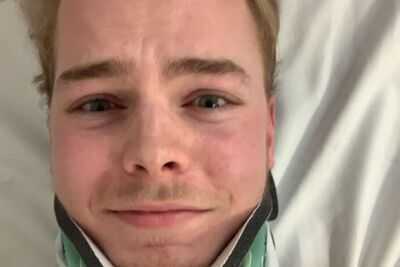
A student who crashed his car and suffered concussion, temporarily lost his fluency in Welsh, leaving him cut off from friends and feeling like a “foreigner” at his Welsh-speaking university, while also enduring flashbacks, anxiety, and brain fog. Ellis Pears, 19, a law student at Aberystwyth University, said he was driving down a muddy country road in November 2024 when another car drove on to the wrong side of the road, forcing him to swerve and causing his car to flip over, leaving him concussed.
A few days later, Ellis, whose first language is English but who had always been fluent in Welsh and attended Welsh-medium schools, said he suddenly struggled to speak Welsh. This left him feeling isolated, as a third of his university course is in Welsh and many of his peers spoke low-level English, making it hard to keep up with both his studies and social life.
He believes the concussion triggered his language difficulties, and his low mood and daily nightmares and panic attacks made it even harder to concentrate. Over time, as his mental health improved, so did his Welsh, and he can now speak the language at university level again, and panic attacks typically occur only when he sees a car crash.
- UK snow horror with 'up to 10 inches' hitting Britain in just DAYS as maps turn purple
- Call the Midwife's Emerald Fennell unrecognisable as Wuthering Heights released
Ellis, who is from Cardiff, said: “I felt like a foreigner in a different country because I couldn’t understand people around me, and not many people knew English so didn’t understand me. I stayed in my room and I didn’t go to lectures for four weeks after my language got worse, then I’d be surrounded by people in my flat that I couldn’t understand.
“I went from being able to do university essays on human rights laws to not being able to build a Lego set.” Ellis began studying at Aberystwyth University in autumn 2024, and after a few months he was “starting to settle in”.
That was until November, when his day-to-day life “completely changed”. One morning he was driving his 2013 Ford KA to a friend’s house down a country road about five miles outside Aberystwyth.
After a storm the previous night, he was being especially careful because of the amount of mud on the roads. But, he said, a car came around a corner and drove on to his side of the road and he had to “choose between” being hit by the oncoming 4×4 or swerving, so he swerved.

He recalled losing control on mud and spinning several times, before hitting a bank. He said the car then flipped over three times before it was finally stopped by a fence post going into the car’s wheel arch, “wedging” his car into the ground.
“In the moment, I remember it spinning and thinking ‘Crap, this is out of my control’ – there was nothing I could do,” Ellis said. “I was shouting and shouting but there wasn’t a house for two miles either way.”
Ellis then “went into survival mode” with “so much adrenaline” – he said he climbed out of the car through a window and began searching for his phone. After 20 minutes he found it in a field next to the lane, rang the police and used what3words – a geocoding system that divides the world into 57 trillion 3m by 3m squares, assigning each a unique, fixed three-word address – to give them his location, which was listed as “///passion.cobras.toasters”.
He said: “It completely saved my life – I was in the middle of nowhere, and without it, I’d be walking about two miles before I found a road sign, let alone a house. It was an absolute godsend – I would urge any driving instructor to instruct your pupils to download it, any parents, and just everyone to get it.”
Police arrived to secure the road and check Ellis over. He only had a cut on the back of his head from a piece of glass, but went to Bronglais Hospital the same day to be checked.

He had CT and MRI scans, and tests on his heart, blood and bones, and was “surrounded” by nine specialists while he was “poked and prodded”. He said: “I don’t think I had a single thought in my head, I was just in shock – the only thing I remember saying is that I didn’t want my little sister seeing me with all the machines around me.
“I felt guilty that my family was so worried too. I only moved to university two months before, I hadn’t even been to all the pubs yet, and I was already in hospital.”
He was diagnosed with a concussion and, about 24 hours later, “once the adrenaline wore off” he “completely mentally crashed”.
He said he had “brain fog” and could barely follow the instructions of a simple Lego set. A few days after the crash, he noticed he was also struggling to speak Welsh. He believes this was because of the concussion, and his low mood made his ability to concentrate even harder.
Ellis had been in Welsh-medium education since nursery and could speak the language fluently to university standard. At university, one third of his course was in Welsh, including essays and lectures, and all of his friends and housemates spoke Welsh “constantly” to each other.
Ellis added that he would speak Welsh around Aberystwyth, whether he was in a shop or “ordering a pint”.
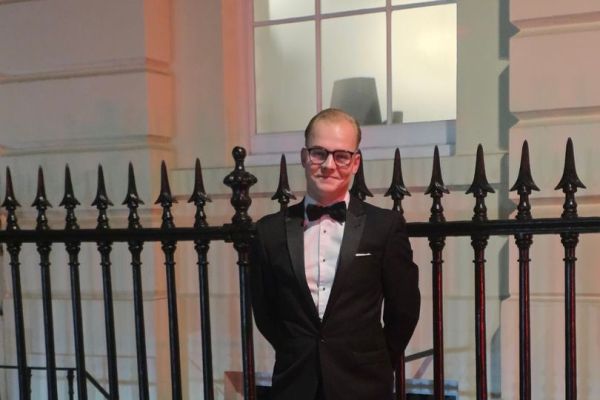
According to the 2021 Census, 17.8% of the population in Wales speak Welsh, and in Ceredigion, the county where Aberystwyth is located, 45.3% speak Welsh. Ellis said: “I was just sat there and didn’t write a thing during the entire lecture – I couldn’t comprehend any of it.
“I tried emailing my lecturer in Welsh but I couldn’t get the words together, couldn’t do the formalities and the grammar or even the most basic Wenglish, which is slang Welsh. “A lot of my mates at university only speak Welsh, it was their first language and their English is poor so I suddenly couldn’t have conversations with my friends.”
Since the crash, Ellis had been suffering from low mood, anxiety and flashbacks. He was not formally diagnosed, but also believes he was experiencing PTSD.
Despite this, he was given a replacement car and decided to take it on short journeys to “feel in control”, despite his family being “so worried”.
He said: “My general mood was terrible – I was a right miserable sod. I wouldn’t smile, I was riddled with anxiety, permanently exhausted. I wasn’t sleeping properly – it would take me hours to get to sleep, and even then, I would be up every half an hour.
“I’d have panic attacks before bed every single night, my whole body would shake and my neck and knees would jerk and I’d be physically in pain.”
In December 2024, he tried taking antidepressants but felt they numbed his emotions and did not work well for him. He found that going to a piece of land, in the fresh air, shouting and chopping wood “genuinely helped”.
By June 2025, he noticed a significant improvement in both his mood and his language skills. Ellis believes that as his mental health improved, his ability to concentrate increased, which in turn helped his language skills recover.
He achieved a third in some modules at university, but was reassured that this would not affect his final grade “too much”.
His flashbacks reduced to about once a week, or when he saw anything related to a car crash. Now, he said, his Welsh has “gone back to normal” and he only has panic attacks when driving past another car crash.
He thinks his comprehension is still “a little slow” and that he struggles with reading instructions. Looking back on his experiences, he said: “It made me think a lot about my priorities – so going home and spending time with family and going out with mates instead of focusing so much on work.”
For more information, visit: www.what3words.com. For support, visit: www.nhs.uk/nhs-services/mental-health-services.
Contact to : xlf550402@gmail.com
Copyright © boyuanhulian 2020 - 2023. All Right Reserved.