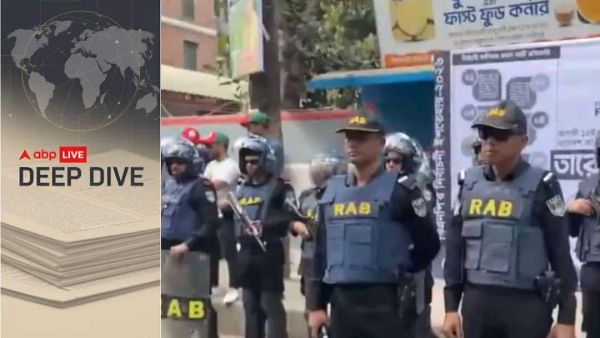
Bangladesh is voting to elect a new government nearly two years after Prime Minister Sheikh Hasina was ousted in a Gen-Z-led uprising. But this election is about more than a transfer of power. Voters are also deciding the fate of the July Charter, a sweeping proposal that seeks to reshape the Constitution in both letter and spirit
The Bangladesh Nationalist Party (BNP), led by Tarique Rahman, is widely viewed as the frontrunner. Yet its former ally, the resurgent Jamaat-e-Islami under Shafiqur Rahman, could yet spring a surprise. With the Awami League absent from the ballot, the race has tightened, and three late-breaking variables could tilt the outcome decisively.
A Massive Undecided Bloc That Could Flip the Script
One of the most unpredictable elements in this election is the size of the undecided vote.
Traditionally, 30–40% of Bangladeshi voters backed the Awami League. Now, with that option off the ballot, a substantial segment of the electorate is up for grabs. Surveys suggest indecision remains high.
A November 2025 survey by the International Republican Institute found 7% of voters undecided, with another 11% declining to state a preference. A nationwide Prothom Alo survey published in January reported 17% still undecided. Earlier, in August 2025, the Brac Institute of Governance and Development found that 48.5% of respondents had not made up their minds — up sharply from 38% in March, according to the Dhaka Tribune.
The Brac survey also noted that as indecision rose, support for major parties such as the BNP and Jamaat-e-Islami dipped slightly. The proportion of respondents saying they “don’t want to say” climbed to 14.4%.
“Opinion polls suggest the BNP has an edge, but we must remember that a significant portion of voters are still undecided,” Parvez Karim Abbasi, executive director at Dhaka’s Centre for Governance Studies, told Reuters.
In a country where each parliamentary constituency averages around 400,000 voters — far fewer than in neighbouring India — even a few thousand swing votes can determine the outcome. Mobilising fence-sitters and former Awami League supporters has therefore become central to both campaigns.
Earlier in the race, analysts debated not whether the BNP would win, but by how large a margin. Now, some surveys suggest a neck-and-neck contest, fuelling fresh excitement, and uncertainty.
Why Lower Turnout Could Benefit Jamaat More Than BNP
Turnout may prove just as critical as vote share.
While anecdotal enthusiasm suggests strong participation, Election Commission mock drills tell a different story. Voters reportedly took nearly 10 times longer to cast ballots due to the combined parliamentary vote and referendum.
The Bangladesh Institute of Democracy and Development (BIDD) warned that the dual-ballot process could significantly slow voting. If delays persist, turnout could suffer. The institute estimated that between 33% and 42% of registered voters risk failing to vote due to time constraints.
Complicating matters further are signals of disengagement, including what has been described as a “soft boycott” from segments of Awami League supporters. Reuters noted that despite competitive campaigning, some voters remain ambivalent in the absence of the former ruling party.
Turnout levels could prove decisive. According to BIDD’s projections, participation of 65% to 68% would likely give the BNP-led alliance a simple majority. But if turnout slips to between 53% and 58%, the advantage could tilt towards Jamaat’s 11-party alliance.
Lower turnout often favours parties with disciplined grassroots cadres. Jamaat, with its organised student and youth wings, may benefit if participation drops. The BNP, seen as more cautious in its mobilisation, could find itself disadvantaged in a low-turnout scenario.
Women and Elderly Voters May Stay Away
Another critical factor is the participation of women and elderly voters, both vulnerable to long queues and fears of unrest.
The Daily Star reported that during mock polls, voting took seven to eight times longer than mandated by the Election Commission. Enhanced verification and stricter scrutiny have slowed the process further.
In such conditions, some voters, particularly women and older citizens, may abandon queues before casting ballots. That would not only depress turnout but could also raise questions about representational legitimacy.
Survey data suggests enthusiasm among women has already softened. Innovision Consulting found that the share of women who had decided their vote fell from 57% in March 2025 to 51.6% in September 2025. With women comprising nearly half the electorate, even marginal declines in participation could significantly affect the result.
Overlay these logistical concerns with reports of pre-poll malpractice and sporadic violence, and the risks deepen. If unrest intensifies, casual or risk-averse voters may stay home. Yet supporters of cadre-based parties may still turn out.
That asymmetry could prove decisive.
Contact to : xlf550402@gmail.com
Copyright © boyuanhulian 2020 - 2023. All Right Reserved.