Land Acquisition – In a significant ruling that could reshape the financial exposure of several states, the Supreme Court on Monday permitted Karnataka and other state governments to proceed with hundreds of delayed appeals in land acquisition compensation cases. The judgment addresses long-pending disputes arising under the Right to Fair Compensation and Transparency in Land Acquisition, Rehabilitation and Resettlement Act, 2013.
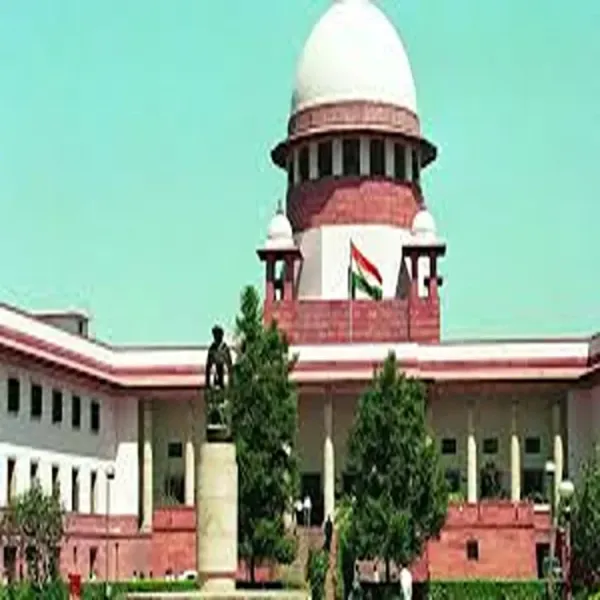
Court Clarifies Scope of Limitation Law
A Bench comprising Justices M.M. Sundresh and Satish Chandra Sharma held that Section 74 of the 2013 Act does not exclude the application of Section 5 of the Limitation Act, 1963. Section 5 empowers courts to condone delays in filing appeals if sufficient cause is shown.
With this clarification, the court allowed applications seeking condonation of delay in first appeals filed before various High Courts under Section 74. The ruling overturns earlier High Court decisions that had dismissed such appeals solely on the ground of delay.
The Bench further advised High Courts to adopt a practical and balanced approach while examining delay condonation applications in land acquisition matters, rather than adhering to a rigid technical interpretation.
Over 500 Appeals Receive Relief
The decision came in the case of Deputy Commissioner & Special Land Acquisition Officer vs. SV Global Mills, in which the apex court allowed 530 appeals. These matters had earlier been dismissed by High Courts that declined to condone delays in filing appeals against compensation awards granted by Reference Courts.
The Supreme Court noted that many of these cases reflected administrative lapses. In several instances, even applications for certified copies of Reference Court judgments were not submitted within the prescribed time. The court observed that such procedural failures pointed to poor coordination and, in certain cases, possible official negligence.
Concerns Over Administrative Lapses
While granting relief to the states, the court expressed concern about what it described as lackadaisical handling of litigation. It flagged the possibility of collusion or active connivance among officials, including representatives of the acquiring bodies and legal counsel.
The Bench emphasized that such issues must be addressed through improved management systems and closer monitoring of legal proceedings. It called upon state governments to put in place stronger oversight mechanisms to prevent delays in filing appeals in future land acquisition cases.
Projects Linked to Major Development Works
The appeals before the Supreme Court were connected to large-scale public infrastructure and irrigation projects. These included the Upper Krishna Basin Project, the Singatalur Lift Irrigation Project, state highway expansions, and other development initiatives that required acquisition of private land.
Compensation awarded by Reference Courts in these matters had been challenged by the state governments on the ground that the amounts were excessive. However, due to procedural delays, several appeals were dismissed by High Courts before the present ruling.
By allowing the delayed appeals to proceed, the Supreme Court has reopened the door for judicial review of those compensation awards.
Financial Implications for States
Officials in Karnataka indicated that the ruling carries substantial financial implications. According to government sources, large sums of public funds were involved in the compensation disputes. The successful challenge mounted by the Karnataka government, along with Karnataka Neeravari Nigama, is expected to protect public resources amounting to tens of thousands of crores of rupees.
The Supreme Court also directed state governments to issue appropriate instructions to officers handling land acquisition litigation. It stressed that appeals under Section 74 of the 2013 Act must be filed within the statutory framework and in a timely manner to avoid similar complications.
With this judgment, the apex court has clarified the legal position regarding limitation in land acquisition appeals and underscored the importance of administrative accountability. The decision is likely to influence how High Courts handle delayed appeals in compensation disputes across the country.
Contact to : xlf550402@gmail.com
Copyright © boyuanhulian 2020 - 2023. All Right Reserved.