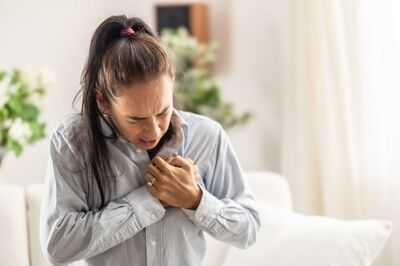
Brits are advised to dial 999 immediately if they notice two critical warning signs of a blood clot. These indicators may suggest the clot has reached the lungs, requiring urgent medical attention.
While some degree of blood clotting is essential to stem bleeding from injuries, clots which fail to naturally break down can become problematic by obstructing blood flow to various organs. "Blood clots can be very serious and need to be treated quickly," the NHS warns on its website.
Often a blood clot initially develops within a vein located in the leg or arm. This condition is referred to as deep vein thrombosis (DVT). Signs of DVT affecting the leg include:
- NHS vitamin D warning over damage to kidneys and heart
- Thousands of nurses to get pay rise after being 'undervalued' by NHS for years
- Throbbing pain in one leg (rarely both legs), usually in the calf or thigh, when walking or standing up
- Swelling in one leg (rarely both legs)
- Warm skin around the painful area
- Red or darkened skin around the painful area – this may be harder to see on brown or black skin
- Swollen veins that are hard or sore when you touch them
The NHS advises: "These symptoms can also happen in your arm or tummy if that's where the blood clot is." It is particularly dangerous if a blood clot migrates to a vital organ such as the brain or lungs.
Consequently, the NHS strongly recommends contacting 999 or visiting A&E if DVT symptoms, including pain and swelling, are accompanied by:
- Breathlessness
- Chest pain
This could indicate you're suffering from a pulmonary embolism. According to the NHS: "DVT can be very serious because blood clots can travel to your lungs.
"This is called a pulmonary embolism. A pulmonary embolism can be life-threatening and needs treatment straight away."
Should you exhibit these warning signs, it's crucial not to attempt driving yourself to A&E. The NHS website advises: "Ask someone to drive you or call 999 and ask for an ambulance."
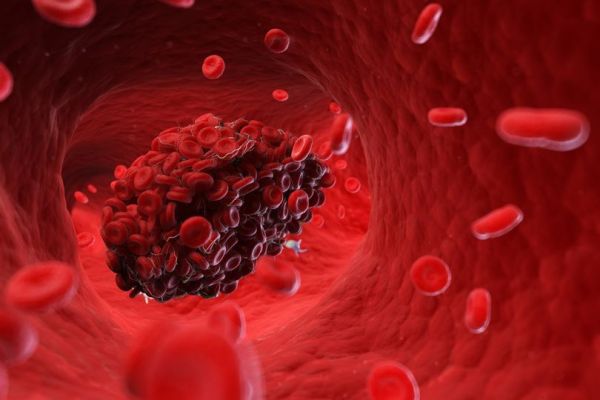
Several risk factors can increase the likelihood of developing a blood clot. You may be at heightened risk if you:
- Are aged over 60
- Carry excess weight
- Use tobacco products
- Have previously experienced DVT
- Use contraceptive pills or hormone replacement therapy
- Are living with cancer or heart failure
- Suffer from varicose veins
Certain circumstances can also elevate your chances of developing DVT. Your risk increases if you:
- Are currently hospitalised or have recently been discharged – particularly if your mobility is limited (such as following surgery)
- Are restricted to bed rest
- Undertake extended travel (exceeding three hours) via aeroplane, car or train
- Are expecting a child or have given birth within the past six weeks
- Are not adequately hydrated
Nevertheless, DVT can occasionally occur for "no obvious reason". Fortunately, there are preventative measures available to reduce your likelihood of experiencing a blood clot.
These include:
- Maintain a healthy body weight
- Keep physically active – regular walking is beneficial
- Ensure adequate fluid intake to prevent dehydration – DVT risk increases when dehydrated
- Avoid prolonged periods of sitting – stand and move about every hour or so
- Refrain from crossing your legs whilst seated
- Avoid smoking
- Limit alcohol consumption
Should you receive a blood clot diagnosis, you may be given anticoagulant medication such as warfarin. Surgical intervention might also be necessary to extract blood clots or prevent their development.
Contact to : xlf550402@gmail.com
Copyright © boyuanhulian 2020 - 2023. All Right Reserved.