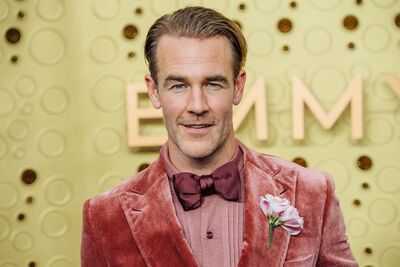
James Van Der Beek's death 'didn't need to happen', according to a prominent medical expert. Dr Will Bulsiewicz, a gastroenterologist who goes by the Gut Health MD online, has spoken out following the tragic loss.
The doctor, who boasts a substantial following on social media where he regularly shares insights on health matters, particularly relating to gut wellness, paid tribute to the late actor James Van Der Beek.
The beloved Dawson's Creek star passed away aged just 48 on February 11. Van Der Beek received a colorectal cancer diagnosis, commonly referred to as bowel cancer, on 31 August 2023. He chose to share his condition publicly in November 2024. He leaves behind his wife Kimberly Brook and their six children.
- Mum issues warning after waking up with rotting legs when she passed out drunk
- Jesy Nelson bursts into tears as SMA petition hits 100k in ONE DAY after backing Mirror campaign
Dr Bulsiewicz stated: "He was 48, and this didn't need to happen," Dr Bulsiewicz said. "James Van Der Beek died from colorectal cancer, and right now, colon cancer is rising in younger adults."
"But you need to know: this is often preventable. That's why we lowered the screening age from 50 to 45. If you're 45 or older, you don't wait for symptoms; you get screened. And if you have a family history, you start even earlier.
"But at any age, if you have bleeding, a change in bowel habits, unexplained anaemia, persistent abdominal pain, or unexplained weight loss – don't ignore it. Get checked. As a gastroenterologist, I've removed pre-cancerous polyps that would have become cancer.
"That's what a colonoscopy can do. It can prevent cancer or catch it early when it's most curable. So I'm asking you, please book the colonoscopy. The earlier the better. Do it for yourself, do it for your family, and help me share this message."
Understanding bowel cancerVan Der Beek revealed he first got himself checked after spotting a shift in his toilet habits. Initially putting it down to excessive caffeine intake, he eventually consulted doctors and received his diagnosis.
His screening uncovered stage three disease, indicating the cancer had already reached surrounding lymph nodes. According to the Cleveland Clinic, colorectal cancer begins as growths within the colon's inner wall and can advance without intervention.
Death rates have fallen thanks to improved screening and diagnostic methods, though the condition affects more blokes than women. After learning of his own condition, Van Der Beek has dedicated himself to promoting awareness around early detection. "I've learned a lot," he shared with Business Insider.
"If I can save anyone from having to go through this, that's magic."
 What guidance does the NHS offer?
 The NHS highlights that bowel cancer ranks among Britain's most prevalent cancers. It can emerge anywhere along the large bowel, encompassing both the colon and rectum.
Treatment varies depending on the tumour's size, precise location, whether it's metastasised, the cancer's genetic profile, alongside your age and overall wellbeing. Options encompass surgery, chemotherapy, radiotherapy, and targeted drug therapies.
Cancer Research UK reports that roughly 90 out of 100 people (approximately 90 per cent) diagnosed with stage 1 bowel cancer will survive for five years or longer following diagnosis. For stage 2 bowel cancer, about 85 out of 100 people (approximately 85 per cent) will survive their cancer for five years or more after diagnosis.
The figures also reveal that 65 out of 100 people (65 per cent) with stage 3 bowel cancer will survive for five years or more following diagnosis. However, only around 10 out of 100 people (approximately 10 per cent) with stage 4 bowel cancer will survive their cancer for five years or more after diagnosis.
A 2010 UK study examined patients with bowel cancer that had metastasised to the liver. Among those eligible for surgery, roughly 45 out of 100 people (approximately 45 per cent) survived for five years or longer post-operation. This figure encompasses individuals who may have died from unrelated causes.
Contact to : xlf550402@gmail.com
Copyright © boyuanhulian 2020 - 2023. All Right Reserved.