
Two warning signs of dementia may manifest during the night, experts have said. These indicators can become increasingly noticeable as the illness advances.
Dementia is classified as a syndrome – a collection of related symptoms – associated with the progressive deterioration of brain function. Predominantly affecting those aged over 65, the condition's hallmarks can encompass memory lapses, alongside shifts in behaviour and personality.
Certain less recognised signals may emerge after dark. The Alzheimer's Society has highlighted two particular symptoms on its website that occur "as dementia progresses". These are walking about at night and having difficulty sleeping at night.
- Doctor Amir Khan says we're all waking up at 3am for same reason
- Mum issues warning after waking up with rotting legs when she passed out drunk
The organisation noted that restlessness is "very common" among those living with dementia. It explained: "Sometimes the person may seem to be searching for someone or something.
"They may start walking repeatedly around at home or leaving the house during the day or night."
The guidance added: "The person you are caring for may walk a lot during the night if they have difficulty sleeping. This is common in older people and is particularly common in people with dementia.
"You can do simple things to try to help them sleep. For example, encourage them to develop a routine when going to bed at night.
It may help if they avoid daytime naps, caffeinated drinks, and alcohol. "
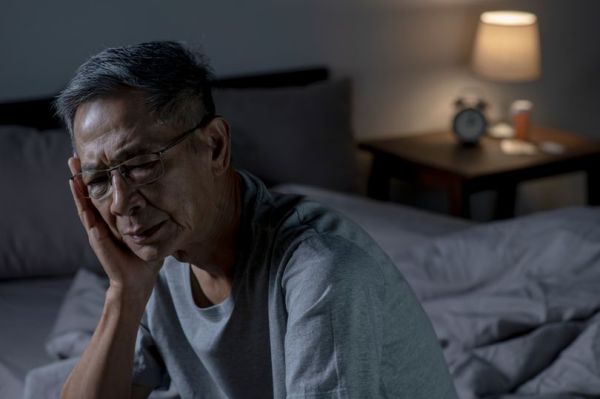 Sleeping difficulties
 Disruptions to a person's internal body clock can lead to sleep disturbances. The organisation explained: "As well as disruption to their body clock, a person with dementia may sleep more in the day and have difficulty sleeping at night.
"It added: "A person with dementia experiences physical changes in their brain because of their condition. These changes can affect how much, and how well they sleep.
"A person with dementia may have problems with sleeping at night, and may sleep more during the day. They may find it difficult to get to sleep or they may wake up in the night.
"The person you care for may not feel well-rested when they wake up. Over time, if these problems happen often, poor sleep may make the symptoms of dementia worse.
"You may find this difficult to cope with." To assist someone living with dementia who struggles with sleep, the charity suggested the following measures:
- Treat any underlying causes such as pain or medications
- Keep a routine
- Take them outside in the daytime to get natural light
- Engage them in fun physical activities in the day
- Avoid giving them caffeine
- Avoid cigarettes and alcohol
- Avoid them being too hungry, thirsty, or full
- Make the bedroom sleep-friendly
- Reduce their screen time
- During the late evening, try calming and relaxing activities such as a bath or listening to calm music
If someone you know is experiencing symptoms of dementia, you should speak to a GP.
Contact to : xlf550402@gmail.com
Copyright © boyuanhulian 2020 - 2023. All Right Reserved.