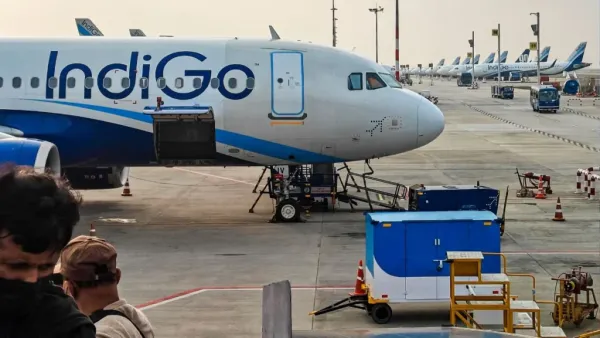
The parent firm of IndiGo, InterGlobe Aviation, the biggest airline in India by market share, said that it had been fined just over ₹1.27 crore. The penalty pertains to input tax credits (ITCs) for goods and services tax (GST) that were claimed between July 2017 and March 2018.
Even if the sum is insignificant for a business the size of IndiGo, the incident raises awareness of long-standing GST conflicts from the early days of the tax regime’s implementation.
Credits: The Free Press Journal
What Is the Dispute About?
The airline’s use of an input tax credit during the first phase of the GST regime, which went into effect in July 2017, is the root of the problem. Businesses can use the input tax credit to balance the GST they collect on sales against the GST they pay on purchases. ITC is essential to controlling operating expenses for big, asset-heavy companies like airlines.
The Office of the Joint Commissioner of State Tax (Appeals) IV, Bandra, Mumbai, has rejected some of the input tax credits that the business had claimed, according to the regulatory filing that was submitted to the BSE. Authorities have made a demand that includes interest and a penalty component in addition to the refusal, bringing the total financial implications to little over ₹1.27 crore.
The period under scrutiny—July 2017 to March 2018—covers the first nine months after GST replaced multiple indirect taxes in India. During this time, compliance processes, interpretations, and documentation standards were still evolving across industries.
IndiGo Calls the Order “Erroneous”
InterGlobe Aviation has made it clear that it does not agree with the tax authority’s findings. In its filing, the company stated that it believes the order is “erroneous” and that it has a “strong case on merits.”
Importantly, the airline noted that its position is backed by advice from external tax advisors. This signals that the company has undertaken a legal and financial assessment before deciding to challenge the order.
The airline also said it will contest the decision before the appropriate authority, indicating that the matter will move to a higher appellate forum. GST- disputes often follow a multi-tiered appeals process, and companies frequently pursue legal remedies when they believe tax credits have been wrongly disallowed.
Limited Financial Impact
IndiGo has stressed that the penalty will not significantly affect its financials, despite the headline sum. To put things in perspective, InterGlobe Aviation has the biggest fleet in India and makes tens of thousands of crores a year. In light of this, a demand of ₹1.27 crore is rather modest.
However, because it is a regulatory action affecting a listed firm, the notification is required by listing regulations. Investor trust depends on transparency in these areas, especially in an industry as carefully monitored and capital-intensive as aviation.
The company’s prompt disclosure and clarity about its intention to challenge the order may help reassure shareholders that the issue is contained and manageable.
A Reminder of GST’s Early Challenges
This case is also a reminder of the complexities that businesses faced during the early implementation of GST in India. The transition to a unified tax structure was one of the most significant fiscal reforms in recent history. However, its rollout came with interpretational challenges, technology glitches, and evolving compliance norms.
Tax credit claims are complex and require a lot of documentation because airlines, in particular, deal with a wide range of input services, from maintenance and leasing agreements to airport services and aviation turbine fuel logistics.
As tax officials review and reevaluate claims made during that transitional period, numerous businesses from various industries are still involved in litigation over problems pertaining to the early years of GST.
Credits: Deccan Chronicle
What Happens Next?
The matter will now likely move into the appellate process, where InterGlobe Aviation will present its case. If successful, the company could see the demand set aside or reduced. If not, it may choose to escalate the dispute further, depending on the merits and materiality.
For now, IndiGo continues to operate from a position of financial strength and market leadership. While the ₹1.27 crore penalty makes for a noteworthy disclosure, it appears unlikely to dent the airline’s broader growth trajectory.
In the high-stakes world of aviation, turbulence is inevitable—but for IndiGo, this one seems more procedural than operational.
Contact to : xlf550402@gmail.com
Copyright © boyuanhulian 2020 - 2023. All Right Reserved.