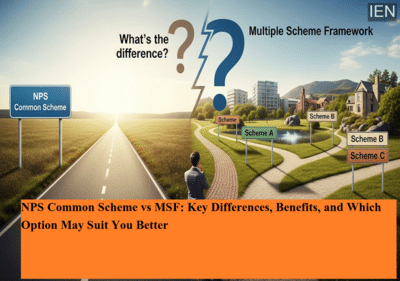
Interest in the National Pension System has surged in recent months as policy enhancements and structural updates have made the retirement platform more flexible and appealing for investors. If you’re planning to invest in NPS, understanding the difference between its two main structures—the traditional Common Scheme and the newer Multiple Scheme Framework (MSF)—is essential before making a decision.
Two Investment Structures Within NPSThe NPS currently offers two distinct frameworks:
Common Scheme (Traditional Structure)
Multiple Scheme Framework (MSF)
Both serve the same retirement goal but differ significantly in flexibility, customization, and investment choices.
How the Common Scheme WorksThe Common Scheme follows a standardized investment process designed to be simple and uniform for all subscribers. Under this structure, an investor can select only one scheme per tier and decide how funds are allocated among asset classes.
Investors can choose between two allocation styles:
Active ChoiceHere, you decide how much to invest in:
-
Equities (stocks)
-
Corporate bonds
-
Government securities
Allocation depends on your risk appetite. Younger investors may choose higher equity exposure for growth, while conservative investors may prefer safer assets.
Auto ChoiceIn this option, asset allocation is automatically determined based on pre-set life-cycle models such as Life Cycle 25, 50, or 75. These adjust investments according to age:
-
Younger investors → higher equity allocation
-
Older investors → more funds in safer instruments
This automatic rebalancing makes it suitable for those who want a hands-off approach.
Advantages of the Common SchemeThe Common Scheme’s structured design offers stability and simplicity. Because it has limited customization, it’s often considered ideal for long-term retirement planners who prefer minimal changes in their portfolio strategy.
There is also a cap on equity exposure—generally up to 75%, which gradually reduces as the subscriber ages. This mechanism helps lower risk as retirement approaches.
Investors who want conservative options can even allocate their entire corpus to government securities for maximum safety.
What Is the Multiple Scheme Framework (MSF)?The MSF is a newer and more flexible structure introduced to expand choice for subscribers. Unlike the single-scheme approach, MSF allows pension fund managers to offer multiple investment schemes tailored to different investor profiles.
For example, schemes can be designed specifically for:
-
Women investors
-
Gig workers
-
Self-employed individuals
-
Long-term aggressive investors
This means investment strategies can be customized based on lifestyle, profession, and financial goals—something not possible in the traditional structure.
Wider Choice Under One AccountOne of MSF’s biggest advantages is that it allows multiple schemes under a single PRAN (Permanent Retirement Account Number). Currently, around 16 schemes are available within this framework, giving investors a wide range of options without needing multiple accounts.
Various pension fund managers offer different strategies. Some focus on long-term equity growth, while others emphasize balanced or conservative approaches. This variety helps investors diversify their retirement portfolio more efficiently.
Key Differences at a Glance| Flexibility | Limited | High |
| Number of schemes | One per tier | Multiple options |
| Customization | Minimal | Personalized |
| Investor control | Moderate | Extensive |
| Suitable for | Simple, long-term investors | Active, goal-based investors |
The right choice depends on your financial goals, risk tolerance, and level of involvement:
-
Choose Common Scheme if:
You want a straightforward retirement plan, minimal monitoring, and predictable asset allocation. -
Choose MSF if:
You prefer flexibility, want tailored strategies, or plan to actively manage your retirement investments.
Both NPS structures are designed to help you build a retirement corpus, but they cater to different types of investors. The Common Scheme offers simplicity and stability, while the MSF provides customization and broader investment choices. Before deciding, assess your risk appetite, investment knowledge, and retirement goals. Selecting the right structure today can significantly influence the financial comfort you enjoy after retirement.
Contact to : xlf550402@gmail.com
Copyright © boyuanhulian 2020 - 2023. All Right Reserved.