"As an Occupational Therapist I assess people's wheelchair requirements in the context of the activities they will be performing, the environments they will be accessing and their functional abilities and challenges," says Natasha Bruce-Jones, OT for CareCo. "This means posture and tone, skin integrity, continence, transfers, ergonomics and anthropometrics, strength, coordination, sight, and cognition, to name but a few, are all considerations I will draw on to identify a potential wheelchair for a user."
"Importantly within all these variables I always give value to the person’s identity – independence isn’t just about the physical self but the emotional and psychological self too, and it is for this reason I am so happy to see the variety of wheelchairs readily available on the open market expanding all the time.
• I ride a mobility scooter - this one hack will make choosing yours a breeze
"There is a plethora of information to be considered when choosing a chair and as such I would strongly suggest at the very least a chat with a wheelchair specialist before making a private arrangement for a chair. Although they may all look very similar, the risks of choosing the wrong chair are not just financial - you could exacerbate health issues, or even put yourself or your carer at risk of injury." So where do you start?
The basics...Propulsion: Some wheelchairs need to be pushed by an attendant, some by the user, some are powered by batteries, some by your body weight and some are a combination of all of the above. So think about the purpose of your chair – are you using it for short transits, always accompanied by somebody or are you wanting more independence and unaided mobility?
Environment: Then think about where you will use it – indoors, outdoors or both? One of the benefits of wheelchairs over scooters is their customisable ability, not only can you find chairs to suit your body dimensions but you can often change the wheels and tyres, cushions and footrests dependent on what activity you are engaging in. Having a smaller footprint than a scooter, wheelchairs are useful in tight spaces which makes them ideal for home environments.
Using a self-propelled chair"So, you’ve seen people move chairs with the push rims, but it is also helpful for some people to use their feet to move the chair," says Natasha. "Every person’s reason for using a chair is different but for some removing the footplates and pulling themselves along with their feet works perfectly.
"This is also a particularly useful technique if you have narrow doorways that you would otherwise catch your knuckles on, or tight turning circles in smaller rooms. In these cases, try a chair with individual footplates that can be removed or folded out of the way rather than a single tray footplate as this may limit the knee flexion available when folded and you could end up catching your heels on it!
"If you have the upper body strength to push yourself, it’s important to check you have the range of motion needed too. The rear wheels can be set in different positions, making the shoulder movements you need differ from chair to chair. The further back the wheels are set the greater the stability of the chair, but the greater shoulder extension you will need for each push.
"For an efficient propelling technique, think about reaching behind you to grab the push rims (not the tyres, they will be dirty!) rather than reaching straight down to the peak of the wheel, or look for a chair like the Ventor Sport that has the wheels further forward to reduce the reach needed.
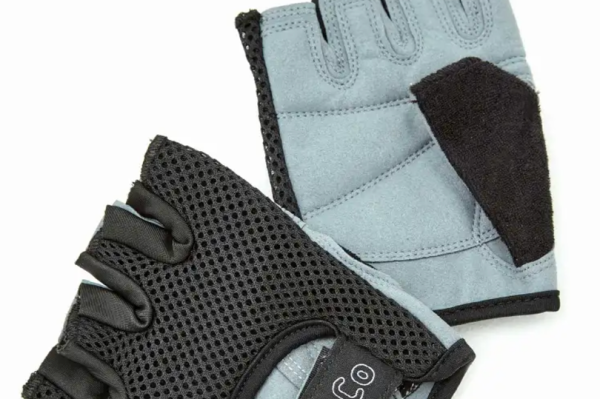
"If you are commuting or mobilising long distances in your chair, consider gloves to protect your skin like the CareCo Gel Padded Fingerless Wheelchair Gloves, £12.99.
"Also consider a wheelchair workshop to help teach you the safest and most practical ways to control your chair. There are plenty of techniques that can move you from beginner to expert when it comes to propelling your chair: negotiating hills backwards, turning on the spot and curb jumping are a few techniques you may want to learn if you are venturing out of your home regularly.
"If you are new to propelling yourself it may be sensible to start with a self-propelled chair with attendant handles like the CareCo Ergo Pro Self Propelled Crash Tested Wheelchair until you have the stamina to complete all you mobility unaided.
"Being safe to use in a vehicle whilst still occupied, this chair is one of few that allow you travel in your own chair which is great if you find transferring difficult but still access a car."
Using a transit car"If you have someone to help you move the chair, make sure they know how to move you on ramps and curbs. These can be daunting times for a passenger," says Natasha.
"Make sure you go down surface level changes in reverse to reduce the risk of you falling from the chair. As an attendant, make sure you use the tipper foot by the rear wheels to help manage any curbs. You can see them on the I-GO Airrex LT Transit Wheelchair - a great lightweight chair that has the versatility of different widths and a padded seat base.
"Ensure attendants know where the brakes are and that they are on before transferring in and out. Just as importantly, make sure you have the footplates in use. You will need to have your feet well supported to reduce pressure on your sacrum, as well as helping you keep a good posture and avoid associated back pain.
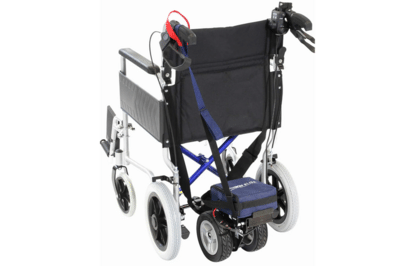
"A fantastic addition to a transit chair can also be a battery pack. Yes, transit chairs can also be powered by something like the I-Go PowerGlide Powerstroll. Think how challenging a hill can be, or the extra weight of carrying shopping - with the flick of a switch powered assistance can delivered to aid your attendant and keep you both moving for longer!"
"From hands free wheelchairs using segway principles to collapsible motorised chairs that can fold down to the size of a suitcase, such as the iCONNECT Zora Carbon Powerchair, powered chairs are more useful to more people than ever before," says Natasha.
"With mainstream models using a joystick control the simplicity of mobility powered chairs offer can be liberating. With very little hand function you can regain independence mobility with minimal physical effort but do make sure you are aware of the safety of yourself and others, as you are then in control of a powered vehicle. When did you last have your vision checked? It’s an important but often overlooked consideration when taking control of a powered chair."
Some first-time user tips are: One size doesn't fit all
 "If you’re recovering from surgery, have limited knee flexion or lower leg oedema, a standard wheelchair might fit your body but you may also need adaptations to comply with medical guidelines or just to find a comfortable position," says Natasha.
"Adding leg raisers can be a simple fix. Look at the Ergo Pro SP/Transit - Elevating Leg Rest for ideas on how they work. If you have an amputation, you may need a stump board, if you use a walking stick you may need a holder.
"Sometimes these additions can alter the stability and centre of gravity of your chair so an extended wheelbase chair may be worth trying. Oh, and cushions; never underestimate the importance of a suitable cushion! Be ready for a whole new blog just to cover the world of cushions!"
The price tag"Whilst the NHS can sometimes provide you with a wheelchair, if you have a specific product preference or specification you favour, you may want to ask them about the voucher scheme instead," says Natasha.
"This could be a cash equivalent you put towards a chair of your choice, giving you access to a wider selection of products. If your needs are acute and short term there may even be options to hire a wheelchair, but specialist accessories are not always provided from hire centres, so having these add-ons available for purchase can be very useful."
*All products are available to shop at CareCo.co.uk
• 'I broke my ankle playing football - then doctors said they'd have to chop off my leg'
Contact to : xlf550402@gmail.com
Copyright © boyuanhulian 2020 - 2023. All Right Reserved.