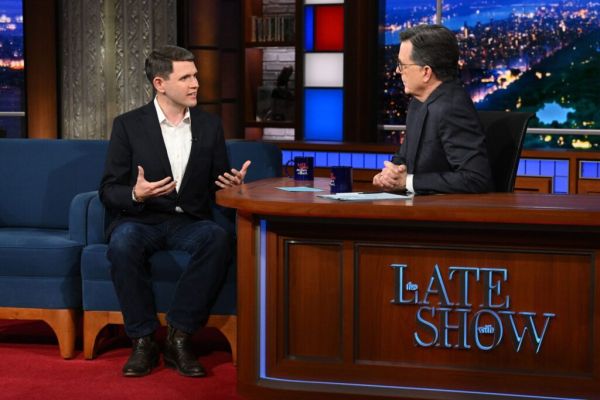
An interview between late-night host Stephen Colbert and Texas Democratic Senate candidate James Talarico has attracted millions of online viewers after it was withheld from a scheduled television broadcast, turning a regulatory dispute into a viral media moment.
The segment, recorded for The Late Show with Stephen Colbertwas originally expected to air during a recent episode. Instead, concerns about federal broadcast regulations and political fairness rules led network executives to keep the interview off the televised program. The decision prompted Colbert and his production team to release the full conversation online, where it quickly spread across multiple social media platforms.
The unexpected shift from television to digital distribution significantly expanded the interview’s reach, surpassing the show’s typical broadcast audience and drawing widespread attention to the regulatory issues behind the decision.
Network Lawyers Cite Regulatory Risks
According to Colbert, the decision to withhold the interview from television stemmed from legal concerns raised by attorneys at CBS. The lawyers reportedly warned that airing the segment could create complications under rules enforced by the Federal Communications Commissionwhich oversees broadcast standards in the United States.
At the center of the issue is an FCC requirement that obligates certain broadcasters to provide balanced opportunities for political candidates when they appear on programs using public airwaves. The rule has prompted fresh scrutiny of how entertainment and talk shows handle interviews with declared political figures, particularly during an election cycle.
The FCC is currently chaired by Brendan Carrwho was appointed during the administration of Donald Trump. The regulatory environment has made networks more cautious about airing segments that could be interpreted as giving preferential exposure to a single candidate without offering comparable opportunities to others.
Faced with that uncertainty, CBS opted not to broadcast the interview on its network feed. Instead, the program’s team pursued a digital release strategy that falls outside traditional broadcast restrictions.
Online Release Quickly Goes Viral
Once published on YouTube and shared through other social media channels, the interview gained traction within hours. The full video attracted millions of views, while shorter clips circulated widely on platforms such as TikTok, Instagram, and Facebook. The rapid spread of the content demonstrated the growing influence of online distribution compared with conventional late-night television.
Talarico also shared the interview through his social media accounts, further boosting visibility and encouraging discussion among political supporters and media watchers. The digital response far exceeded the program’s average nightly television audience, which typically numbers in the low millions.
Media analysts say the episode illustrates how online platforms can amplify political content beyond the limits of scheduled broadcast programming. By moving the segment to the internet, the show effectively tapped into a global audience unrestricted by time slots or geographic boundaries.
Colbert Highlights the Issue During Broadcast
Although the interview itself did not air on television, Colbert addressed the situation during his monologue. He informed viewers that the conversation was available online and discussed the broader implications of the regulatory framework influencing the network’s decision.
The host pointed to public remarks from FCC leadership about how talk shows can navigate equal-time requirements. He noted that distributing the segment digitally aligned with guidance suggesting that creators who wish to avoid certain broadcast obligations can use alternative platforms such as streaming services or online video channels.
By directing viewers to the online version, Colbert underscored the increasingly blurred line between traditional broadcasting and digital media. His comments brought additional attention to the interview and the policies shaping how political content appears on entertainment programs.
Broader Debate Over Media and Political Speech
The incident has intensified discussion about the balance between fair political representation and creative freedom in entertainment media. Supporters of equal-time regulations argue that they help maintain fairness when political candidates appear on widely watched programs. Critics counter that applying such standards to late-night talk shows could discourage open political conversation or complicate routine guest bookings.
Experts in media law note that the rapid online migration of the interview demonstrates how digital platforms can sidestep some of the constraints associated with over-the-air broadcasting. Streaming services and social media are not subject to the same rules as traditional networks, giving producers greater flexibility in how they present political material.
The episode also highlights the shifting landscape of audience engagement. Increasingly, viewers consume political and cultural content through clips and full segments shared online rather than through scheduled television broadcasts. This trend allows moments like the Colbert-Talarico interview to reach audiences far beyond the scope of a single night’s programming.
Contact to : xlf550402@gmail.com
Copyright © boyuanhulian 2020 - 2023. All Right Reserved.