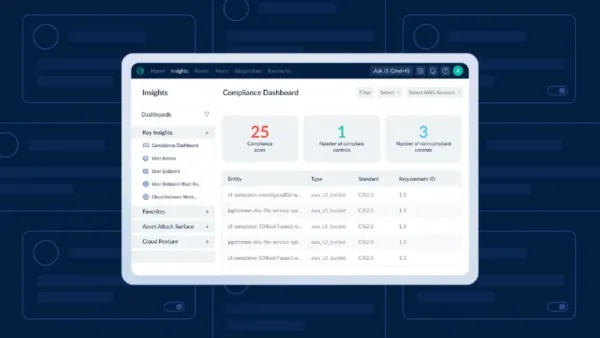
Point-in-time internal controls testing is like an annual physical—it shows controls worked on audit day, but tells you nothing about the weeks before or after. Continuous control monitoring catches failures when they happen. That timing difference determines whether security leaders prevent incidents or explain them.
Internal controls testing has traditionally functioned like an annual physical for security programs. Teams schedule periodic assessments, run tests, collect evidence, and document that controls worked on audit day. This approach made sense when infrastructure was relatively static.
Modern environments challenge that model. Systems change constantly. Controls drift between assessments. The timing gap between control failures and the testing that discovers them creates risk.
Point-in-time validation tells you controls worked during the audit window, not whether they’re working right now. Executives ask about current security posture—you provide historical data. Incidents reveal control failures weeks or months after they occurred.
Continuous control monitoring shifts from periodic checkups to constant vital signs tracking. Instead of testing on schedule, you monitor controls continuously, catching failures as they happen rather than during the next assessment cycle. The difference: knowing your controls work today, not assuming they still work based on last quarter’s test.
Internal controls testing runs on predetermined schedules—quarterly reviews, annual audits, compliance assessment cycles. Control failures don’t follow that schedule. They happen when infrastructure changes, permissions drift, configurations get modified during incidents, or emergency access bypasses normal protocols.
A control can fail the day after validation and remain undetected for months until the next test cycle. During that gap, security leaders operate without knowing their actual security posture. They face executive questions about current controls with only historical data. They discover compliance violations during audits, not when they occur.
Consider common scenarios: MFA requirements bypassed to restore service during an outage. Encryption disabled during a database migration and never re-enabled. Privileged access granted for “temporary” troubleshooting, then forgotten. These failures sit undetected between scheduled testing windows.
By the time internal controls testing discovers them, consequences have already accumulated. Data may have been exposed. Compliance frameworks violated. Incident response teams scrambling to understand when the control actually failed and what the blast radius might be.
The fundamental mismatch: validation cadence can’t keep pace with change velocity. Infrastructure evolves daily. Applications deploy multiple times per day. Permissions adjust constantly to unblock work. But testing happens quarterly?
It’s like only checking vital signs during annual doctor visits. Everything that happens between appointments—the heart rate spikes, the blood pressure changes, the early warning signs—goes unnoticed until the next scheduled checkup.
The gap between testing cycles is where security risk accumulates. Controls that passed the last assessment slowly drift out of compliance. Permissions expand beyond their intended scope. Configurations change during troubleshooting and never get reverted. Encryption settings adjust during migrations and don’t match policy.
Security leaders lack visibility into current control effectiveness. They know controls passed testing last quarter. They know what the documentation says should be true. But they don’t know what’s actually happening in production right now. Traditional internal controls testing can’t provide that visibility between scheduled cycles.
When incidents occur, investigations start with fundamental uncertainty. Did this control fail today, or has it been broken for weeks? What other systems might be affected? Teams spend time reconstructing history instead of containing threats.
Audit preparation reveals the accumulated drift. Controls that were compliant months ago no longer meet requirements. Teams scramble to remediate before assessments conclude. The work becomes reactive and rushed—fixing problems under deadline pressure rather than addressing them when they first emerge.
Board meetings and executive briefings rely on outdated validation data. When leadership asks about current security posture, the answer references last quarter’s testing results. Confidence requires current evidence, not historical assumptions.
The longer the gap between tests, the more expensive remediation becomes. Small configuration changes are easy to fix when caught early. Months of accumulated drift across hundreds of systems becomes a project.
Like a patient developing symptoms between annual checkups—by the time they see the doctor, the condition has already progressed. Early detection would have meant simpler treatment.
Continuous control monitoring functions like vital signs monitoring in an ICU—constant tracking rather than scheduled checkups. Instead of testing controls quarterly, you validate them continuously against your live infrastructure.
The monitoring encodes control requirements as executable queries that run automatically, checking actual configurations against security policies. MFA enforcement across all privileged accounts? Encryption enabled on production databases? Least-privilege access maintained across cloud resources? These tests validate what’s actually deployed, not what documentation claims should be deployed.
Control drift triggers immediate detection. An encryption setting changes during a migration—you know within minutes. Service accounts gain excessive permissions, and alerting fires before the next audit cycle. The failures surface as they occur, not months later during compliance reviews.
Security leaders gain real-time awareness from continuous control monitoring. They see which controls are working, which have drifted from policy, and which assets are affected. The evidence reflects current state rather than historical assumptions from last quarter’s assessment.
Executive conversations change fundamentally. Leadership asks about security posture—you provide current data instead of referencing outdated testing. Incidents reveal which controls were functioning and which had failed. When auditors request evidence for specific dates, you can pull timestamped validation from exactly when they need it.
Like ICU monitoring that tracks heart rate, blood pressure, and oxygen levels continuously—catching dangerous changes before they become critical. The constant stream of data enables intervention when problems are still small and manageable.
Traditional internal controls testing operates reactively. It diagnoses what failed after the fact. Teams discover control failures during scheduled assessments, document them, and begin remediation. By that point, the control may have been broken for weeks or months.
Continuous control monitoring fundamentally changes the timeline. Instead of diagnosing failures after they’ve persisted, you detect them as they occur. An encryption setting changes—you know immediately. Permissions expand beyond policy—alerting fires that day. Access controls drift during routine maintenance—detection happens in real time, not during next quarter’s audit.
This timing advantage enables prevention instead of diagnosis. Security leaders can remediate before control failures create incidents or compliance violations. A misconfigured database gets corrected when it’s still a configuration issue, not after it becomes a breach. Privileged access gets revoked when context is fresh and the change is simple to implement.
Small problems stay small. You’re not fixing months of accumulated drift under audit deadline pressure. You’re not explaining to executives why a control failed weeks ago. You’re not reconstructing timelines during incident response to understand when failures actually occurred.
The shift is fundamental: from explaining what went wrong to preventing problems before they escalate. Security leaders move from reactive diagnosis to proactive management. Like monitoring vital signs continuously rather than waiting for symptoms to appear—you catch changes early when intervention is straightforward.
Internal controls testing has traditionally operated on schedules—quarterly reviews, annual audits, periodic assessments. That cadence made sense when infrastructure was stable and changes were infrequent, but modern security programs operate differently.
Infrastructure changes constantly. Applications deploy multiple times daily, permissions adjust to enable work, and controls drift between scheduled testing windows. The validation cadence can’t keep pace with change velocity.
Internal controls testing wasn’t designed for that pace, but continuous control monitoring closes the timing gap. Instead of testing on schedule, you validate controls constantly against live infrastructure. Detection happens when failures occur, not months later during audits. Security leaders gain real-time evidence for executives and boards rather than relying on historical data.
The timing difference determines outcomes. Point-in-time testing diagnoses what failed, but continuous control monitoring prevents failures from becoming incidents in the first place. When security leaders shift from reactive diagnosis to proactive management, everyone benefits.
The difference between annual physicals and vital signs monitoring is timing. The difference between point-in-time testing and continuous monitoring is prevention. Security leaders who test continuously don’t just prove controls worked—they ensure controls keep working.
Contact to : xlf550402@gmail.com
Copyright © boyuanhulian 2020 - 2023. All Right Reserved.