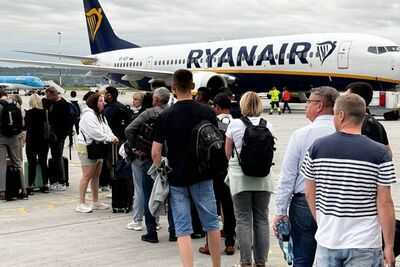
Ryanair'sdual citizen passengers may be allowed to board flights to the UK without exactly the right documents so long as they have valid proof of their citizenship, amid confusion over new rules.
The carrier has indicated that it might permit British dual nationals to board UK-bound flights without certain documents from next week, when new, somewhat confusing regulations take effect.
From next Wednesday, dual nationals have been instructed that they must show a British passport when travelling to the UK, or secure a "certificate of entitlement" costing £589. Currently, they can enter using non-British passports.
The new regulation applies to all dual British nationals regardless of where they reside. The Home Office has instructed airlines to refuse boarding to any dual national who does not possess a British passport, including children.
However, concerns have been raised about the confusing nature of the new regulation and worries that British citizens would be left stranded outside the country. Ryanair was asked if dual nationals would be permitted to board if they presented a foreign passport without an electronic travel authorisation (ETA) - the new visa-waiver scheme - and also had evidence of British citizenship.

Are you worried about being impacted by the new rules? Email webtravel@reachplc.com
In response, a spokesperson for the company told The Times: "Yes, we will allow a passenger to board a flight to the UK if we are satisfied that the passenger is a British national, an Irish national or is in possession of any other status in the UK, including passengers who hold an old stamp/vignette with indefinite leave to remain."
The spokesperson said it may be able to accept passengers who present with the wrong document, but that the decision would have to be taken by the government first. In a statement, the airline said: "If a dual national claims to be British but cannot present a British passport, Ryanair will need to contact the UK government's carrier support hub to verify their identity and confirm eligibility to travel - they will decide."
From February 25, visitors to the UK will require an Electronic Travel Authorisation (ETA). Those lacking an ETA will be unable to board their flight, ferry or train. British and Irish citizens, including dual nationals, are exempt from this requirement, though they must satisfy other criteria.
To travel to the UK, dual nationals will now require a valid British passport. Alternatively, they can pay £589 for a certificate of entitlement to attach to their second nationality passport. Dual nationals have previously been permitted to enter the UK using their non-British passport at no charge.
Dual nationals attempting to enter the UK using only a foreign passport could encounter difficulties. British citizens possess a statutory right of abode in the UK, but travellers may face additional checks whilst their status is confirmed.
They could also be prevented from boarding if they cannot demonstrate their right of entry. The Government unveiled the regulations last year, but some dual nationals have claimed the alterations were implemented abruptly and communicated inadequately.
Concerns are mounting that holidays or business trips could be disrupted if individuals fail to obtain a passport or certificate of entitlement promptly. Affected individuals have expressed feeling like "second-class citizens", arguing they will be disadvantaged compared to foreign nationals, who can enter the UK using their foreign passport and a £16 ETA.
Luke Petherbridge, Abta's director of public affairs, has called on the government to implement a grace period, during which carriers should be permitted to allow passengers to board with alternative proof of citizenship, as Ryanair has indicated it will do.
A Home Office spokesperson said: "We recognise that this is a significant change for carriers and travellers, but we have been clear on requirements for dual British citizens to travel with a valid British passport or certificate of entitlement, in line with those for all British citizens.
"At their own discretion, carriers can accept an expired British passport as alternative documentation. Separately, individuals who have previously had a British passport can apply for an emergency travel document if they urgently need to enter the UK. In line with current practice, on arrival at the UK border, Border Force will still assess a person's suitability to enter the UK and conduct additional checks if required."
The Home Office has verified that the new regulations apply to children and infants, even if they are accompanied by a parent holding a British passport. However, Border Force officers will have "discretion" over whether to grant them entry.
The government body strongly recommends that those passengers who need to obtain a British passport or Certificate of Entitlement to ensure the smoothest travel experience.
Contact to : xlf550402@gmail.com
Copyright © boyuanhulian 2020 - 2023. All Right Reserved.