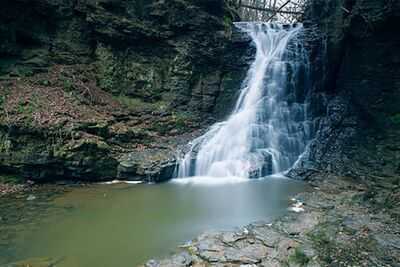
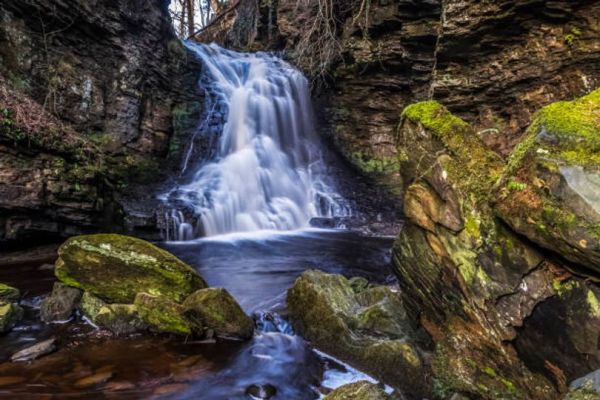
Amagical 40-minute walkwill guide you across six bridges before culminating at a stunning waterfall ideal for a refreshing plunge. This three-mile journey takes you along delightful ancient woodland paths to Hareshaw Linn waterfall, amongst Northumberland National Park's mostbreathtaking natural attractions.
Even before reaching the waterfall, you'll hear the rushing water, before the trees open up to unveil the dazzling cascade of white. This moderately challenging walk suits families, though it features brief ascents, steps and some rough terrain.
Ramblers suggest wearing robust footwear, particularly during wet conditions when the route can become treacherous, according to Northumberland National Park.
The WaterfallAdrian shared on TripAdvisor: "Wow! Amazing place – much better than I imagined. Lovely views of the woodland and river, then you're met by a lovely waterfall. Well worth a visit."
The stone pool beneath the waterfall provides an excellent wild swimming location during warm summer months before heading back, or year-round for the more adventurous amongst us.
Marta J commented: "Loved the place. Nice walk, great reward at the end. Not too strenuous. We also did wild swimming at the bottom of the waterfall."
Being a designated Site of Special Scientific Interest (SSSI), there's an abundance of wildlife to admire along the route. Within this compact zone, there's an impressive 300 species of mosses, liverworts and lichens. You might also spot squirrels and even bats if you time your visit right.
 The Route's History
 The trail begins at Northumberland National Park car park at Hareshaw Linn, in Bellingham. This region boasts a rich ironworking heritage.
Hareshaw Ironworks opened in 1939 and was employed to produce coal-sourced pig iron, limestone and iron ore. Then there's the charming stone terrace of Foundry Farm – previously home to the foundry managers responsible for supervising production at the metal casting works.
Ascending the footpath, you'll encounter mounds formed from remnants of the 70 ironworks ovens that provided raw materials to the furnaces.
Passing through the gate, you'll notice a dam on your left shortly before reaching a picturesque spot ideal for a picnic.
Further along are more spoil heaps from furnaces – these were utilised to create stone for local miners' cottages. Here you can also observe sealed mining entrances.
Next, you'll enter the ancient woodland rising towards the Linn, featuring oak, hazel, elm and ash trees. At the waterfall's summit sits the bridge to Cupid's Bower seat with views over the stream.
At the second bridge, two disused mine shafts lie to your left, whilst at the third and fourth bridges, towering Douglas firs planted during Victorian times loom above the pathway.
The Victorian era also made its impression on the fourth and fifth bridges, where a bandstand was constructed for picnics, musical performances and tale-telling.
Ensure our latest headlines always appear at the top of your Google Search by making us a Preferred Source. Click here to activate or add us as your Preferred Source in your Google search settings.
Contact to : xlf550402@gmail.com
Copyright © boyuanhulian 2020 - 2023. All Right Reserved.