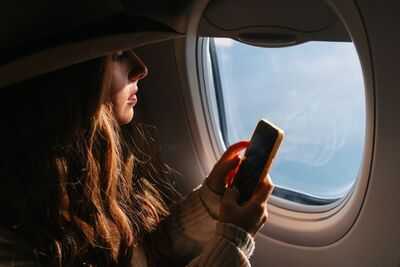
Aeroplane passengers have been treated to a once-in-a-lifetime spectacle after their pilot made an announcement to their cabin telling them to look out of the windows mid-flight. The moment was captured by traveller, Aurelie, who recorded footage at the time and later shared it to TikTok.
"Look out your window if you’re seated on the left side of the plane," Aurelie penned in a caption, relaying what those on board had been instructed to do. Indeed, those passengers could then be seen gathering by windows on the left of the aircraft, gazing out into the night sky.
Aurelie then panned her camera over to a window to reveal a stunning Northern Lights display, with the sky illuminated in shades of neon green.
- Dunelm shoppers 'hardly take off' warm and 'cosy' fleece that's now half price
- Martin Lewis shares surprising £1.50 home hack to save on heating bills
The travel influencer's followers were left captivated by the aurora borealis too.
"I actually got goosebumps," one TikTok user admitted. "That is my dream to see that one day."
A second person commented: "I would start crying. I have always wanted to see them in real life."
A third added: "Exactly why I paid to select my seat on my upcoming Iceland flight!"
While a fourth TikTok user declared: "Wow that’s gorgeous. It is on my bucket list to see, glad you were able to experience it."
The Northern Lights, scientifically known as the aurora borealis, is a natural light display in the sky caused by the collision of solar wind and magnetically charged particles with the atmosphere.
They are most commonly be seen in Scandinavia, especially Norway, but can be visible in the UK when there are violent solar explosions.
This year is expected to be the best year in a decade for seeing the phenomenon, with February believed to be an ideal time.
2026 also brings with it a once-in-a-decade phenomenon; the solar maximum. This rare event occurs when the Sun has heightened magnetic activity, and scientists are expecting it to peak until March 2026, before fading again until the mid 2030s.
The good news is that you don't need to head into the deep depths of the Arctic if you want to try and spot the lights. There are plenty of European destinations including Iceland, Norway, Sweden, and Finland where you can watch the aurora because of their proximity to the Arctic Circle.
Ensure our latest headlines always appear at the top of your Google Search by making us a Preferred Source. Click here to activate or add us as your Preferred Source in your Google search settings.
Contact to : xlf550402@gmail.com
Copyright © boyuanhulian 2020 - 2023. All Right Reserved.