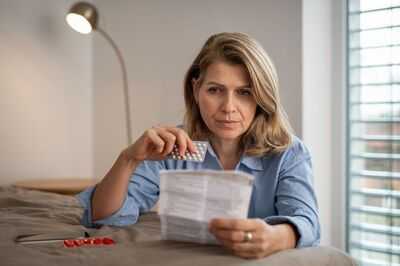
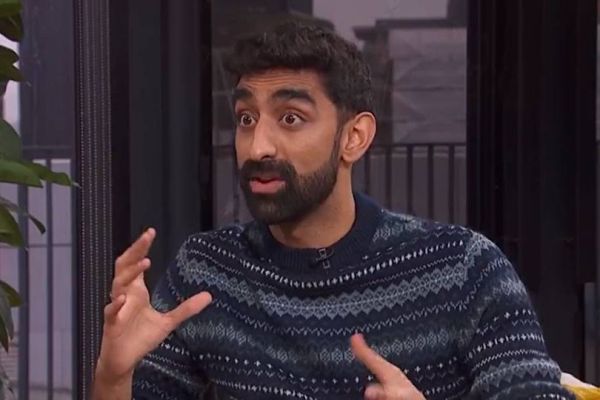
An NHS doctor has issued a warning for individuals taking several commonly used medications, including levothyroxine. Dr Kasim Ahmed, a specialist in geriatric medicine and general internal medicine, appeared on BBC's Morning Live programme to address the health risks.
Medicines he highlighted included ibuprofen, aspirin, naproxen, and levothyroxine. His caution centred on whether individuals should take them with or without food.
Dr Kas, as he is known, clarified that it varied depending on the medication. He said certain drugs risked serious stomach complications if taken without food, whilst others needed to be consumed when nothing else had been eaten to ensure faster absorption and a more immediate effect.
Empty-stomach medicationsDiscussing medicines that need to be taken without food, Dr Kas sai: "So these are really important, because the number of people I see on huge, whacking doses of some of these medications because they're taking them with food so they're not being absorbed properly is really apparent.
"So, levothyroxine I think's the big one. So, thyroid medication, if you've got an autoimmune thyroid condition, you have levothyroxine as a thyroid replacement, and that needs to be taken on an empty stomach. So, and the reason for that is it's absorbed really quickly in the stomach, but can get mixed up in food quite quickly and then pass through the stomach and not be absorbed.
"When mentioning Ramadan, mentioning Lent, which actually coincidentally started on the same day this year - which was fantastic - if you are giving up snacking for Lent, maybe give up snacking not as a whole but on the wrong things.
"The right things, whether that's grazing on nuts, salads, things that you can graze on which are healthier as opposed to things like crisps, chocolates, etc, makes a big difference, I think.
"Going back to the Ramadan thing, if we're talking about fasting, having a think about when you're taking your medications for that is really important. So if it's an empty-stomach medication, taking it first thing with the pre-dawn meal, or on a full stomach if you can take something either after the pre-dawn meal or after you've broken your fast in the evening. But the big thing here is really having a chat to your medical professional."
Levothyroxine is a medication prescribed to treat an underactive thyroid gland (hypothyroidism). The thyroid gland produces thyroid hormones which regulate energy levels and growth. Levothyroxine is administered to replace the absent thyroid hormone thyroxine.
• 'I was fat-shamed for weighing 22st - now I'm in the shape of my life and trolls still come at me'
• Brit paralysed from chest down after horrific skiing crash in France
Full-stomach medicationsWhen asked about which medications should not be taken without food, he said: "So these are big ones that you do need to make sure you've had something to eat beforehand. The biggest ones are things like non-steroidal anti-inflammatory drugs (NSAIDs), so those are things like ibuprofen and naproxen.
"Those are notorious for causing issues with gastric acid, potentially causing stomach ulcers, which can be really, really dangerous. On top of that, things like steroids which, again, increase acid production in the stomach.
"Aspirin works in a similar way to some of the NSAIDs, so the ibuprofen, naproxen, so that should be on a full stomach as well. So all of those things, really we want to be having something to eat with at the same time.
"And the other thing is making sure your diabetic medication, for two reasons. Some of them drop your blood sugars, so actually you want to have some blood sugar - something there so you're absorbing some sugar.
"But some of them, like metformin, which is probably the most common medication for diabetes, can cause gastrointestinal side effects. So it can cause nausea, diarrhoea, and vomiting if it's taken on an empty stomach. So you want to make sure you've had something to eat at the same time."
THE NHS states that ibuprofen is a 'painkiller that helps relieve pain and reduce swelling (inflammation)'. Most varieties can be purchased from shops and pharmacies, though certain types require a prescription only. It can also help lower a high temperature, but does carry more side effects than paracetamol.
It also recognises that a major cause of stomach ulcers is individuals taking NSAIDs such as ibuprofen. Low-dose aspirin is a painkiller which also helps prevent heart attacks and strokes in those who face a high risk of them. Aspirin is also known as acetylsalicylic acid.
Your GP may recommend that you take a daily low dose if you've experienced a stroke or heart attack to help prevent you suffering another one. Naproxen is another NSAID which reduces swelling (inflammation) and pain in joints and muscles. It is used to treat:.
Contact to : xlf550402@gmail.com
Copyright © boyuanhulian 2020 - 2023. All Right Reserved.