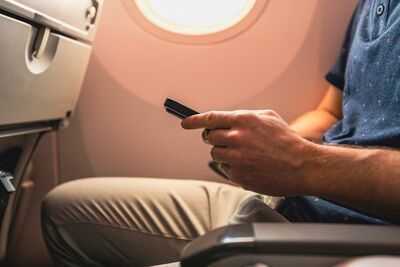
Flying remains one of the safest ways to travel, largely due to meticulously crafted safety protocols. Whilst some procedures might appear mundane or superfluous, each serves a vital purpose in safeguarding passengers and crew alike.
However, a pilot (@PerchPoint) has taken to TikTok to clarify whether one specific procedure genuinely needs following. Whether through absent-mindedness or simply not knowing better, switching your phone to aeroplane mode matters – and it's not "a conspiracy theory," the pilot cautions.
But what actually occurs if you don't bother? In the video, the pilot explained: "This is just a friendly PSA, that the airplane mode button is not a conspiracy.
- New UK passport rules starting next week as huge £589 charge introduced
- 'I'm a pilot's wife and there's 1 item you should never wear on planes'
"If you forget to put your phone on airplane mode, no, it's not the end of the world, the plane will not fall out of the sky, and it won't even mess with the systems on board."
However, does this mean passengers can disregard the procedure? "If you have an aircraft with 70, 80, or 150 people on board and even three or four people's phones start to try and make a connection to a radio tower for an incoming phone call, it sends out radio waves.
"There's a potential that those radio waves can interfere with the headsets that the pilots are using."
He proceeded to describe his own encounter with this interference whilst attempting to land safely, noting there was an irritating noise in the headset that "sounded like a mosquito."
The pilot explained: "No, it's not the end of the world, but it's pretty annoying when you're trying to copy down instructions and it sounds like a wasp or something flying around you. So if you're ever curious why you need to put on airplane mode, that's why."
According to Travel and Leisure, it goes beyond mere irritation. Pilots frequently operate with restricted visibility, meaning they depend heavily on information relayed from ground control, particularly during takeoff and landing – the phases when most aviation incidents take place.
Consequently, it's vital that they remain focused and their communication isn't compromised.
Rule or courtesy?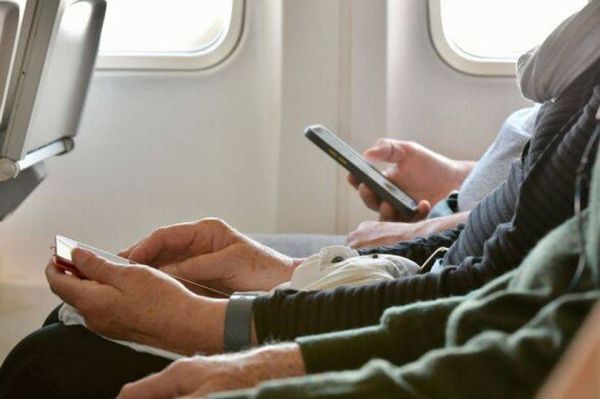
Per Federal Aviation Administration (FAA) regulations, all passengers must enable airplane mode during flight to avoid potential signal interference.
It's also a straightforward gesture of consideration that contributes to a seamless journey for all passengers, according to Booking.com.
"When smartphones and devices were first introduced, it was found that cell phones that aren't in flight mode can overload the networks on the ground, especially during takeoff and landing, as phones try to connect to multiple towers at once.
"How much phones affect aviation technology hasn't been studied in-depth, but pilots say they can hear background noise and interference from phones while flying, especially when they're landing, and mobile phones begin to make contact with towers again.
"So, while your phone may work at times during flight, do you really want to distract your pilot while they're speaking with air traffic control to execute a safe landing?"
Why are flight crew permitted to use devices?According to Lovely Planet, pilots and flight attendants are seen with devices right in the cockpit, which gives them access to digital charts and documents.
However, unlike passenger devices, this equipment has undergone rigorous testing to guarantee it won't disrupt the aircraft's systems.
Contact to : xlf550402@gmail.com
Copyright © boyuanhulian 2020 - 2023. All Right Reserved.