
‘I went into Boots to pick up a repeat prescription. I was busy – on my lunch break from the office, so I felt a little stressed, hungry and distracted – all totally normal for a working day. At the counter, the pharmacist asked if I’d like a free blood pressure test. I said no – I was only 42, after all – but then paused.
When I worked as a GP receptionist, I was constantly frustrated by how often people turned down or skipped free health checks.
“OK, fine,” I said, as though I was doing them a favour. “Let’s do it.”
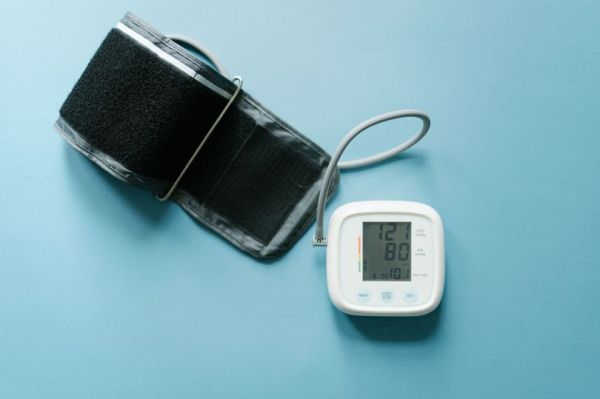
The pharmacist wrapped the familiar Velcro cuff around my arm. The pressure built, released, and a reading appeared. She frowned slightly and repeated the test twice more, then carefully folded the equipment away.
“You need to go straight to A&E,” she said.
I think I actually laughed. “I can’t,” I replied. “I have to get back to work.”
“Your reading is very high. Your blood pressure is 210/137.”
Those numbers meant nothing to me. I shrugged. “I can’t just leave work in the middle of the day.”
She tried to persuade me to go, then said she would like to pass the reading on to my GP, which I agreed to. As I left, I honestly thought the equipment must have been faulty.
Back at work, though, I couldn’t shake the feeling that something wasn’t right, so I phoned NHS 111. The call handler told me that not only did I need to go to A&E, I needed to take a taxi – not public transport – and ideally have a colleague escort me. If I felt weak or my vision became blurry on the way, she said, the driver should pull over and call an ambulance.
The strangest thing was that I felt completely normal.
At the hospital, it quickly became clear this was serious. Despite the usual queues, I was triaged and hooked up to a heart monitor within ten minutes. With blood pressure that high, I was told, it’s classed as a hypertensive crisis. Untreated, it carries a real risk of stroke or permanent organ damage.
I feel incredibly lucky. Without that pharmacist’s persistence, there’s no way I would ever have known anything was wrong.’
What is high blood pressure?
READ MORE: How to get rid of a UTI fast without seeing a doctor– and the warning symptom to watch out for
Each time your heart beats, it pumps blood through your arteries – the vessels that carry blood to your brain and the rest of your body. The force of that flow is your blood pressure. It’s normal for levels to rise and fall during the day, for example during exercise or stress. Problems arise when blood pressure stays high even when you’re resting, and remains elevated over time.
What does the reading mean?
Blood pressure is measured with two numbers. Claire Nevinson, Superintendent Pharmacist at Boots, explains: “The first number measures systolic pressure – the highest level your blood pressure reaches when your heart pumps blood. The second measures diastolic pressure – the lowest it reaches when your heart relaxes between each beat.”
Ideally, blood pressure should sit between 90–120 for the systolic reading and 60–80 for the diastolic. “Blood pressure is generally considered high if it’s 140/90 or above when checked by a healthcare professional,” adds Claire.
Why you may not notice any symptoms
High blood pressure, medically known as hypertension, is often called the silent killer. “It often has no obvious symptoms, which is why it can go undetected for years,” says Claire. “The only way to know if your reading is high is to have it checked.”
While it can occasionally cause headaches, nosebleeds or blurred vision, most people feel nothing unusual. For some, the first sign is a heart attack or stroke.
According to the British Heart Foundation, around five million people in the UK are living with undiagnosed hypertension. Over time, untreated high blood pressure can damage blood vessels and vital organs, increasing the risk of stroke, heart disease, kidney failure and vascular dementia.
When is it an emergency?
“When blood pressure readings are extremely high, there’s an increased risk of serious health problems such as heart attack or stroke,” says Claire. “A reading above 180/120 is treated as a medical emergency and people would be urgently signposted to A&E.”
This is why pharmacists don’t ignore very high readings, even if someone feels well. Prompt assessment and treatment can significantly reduce the risk of sudden, serious complications.
Women and hidden risk
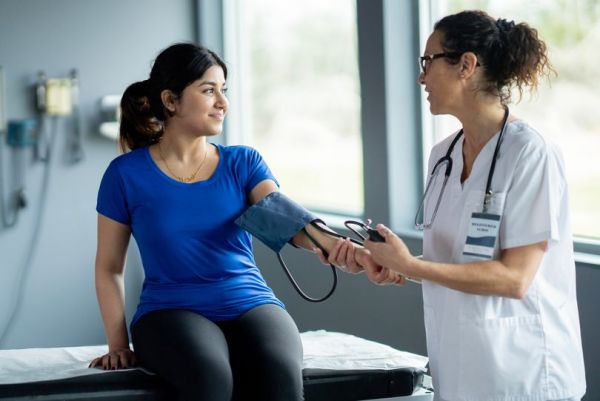
High blood pressure – and the complications it can lead to, such as heart disease – is often thought of as a male issue. In reality, it affects a significant number of women, with around a quarter in the UK estimated to have high blood pressure.
After the menopause, falling oestrogen levels are linked to a faster rise in blood pressure than is seen in men of the same age. But it’s not just something to worry about later in life. Research from the University of Bergen in Norway found that even slightly raised blood pressure in women in their early 40s was linked to a significantly higher risk of heart attack over the following 16 years – a risk not seen in male participants.
Should you get checked?
The NHS recommends that adults over 40 have their blood pressure checked every five years, with more frequent checks for those with risk factors such as family history, diet or ethnicity.
Free checks are widely available in community pharmacies, including Boots, Superdrug, Lloyd’s and many independent chemists. Details of participating pharmacies can be found at nhs.uk.
It’s easy to put off health checks when you feel well, especially on a busy working day. I nearly did. I’m now on blood pressure medication and taking steps to manage it myself too – reducing salt and exercising more. I’ve learned that feeling fine doesn’t always mean everything is fine, and a few minutes in a pharmacy could make all the difference.
Contact to : xlf550402@gmail.com
Copyright © boyuanhulian 2020 - 2023. All Right Reserved.