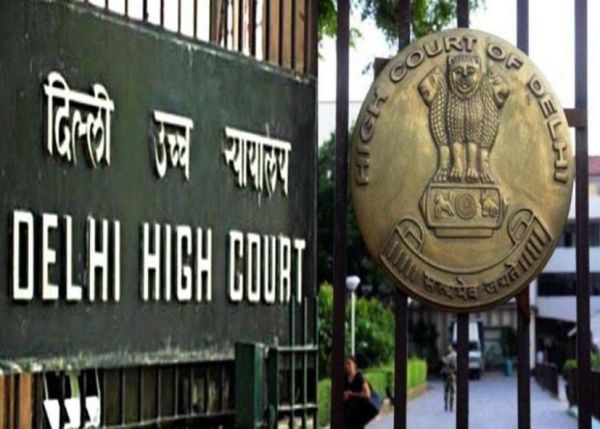
The Delhi High Court has said in one of its important decisions that the principle of “equal pay for equal work” cannot be automatically applied merely on the basis of equality of post or work. The court clarified that if there is a difference in the educational qualification of employees of two different cadres, the difference in their pay can be justified. The court said that factors like educational qualification, selection process, experience and responsibilities are important in determining salary. Therefore the mere argument that employees are doing equal work is not a sufficient basis for equalizing pay.
The bench of Justice Anil Kshetrapal and Justice Amit Mahajan said in its order that when the level of education of two people is different, there is bound to be a difference in their knowledge, skills and abilities. The court said that a person with higher education is endowed with more knowledge and expertise, whereas the scope of work of a person with less education may be relatively limited. In such a situation, giving higher salary to an employee having more qualification and knowledge cannot be considered unfair or discriminatory.
The Court also made it clear that the principle of “equal pay for equal work” does not apply equally in every situation. If there is difference in educational qualification, recruitment process or responsibilities, variation in salary can be justified.
The Delhi High Court, while dismissing the petition of Delhi Medical Technical Employees Association, has clarified that pay equality cannot be claimed merely on the basis of designation or nature of work being similar. The court also justified the favor of central government employees getting higher salaries. Citing the case of State of Bihar vs Bihar Secondary Teachers Sangharsh Samiti in its decision, the bench said that if there is a difference in these factors, then the difference in pay cannot be considered discrimination. The court said that in this case there is a clear difference in the education, selection process and service conditions of central and state government employees, hence comparison of the salaries of both is not appropriate.
The bench of Justice Anil Kshetrapal and Justice Amit Mahajan observed that the minimum qualification for the post of Lab Technician in Delhi Municipal Corporation is prescribed only as Matriculation (10th), whereas B.Sc degree is mandatory for appointment to the same post under the Central Government. The court held that when there is such a glaring difference in the education level required for recruitment, the demand to pay equal pay to both categories of employees cannot be justified. The bench said that classification on the basis of educational qualification is not only valid but is also considered rational from the administrative point of view.
Central and state government salaries were challenged
The petition filed by Delhi Medical Technical Employees Association in the Delhi High Court demanded that the lab technicians working in Delhi Municipal Corporation hospitals should be given the same salary as the lab technicians of central government institutions like All India Institute of Medical Sciences (AIIMS) and National Center for Disease Control (NICD). It was argued in the petition that the name of the post and the nature of work are the same at both the places, hence the lab technicians of MCD should also get the pay scale as per the recommendations of the Fifth Pay Commission.
Follow the LALLURAM.COM MP channel on WhatsApp
Contact to : xlf550402@gmail.com
Copyright © boyuanhulian 2020 - 2023. All Right Reserved.