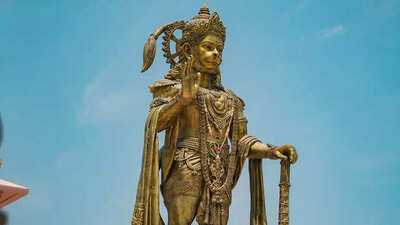
Why Hanuman Chalisa Is Recited 40 Times Traditionally
“संकट कटे मिटे सब पीरा,
जो सुमिरै हनुमत बलबीरा।”
There is a reason why these lines echo in homes, temples, and even in moments of fear. The Hanuman Chalisa is not just a devotional hymn. It is a source of strength for millions. And among its many traditions, one practice stands out strongly: reciting the Hanuman Chalisa 40 times.
Many devotees take a sankalp to complete 40 recitations in one sitting or over 40 days, especially during challenging phases of life. But why forty? Is it written in scripture? Is it symbolic? Or is it spiritual discipline?
1. “Chalisa” Itself Means Forty
 Temples are living spaces with rhythmic energy cycles.
The word
Chalisa comes from “chalis,” meaning forty in Hindi. The Hanuman Chalisa contains 40 verses that describe Lord Hanuman’s strength, devotion, wisdom, and protective power.
Because the hymn itself is built around the number forty, repeating it 40 times is seen as completing a full devotional cycle. Devotees believe that finishing forty rounds strengthens the intention behind the prayer and deepens focus.
It represents completeness, not randomness.
2. Repetition Strengthens the MindIn Hindu spiritual practice, repetition is powerful. Mantras are often repeated 108 times. Similarly, reciting the Chalisa multiple times builds concentration and emotional stability.
When the Chalisa is recited 40 times:
3. Forty Is Linked With Discipline and Sankalp
 A visually calming and spiritually powerful thumbnail showing a peaceful early morning scene. In the center a young devotee is seated cross legged with eyes closed holding a Hanuman Chalisa book close to the chest. A soft golden glow surrounds the figure symbolising inner strength peace and divine protection. In the background a subtle image of Lord Hanuman appears in a gentle blessing posture, not overpowering but protective and reassuring. Warm saffron and soft white tones dominate the image creating a sense of devotion calm and positivity. The overall mood reflects mental peace courage focus and spiritual balance, making it relatable for modern lifestyle and spirituality focused readers.
Across Indian devotional traditions, forty is considered a period of discipline. Many vrats and spiritual practices are observed for forty days to create inner transformation.
Though the Hanuman Chalisa does not command 40 repetitions directly, saints and spiritual teachers have traditionally recommended it during difficult times. Devotees often perform 40 recitations to seek:
4. Hanuman Is Believed to Respond to Intense DevotionHanuman is known as Sankat Mochan, the remover of difficulties. Scriptures describe him as ever-present and compassionate toward sincere devotees.
Reciting the Chalisa 40 times is seen as intense bhakti. It is not about mechanical chanting. It is about immersing oneself in Hanuman’s energy and virtues.
When his qualities are repeated again and again, strength replaces fear. Confidence replaces doubt. That inner shift is what devotees value most.
जो सुमिरै हनुमत बलबीरा।”
There is a reason why these lines echo in homes, temples, and even in moments of fear. The Hanuman Chalisa is not just a devotional hymn. It is a source of strength for millions. And among its many traditions, one practice stands out strongly: reciting the Hanuman Chalisa 40 times.
Many devotees take a sankalp to complete 40 recitations in one sitting or over 40 days, especially during challenging phases of life. But why forty? Is it written in scripture? Is it symbolic? Or is it spiritual discipline?
1. “Chalisa” Itself Means Forty
Temples are living spaces with rhythmic energy cycles. The word
Chalisa comes from “chalis,” meaning forty in Hindi. The Hanuman Chalisa contains 40 verses that describe Lord Hanuman’s strength, devotion, wisdom, and protective power.
Because the hymn itself is built around the number forty, repeating it 40 times is seen as completing a full devotional cycle. Devotees believe that finishing forty rounds strengthens the intention behind the prayer and deepens focus.
It represents completeness, not randomness.
2. Repetition Strengthens the MindIn Hindu spiritual practice, repetition is powerful. Mantras are often repeated 108 times. Similarly, reciting the Chalisa multiple times builds concentration and emotional stability.
When the Chalisa is recited 40 times:
- The mind becomes absorbed in one thought
- Negative thinking reduces
- Fear and anxiety calm down
- Faith becomes stronger
3. Forty Is Linked With Discipline and Sankalp
A visually calming and spiritually powerful thumbnail showing a peaceful early morning scene. In the center a young devotee is seated cross legged with eyes closed holding a Hanuman Chalisa book close to the chest. A soft golden glow surrounds the figure symbolising inner strength peace and divine protection. In the background a subtle image of Lord Hanuman appears in a gentle blessing posture, not overpowering but protective and reassuring. Warm saffron and soft white tones dominate the image creating a sense of devotion calm and positivity. The overall mood reflects mental peace courage focus and spiritual balance, making it relatable for modern lifestyle and spirituality focused readers. Across Indian devotional traditions, forty is considered a period of discipline. Many vrats and spiritual practices are observed for forty days to create inner transformation.
Though the Hanuman Chalisa does not command 40 repetitions directly, saints and spiritual teachers have traditionally recommended it during difficult times. Devotees often perform 40 recitations to seek:
- Protection from obstacles
- Relief from mental stress
- Courage during uncertainty
- Spiritual clarity
4. Hanuman Is Believed to Respond to Intense DevotionHanuman is known as Sankat Mochan, the remover of difficulties. Scriptures describe him as ever-present and compassionate toward sincere devotees.
Reciting the Chalisa 40 times is seen as intense bhakti. It is not about mechanical chanting. It is about immersing oneself in Hanuman’s energy and virtues.
When his qualities are repeated again and again, strength replaces fear. Confidence replaces doubt. That inner shift is what devotees value most.
Contact to : xlf550402@gmail.com
Copyright © boyuanhulian 2020 - 2023. All Right Reserved.