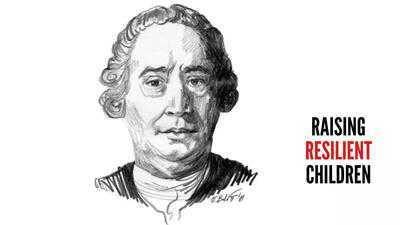
Parenting quote of the day by David Hume, “He is happy whose circumstances suit his temper, but he is more excellent who can suit his temper to his circumstance.”
David Hume once wrote, “
He is happy whose circumstances suit his temper, but he is more excellent who can suit his temper to his circumstance.” The words may sound old, but the lesson feels urgent in today’s homes. Every parent wishes for a smooth road for their child. Yet life rarely adjusts itself to match a child’s mood, comfort, or expectations. The deeper skill lies elsewhere. It lies in teaching children to adjust themselves without losing their sense of self. That shift in thinking changes how parenting works every single day.
Comfort is easy, character is earned
It is natural to want children to feel comfortable. Parents try to shape schedules, schools, friendships, and even family routines to match a child’s personality. That creates short-term peace.
But real growth begins when children learn to function even when things do not go their way. A shy child may not love group projects. An energetic child may struggle with quiet classrooms. Shielding them from every discomfort may protect their mood, but it weakens their coping muscles.
Hume’s idea reminds parents that happiness based only on perfect conditions is fragile. Strong character grows when children learn to manage frustration, delay gratification, and face mild disappointments. These are not punishments. They are practice sessions for real life.
Temper is not destiny
Many parents hear statements like, “That’s just how he is,” or “She has always been like this.” Temperament is real. Some children are sensitive. Some are bold. Some are cautious observers.
Yet temperament should not become a fixed label. Children can learn emotional regulation. They can learn patience. They can learn flexibility. Neuroscience supports this. The brain changes through repeated experiences and practice.
When a child throws a tantrum because plans changed, the goal is not to crush emotion. The goal is to guide it. A calm response, a clear boundary, and a simple explanation help the child see that feelings can exist without controlling behavior. Over time, the child begins to adapt instead of react.
Modeling adjustment at home
Children watch more than they listen. If adults complain constantly about traffic, work stress, or minor inconveniences, children absorb that reaction pattern.
But when adults say, “This wasn’t the plan, but we can handle it,” a different lesson settles in. Calm flexibility becomes normal.
Family life offers daily training grounds:
Parents who adjust their own tone during conflict send a powerful message. Emotional steadiness is learned through observation. This is where Hume’s idea becomes practical.
Teaching adaptability without harshness
Adapting to circumstances does not mean suppressing emotion. It also does not mean accepting unfair treatment. The balance matters.
If a child faces bullying or unsafe conditions, adjustment is not the lesson. Protection and action are. But if a child dislikes a new teacher’s strict style, the skill lies in learning how to function within structure.
Parents can ask guiding questions:
What can be controlled here?
What can be learned from this?
What small step can make this easier?
These questions move the child from helplessness to agency. They shift focus from “Why is this happening to me?” to “How can I handle this?”
Preparing children for an uncertain world
The modern world changes quickly. Schools evolve. Careers shift. Social rules transform. A child who only thrives in ideal conditions may struggle later.
Parents do not need grand lectures. Small daily corrections shape the mindset. Encourage effort over outcome. Praise problem-solving over perfection. Validate feelings, but insist on respectful behaviour.
Hume’s line speaks of excellence. That excellence is not about achievement. It is about inner steadiness. A child who can adjust to change carries a quiet strength that lasts long after childhood ends.
Disclaimer: This article is for educational and informational purposes only. It does not replace professional psychological or medical advice. Parents facing persistent behavioural or emotional concerns in children should consult a qualified mental health or child development professional.
He is happy whose circumstances suit his temper, but he is more excellent who can suit his temper to his circumstance.” The words may sound old, but the lesson feels urgent in today’s homes. Every parent wishes for a smooth road for their child. Yet life rarely adjusts itself to match a child’s mood, comfort, or expectations. The deeper skill lies elsewhere. It lies in teaching children to adjust themselves without losing their sense of self. That shift in thinking changes how parenting works every single day.
Comfort is easy, character is earned
It is natural to want children to feel comfortable. Parents try to shape schedules, schools, friendships, and even family routines to match a child’s personality. That creates short-term peace.
But real growth begins when children learn to function even when things do not go their way. A shy child may not love group projects. An energetic child may struggle with quiet classrooms. Shielding them from every discomfort may protect their mood, but it weakens their coping muscles.
Hume’s idea reminds parents that happiness based only on perfect conditions is fragile. Strong character grows when children learn to manage frustration, delay gratification, and face mild disappointments. These are not punishments. They are practice sessions for real life.
Temper is not destiny
Many parents hear statements like, “That’s just how he is,” or “She has always been like this.” Temperament is real. Some children are sensitive. Some are bold. Some are cautious observers.
Yet temperament should not become a fixed label. Children can learn emotional regulation. They can learn patience. They can learn flexibility. Neuroscience supports this. The brain changes through repeated experiences and practice.
When a child throws a tantrum because plans changed, the goal is not to crush emotion. The goal is to guide it. A calm response, a clear boundary, and a simple explanation help the child see that feelings can exist without controlling behavior. Over time, the child begins to adapt instead of react.
Modeling adjustment at home
Children watch more than they listen. If adults complain constantly about traffic, work stress, or minor inconveniences, children absorb that reaction pattern.
But when adults say, “This wasn’t the plan, but we can handle it,” a different lesson settles in. Calm flexibility becomes normal.
Family life offers daily training grounds:
- A cancelled picnic becomes a movie night at home.
- A poor exam result becomes a study plan, not a shame session.
- A lost match becomes feedback, not identity.
Parents who adjust their own tone during conflict send a powerful message. Emotional steadiness is learned through observation. This is where Hume’s idea becomes practical.
Teaching adaptability without harshness
Adapting to circumstances does not mean suppressing emotion. It also does not mean accepting unfair treatment. The balance matters.
If a child faces bullying or unsafe conditions, adjustment is not the lesson. Protection and action are. But if a child dislikes a new teacher’s strict style, the skill lies in learning how to function within structure.
Parents can ask guiding questions:
These questions move the child from helplessness to agency. They shift focus from “Why is this happening to me?” to “How can I handle this?”
Preparing children for an uncertain world
The modern world changes quickly. Schools evolve. Careers shift. Social rules transform. A child who only thrives in ideal conditions may struggle later.
Parents do not need grand lectures. Small daily corrections shape the mindset. Encourage effort over outcome. Praise problem-solving over perfection. Validate feelings, but insist on respectful behaviour.
Hume’s line speaks of excellence. That excellence is not about achievement. It is about inner steadiness. A child who can adjust to change carries a quiet strength that lasts long after childhood ends.
Disclaimer: This article is for educational and informational purposes only. It does not replace professional psychological or medical advice. Parents facing persistent behavioural or emotional concerns in children should consult a qualified mental health or child development professional.
Contact to : xlf550402@gmail.com
Copyright © boyuanhulian 2020 - 2023. All Right Reserved.