New Delhi: Holi 2026 falls on Wednesday, 4 March 2026, with Holika Dahan on the evening of Tuesday, 3 March 2026. But here’s the thing — Holi isn’t just one festival. It’s a dozen different festivals wrapped in a single name, each state and community adding its own remarkable twist. From women chasing men with sticks in Barsana to devotees smearing pyre ashes on themselves in Varanasi, Holi across India is as diverse as the nation itself. If you’ve ever thought Holi is simply about splashing colours and gobbling gujiyas, you’re in for a wonderful surprise. The festival of colours is celebrated in ways you probably never imagined, and each tradition carries centuries of mythology, culture, and local flavour that make it absolutely unforgettable.
So, what makes Holi so fascinatingly different from one corner of the country to another? In this blog, we take you on a vibrant journey through the most unique and captivating Holi celebrations across India — from the flower-laden streets of Vrindavan to the warrior spirit of Punjab’s Hola Mohalla. Whether you’re a curious traveller planning your Holi 2026 trip or simply someone who loves discovering India’s rich cultural tapestry, this guide has something colourful in store for you. Let’s dive right in!
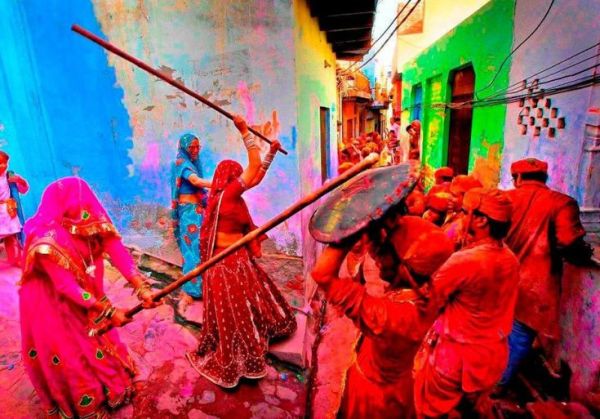
Different types of Holi celebrations across India1. Lathmaar Holi — Barsana and Nandgaon, Uttar Pradesh
This is one of India’s most famous and theatrical Holi traditions. Women from Barsana playfully beat men from Nandgaon with sticks (lathis), re-enacting the legend of Radha chasing Lord Krishna away from her village. The men defend themselves with shields amidst laughter, folk songs, and clouds of coloured powder, making it a spectacular sight that draws thousands of tourists every year.
2. Phoolon Ki Holi — Vrindavan, Uttar Pradesh
Celebrated at the iconic Banke Bihari Temple, this celebration replaces traditional gulal with showers of fragrant flower petals — roses, marigolds, and jasmine. The temple courtyard fills with devotional chants and music as devotees drench one another in blossoms, recreating the divine love of Radha and Krishna. It’s a serene, spiritual, and utterly beautiful way to experience the festival.
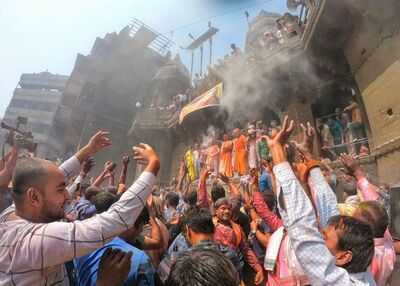
3. Masaan Ki Holi — Varanasi, Uttar Pradesh
In the holy city of Varanasi, Holi takes a mystical turn at Manikarnika Ghat, where Naga Sadhus, Aghoris, and devotees play Holi with the ashes of funeral pyres instead of colours. This ancient tradition is linked to Lord Shiva and the concept of life, death, and regeneration — making it one of the most unique and spine-tingling Holi celebrations in India.
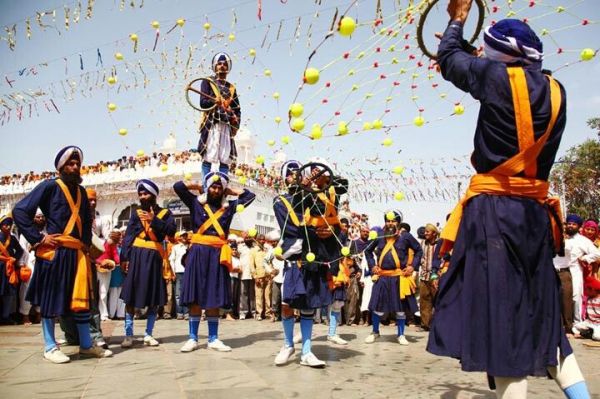
4. Hola Mohalla — Anandpur Sahib, Punjab
Founded by Guru Gobind Singh in 1701, Hola Mohalla is a three-day Sikh festival that replaces colour play with displays of martial arts, horse riding, mock battles, and gatka demonstrations by Nihang Sikhs. Processions, devotional music, and free community meals called langar bring locals and visitors together in a powerful display of courage and unity.
5. Kumaoni Holi — Uttarakhand
Unlike any other Holi celebration in India, Kumaoni Holi is a nearly two-month-long musical festival that begins on Basant Panchami. It includes Baithki Holi (indoor gatherings with classical Hindustani ragas), Khadi Holi (singing and dancing from house to house), and Mahila Holi (a dedicated space for women). This tradition dates back to the 15th-century Chand kings and beautifully blends devotion with classical music.
6. Yaosang — Manipur
Yaosang is Manipur’s version of Holi and features the traditional folk dance Thabal Chongba, community rituals, and colourful celebrations. Unlike the chaotic colour-throwing seen elsewhere, Yaosang has a more structured and community-driven approach, focusing heavily on cultural and religious traditions of the region.
7. Shigmo — Goa
Goa’s vibrant answer to Holi is called Shigmo, and it lasts for several days with grand parades, elaborate floats, folk performances, and street plays. Performers dress as mythological characters and showcase Goan folklore through dance and drama, offering a feast for the eyes unlike any other Holi celebration in the country.
8. Manjal Kuli (or Ukkuli) — Kerala
In Kerala, Holi is observed as Manjal Kuli by the Konkani and Kudumbi communities. Instead of colourful gulal, people splash turmeric mixed with water on one another — a gesture symbolising purification, prosperity, and well-being. Around the Kodungalloor Bhagavathy Temple, the ritual folds into temple worship, making it a gentler and more spiritual celebration.
India’s Holi is not a single celebration but a magnificent mosaic of traditions, each reflecting the unique culture, history, and spirit of its region. These diverse celebrations remind us that the true colour of Holi lies in its beautiful diversity.
Contact to : xlf550402@gmail.com
Copyright © boyuanhulian 2020 - 2023. All Right Reserved.