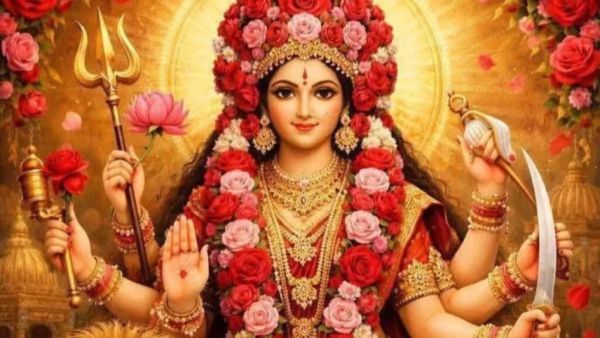
New Delhi: In 2026, Chaitra Navratri begins on 19 March and ends on 27 March. This nine-day festival marks the first Navratri of the Hindu lunar year and is dedicated to the nine principal forms of the Goddess Shakti. It is a time for devotion, reflection, and ritual observance.
Chaitra Navratri is sometimes called Vasanta Navratri because it comes with the first warmth of spring. The festival also leads to Rama Navami, the birth anniversary of Lord Rama, traditionally observed on the ninth day.
Below is a day-by-day look at the dates, key observances, and the spiritual meaning associated with each day of Navratri in 2026, shared by Tanya Singh, Astrologer, Astropatri.
1. Day One (19 March 2026, Thursday)
Tithi: Pratipada
Goddess: Shailputri
Meaning: The festival opens with the worship of Shailputri, the Daughter of the Mountain. She represents the primordial energy of nature and the rooted strength that supports all creation. Devotees begin with Ghatasthapana, the establishment of the sacred pot, which symbolises the presence of the goddess in the home.
Colour: Yellow
2. Day Two (20 March 2026, Friday)
Tithi: Dwitiya
Goddess: Brahmacharini
Meaning: The second day honours Brahmacharini, a form of the goddess associated with discipline, learning, and steady effort. She is revered by those seeking inner resolve and spiritual commitment. Observances often include gentle fasting and prayer.
Colour: Green
3. Day Three (21 March 2026, Saturday)
Tithi: Tritiya
Goddess: Chandraghanta
Meaning: On this day, devotees worship Chandraghanta, the goddess who bears a crescent moon on her brow. Her energy is protective yet benevolent. This day is often linked with Saubhagya Teej, observed by married women for family welfare and the long life of spouses.
Colour: Grey
4. Day Four (22 March 2026, Sunday)
Tithi: Chaturthi
Goddess: Kushmanda
Meaning: Kushmanda is honoured for her creative spark. She is believed to have breathed life into the universe. Devotees pray for physical strength, vitality, and the clarity to pursue life’s purposes with confidence. This day also overlaps with Vasudeva Chaturthi observances.
Colour: Orange
5. Day Five (23 March 2026, Monday)
Tithi: Panchami
Goddess: Unscanned
Meaning: Skandamata is both a mother and a warrior. She is the mother of Skanda (Kartikeya), the divine general. Her worship focuses on love and courage. Devotees seek her blessings for compassion, familial harmony, and emotional resilience.
Colour: White
6. Day Six (24 March 2026, Tuesday)
Tithi: Shasthi
Goddess: katyayani
Meaning: On the sixth day, the goddess Katyayani is honoured as a fierce form of Durga. She is often called upon for protection and the removal of fear. Devotees who face difficulty or conflict seek her strength and courage.
Colour: Red
7. Day Seven (25 March 2026, Wednesday)
Tithi: Saptami
Goddess: Kalaratri
Meaning: Kalaratri is worshipped for her fearsome form and transformative power. She represents the destruction of ignorance and the end of darkness. This day encourages devotees to confront their deepest fears and emerge with clarity.
Colour: Royal Blue
8. Day Eight (26 March 2026, Thursday)
Tithi: Ashtami
Goddess: Mahagauri
Meaning: Mahagauri embodies purity and serenity. Her devotion is associated with peace of mind and spiritual grace. The eighth day is one of the most important of Navratri, often marked with Sandhi Puja, a ritual bridging the eighth and ninth days at a prescribed auspicious time. In 2026, the Sandhi Puja window falls between 11:24 AM and 12:12 PM in Delhi.
Colour: Pink
9. Day Nine (27 March 2026, Friday)
Tithi: Navami
Goddess: Siddhidatri
Meaning: The concluding day is dedicated to Siddhidatri, the bestower of spiritual powers and fulfilment. Worship on this day is a culmination of the devotional journey. It is also observed as Navratri Parana, the day when fasting is traditionally broken. The day aligns with Rama Navami, marking the birth of Lord Rama, a central figure in Hindu tradition.
Colour: Purple
During Chaitra Navratri, traditional practices include fasting, daily puja, and recitation of goddess stotras. Many households perform Ghatasthapana at dawn on the first day. While customs vary by region, the underlying theme is one of renewal, spiritual focusing, and reverence for the feminine principle of the divine.
Across northern India, this Navratri carries strong cultural resonance. In Maharashtra, it aligns with Gudi Padwa, the New Year celebration. In Andhra Pradesh and Telangana, it coincides with Ugadi, the Telugu New Year.
Contact to : xlf550402@gmail.com
Copyright © boyuanhulian 2020 - 2023. All Right Reserved.