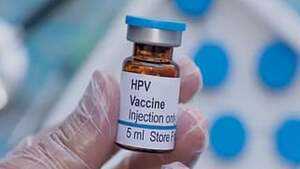
New Delhi | The Centre's decision to launch the HPV vaccination campaign will be a critical step toward achieving the WHO cervical cancer elimination target, experts said on Thursday, while underscoring the vaccine's safety and efficacy.
Prime Minister Narendra Modi will launch the nationwide Human Papillomavirus (HPV) vaccination campaign for girls aged 14 years on February 28 from Rajasthan's Ajmer.
Single-shot Gardasil 4, a quadrivalent vaccine that protects against HPV types 16 and 18, which cause cervical cancer, as well as types 6 and 11, will be administered during the campaign.
A single dose of quadrivalent HPV vaccine (eg, Gardasil 4 or Cervavac) offers substantial benefits for a 14-year-old Indian girl, Dr Mukurdipi Ray, professor of Surgical Oncology in All India Institute of Medical Science, Delhi, said.
The initiative aligns with India's 2026 national rollout targeting this age group to curb cervical cancer, the second most common cancer among women here, claiming 75,000 lives yearly, Ray told PTI.
"Indian cohort studies (17,000 girls vaccinated 2009-2010) showed single-dose efficacy of 92 per cent against persistent infections caused by HPV types 16 and 18, the strains causing 83 per cent of Indian cervical cancers, even 10-15 years later, comparable to 2/3 doses," he said.
No high-grade pre-cancers were detected in vaccinated groups, with projections indicating it could prevent one million lifetime cases nationally, dropping incidence below the World Health Organisation's elimination threshold in all states, Ray added.
The move will reduce screening needs, avert treatment burdens, and support cervical cancer elimination by 2030, he said.
"For a Delhi-based clinician like us, this empowers school-based drives at AIIMS-linked programs, integrating with HPV DNA screening for high-risk populations. It is a great initiative against cervical cancer," he added.
Dr Abhishek Shankar of AIIMS, Delhi, said that cervical cancer is one of the few cancers that can be largely prevented through vaccination.
However, the misinformation spreading online and in communities continues to deter many from protecting themselves or their children.
Large clinical trials and population studies involving millions of people demonstrated that HPV vaccines prevent 90-100 per cent of infections with the high-risk type causing cervical cancer, Shankar said.
According to him, the vaccines dramatically reduce the incidence of pre-cancerous lesions and cervical cancer when given before exposure to the virus.
Explaining the side effects of the vaccine, he said, they are rare, and there is no evidence that links HPV vaccines to infertility or other long-term health issues.
He added that most recipients experience only mild, short-term reactions such as soreness at the injection site, low-grade fever or fatigue.
Countries around the world are scaling up HPV vaccination as a cornerstone of cervical cancer elimination strategies, Shankar said.
Australia is on track to become the first nation to eliminate cervical cancer, buoyed by early and high vaccine uptake and robust screening, while global initiatives under the World Health Organisation's 90-70-90 framework seek to vaccinate 90 per cent of girls by age 15 and improve access to screening and treatment.
The WHO's framework aims to vaccinate 90 per cent of girls against HPV, screen 70 per cent of women with a high-performance test, and provide the appropriate treatment for 90 per cent of those who test positive by 2030.
In low-and middle-income regions including Africa and Asia, the partnerships led by GAVI (Global Alliance for Vaccines and Immunisation) have significantly averted an estimated millions of future deaths from cervical cancer, he said.
Shankar also said that the HPV vaccination will be a critical step toward achieving the WHO targets and help India to reposition itself as a global leader in cervical cancer prevention.
"India contributes nearly one-fifth of the global cervical cancer burden, achieving high coverage in this age group will substantially accelerate national progress toward elimination thresholds (incidence below 4 per 1,00,000 women-years)," Dr Shankar said.
Dr Sewanti Limaye, of Sir HN Reliance Foundation Hospital, Mumbai, said that there is robust data to support this preventive strategy.
This evidence-based preventative strategy could avert over 75,000 annual deaths and accelerate WHO's 90-70-90 elimination goals, she said.
"I strongly advocate vaccination via AIIMS Delhi camps, U-WIN and Reliance Foundation's 'Seva' program that empowers our girls against a vaccine-preventable disease for life," Dr Limaye said.
Contact to : xlf550402@gmail.com
Copyright © boyuanhulian 2020 - 2023. All Right Reserved.