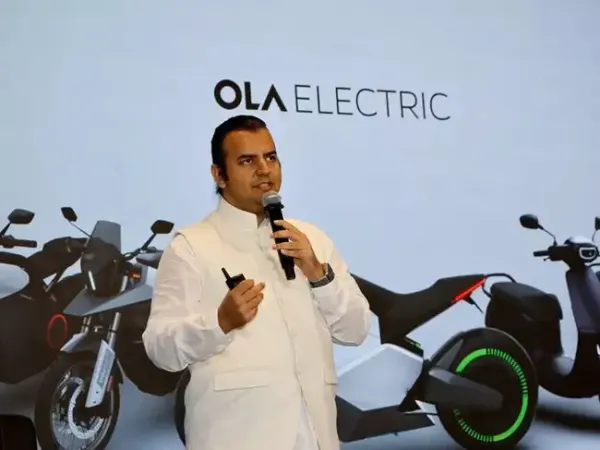
Bhavish Aggarwal, CEO, Ola Electric
Ola Electric, once the market leader in India’s electric two-wheeler segment, has slipped out of the top five ranking by monthly sales volumes, with Greaves Electric Mobility overtaking it in February.
The Bengaluru-based EV maker sold 3,968 vehicles during the month, translating into a market share of 3.7%, according to data from the Vahan website.
The drop marks a sharp reversal in fortunes for the company, which had sold 34,063 scooters in the same month two years ago.
Greaves Electric Mobility, which sells electric scooters under the Ampere brand, recorded sales of 4,725 units in February, securing a 4.3% market share.
Notably, Greaves Electric Mobility was among the companies flagged for alleged violations of the Faster Adoption and Manufacturing of Electric Vehicles-II (FAME-II) subsidy norms by the Government of India and was asked to refund incentives received under the scheme. Other companies that were similarly flagged included Hero Electric, Okinawa Autotech, Benling India, AMO Mobility and Revolt Motors.
Legacy manufacturers continued to consolidate their hold on the EV segment. TVS Motor Company retained its leadership position with a 29.4% market share, followed by Bajaj Auto at 23.5%.
Ather Energy, Ola Electric’s closest rival in the pure-play electric segment, sold 20,585 scooters during the month, capturing 19.1% of the market. Hero MotoCorp also reported improved traction, with sales rising to 12,516 units in February.
Ola Electric’s sales decline comes amid a significant rationalisation of its physical retail footprint. In its latest shareholder letter, the company said it had reduced its store network to 700 outlets as part of a “structural reset”, just a year after announcing an ambitious expansion to 4,000 stores nationwide.
On February 20, ET reported that Ola Electric plans to further pare its physical store count to around 550 by the end of March, amid mounting operational challenges.
Investor sentiment has also weakened. Shares of Ola Electric opened at an all-time low of Rs 21.2 on the BSE on Monday, marking a 72% decline from its listing price of Rs 76.
Ola Electric’s financial performance also mirrored its operational strain. For the quarter ended December 31, 2025, the company reported a net loss of Rs 487 crore, while operating revenue fell 55% year-on-year to Rs 470 crore.
The widening losses and repeated revisions to revenue and profitability guidance have weighed on both private and public investors.
The Bhavish Aggarwal-led company is now seeking to diversify beyond electric scooters. Earlier this year, it entered the non-automotive energy storage segment with the launch of ‘Shakti’, a residential battery energy storage system manufactured at its gigafactory in Krishnagiri, Tamil Nadu. The product is powered by the company’s indigenously developed 4680 Bharat Cell.
The Bengaluru-based EV maker sold 3,968 vehicles during the month, translating into a market share of 3.7%, according to data from the Vahan website.
The drop marks a sharp reversal in fortunes for the company, which had sold 34,063 scooters in the same month two years ago.
Greaves Electric Mobility, which sells electric scooters under the Ampere brand, recorded sales of 4,725 units in February, securing a 4.3% market share.
Notably, Greaves Electric Mobility was among the companies flagged for alleged violations of the Faster Adoption and Manufacturing of Electric Vehicles-II (FAME-II) subsidy norms by the Government of India and was asked to refund incentives received under the scheme. Other companies that were similarly flagged included Hero Electric, Okinawa Autotech, Benling India, AMO Mobility and Revolt Motors.
Legacy manufacturers continued to consolidate their hold on the EV segment. TVS Motor Company retained its leadership position with a 29.4% market share, followed by Bajaj Auto at 23.5%.
Ather Energy, Ola Electric’s closest rival in the pure-play electric segment, sold 20,585 scooters during the month, capturing 19.1% of the market. Hero MotoCorp also reported improved traction, with sales rising to 12,516 units in February.
Ola Electric’s sales decline comes amid a significant rationalisation of its physical retail footprint. In its latest shareholder letter, the company said it had reduced its store network to 700 outlets as part of a “structural reset”, just a year after announcing an ambitious expansion to 4,000 stores nationwide.
On February 20, ET reported that Ola Electric plans to further pare its physical store count to around 550 by the end of March, amid mounting operational challenges.
Investor sentiment has also weakened. Shares of Ola Electric opened at an all-time low of Rs 21.2 on the BSE on Monday, marking a 72% decline from its listing price of Rs 76.
Ola Electric’s financial performance also mirrored its operational strain. For the quarter ended December 31, 2025, the company reported a net loss of Rs 487 crore, while operating revenue fell 55% year-on-year to Rs 470 crore.
The widening losses and repeated revisions to revenue and profitability guidance have weighed on both private and public investors.
The Bhavish Aggarwal-led company is now seeking to diversify beyond electric scooters. Earlier this year, it entered the non-automotive energy storage segment with the launch of ‘Shakti’, a residential battery energy storage system manufactured at its gigafactory in Krishnagiri, Tamil Nadu. The product is powered by the company’s indigenously developed 4680 Bharat Cell.