India and Canada have reset diplomatic ties following PM Mark Carney's visit, targeting a Comprehensive Economic Partnership Agreement (CEPA) by 2026. New economic dialogues have been launched to deepen integration and boost investment.
Strategic Reset: CEPA and New Economic Dialogues
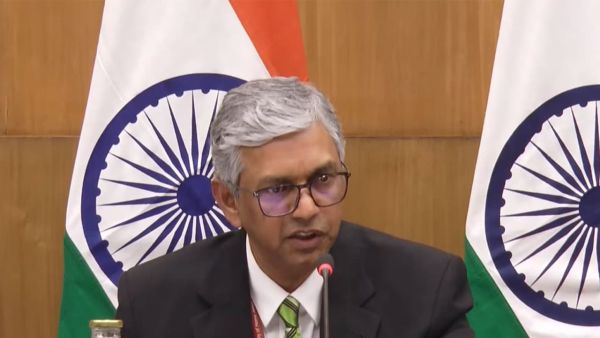
India and Canada are moving forward with Comprehensive Economic Partnership Agreement (CEPA) talks, aiming to conclude by 2026 after the leadership change in Canada (with Mark Carney as Prime Minister), leading to a strategic "reset." During the Ministry of External Affairs briefing on Canadian PM Mark Carney's official visit to India, Secretary (East) P Kumaran stated that they've agreed on terms of reference and will start detailed discussions. "We've just agreed on the terms of reference, and we will soon get into detailed discussions. The broad deadline is by the end of the year 2026. The visit delivered concrete outcomes across five pillars. Number one was the agreement on a durable economic anchor through the launch of CEPA. The signing of the terms of reference for a CEPA provides a clear roadmap to conclude an ambitious, balanced and mutually beneficial agreement by the end of 2026," he said. This marks a transition from the previously discussed "Early Progress Trade Agreement" (EPTA) directly toward a full-scale comprehensive deal.

To ensure the momentum survives political cycles, several high-level platforms were launched or revived: India-Canada CEO Forum, reconstituted and met in New Delhi on March 2, bringing together top business leaders to identify actionable investment opportunities. Moreover, a new "Economic and Financial Dialogue" has been established to streamline capital flows. "To sustain the momentum, the India-Canada CEO Forum has been reconstituted and met today in New Delhi a short while ago. A new finance minister's economic and financial dialogue has been launched. Both sides agreed on reciprocal ministerial-led trade and investment engagements to unlock commercial opportunities," he said.
Boosting Investment and Future-Facing Sectors
Kumaran said that Carney's visit witnessed substantial commercial announcements and investment commitments across a wide range of sectors. "Beyond government-to-government outcomes, the visit witnessed substantial commercial announcements and investment commitments across a wide range of sectors, including pharmaceuticals and life sciences, agri-food processing, clean technology and water infrastructure, financial services and fintech, advanced manufacturing, hospitality and digital innovation. These announcements reflect growing confidence among businesses in both markets and underscore the depth of two-way investment flows," he said.
Beyond traditional trade, the focus has shifted to "next-generation" sectors: Long-term uranium supply arrangements for India's nuclear sector and cooperation on critical minerals (lithium, cobalt); AI-enabled banking, cybersecurity, and regenerative medicine and clean technology, water infrastructure, and advanced manufacturing. "The reciprocal investment pattern signals that the partnership is increasingly anchored in real economic integration rather than episodic transactions. Notably, span next-generation sectors such as regenerative medicine, AI-enabled banking platforms, cybersecurity, clean energy technologies, and advanced industrial solutions," he said.
Diplomatic Thaw and Normalization
Kumaran confirmed that diplomatic relations are now "way better" than the lows of 2023. High Commissioners Dinesh K. Patnaik (India) and Christopher Cooter (Canada) have returned to their posts. Both sides have agreed to progressively increase diplomatic staff strength to return to pre-2023 levels. By placing sensitive security issues into structured dialogues (like the Joint Working Group on Counter-Terrorism), both leaders have successfully "depoliticised" the economic relationship. He said, "This has been discussed during various dialogues at various levels, and there is broad agreement that we should be increasing diplomatic strength on both sides progressively to reach their levels in the past. We are already in the process of doing that. You would have seen that the High Commissioners have returned to their positions."
"We have a High Commissioner in our mission in Canada, and similarly, the Canadian mission is headed now by a High Commissioner. The numbers are currently at levels better than what we had in 2023. We continue to take steps to take this to the next level in keeping with the expanded agenda and ambition. We are taking this on a step-by-step basis," he said.
A Historic 'Inflection Point' in Relations
Kumaran said that this was Carney's first visit since assuming office and marks a crucial turn in relations. The official visit of Canadian Prime Minister Mark Carney to India (February 27 - March 2, 2026) marks a historic "inflection point," effectively ending the diplomatic freeze that began in 2023. This visit, the first by a Canadian leader in eight years, has shifted the relationship from "episodic transactions" to a strategy of deep economic integration. He said, "This was his first visit to India since assuming office and the first bilateral visit by a Canadian Prime Minister in eight years. The visit marks an important inflection point in the India-Canada relationship. Prime Minister Mark Carney's visit commenced with a two-day program in Mumbai. The Mumbai leg was primarily business-oriented and aimed at catalysing investment flows, deepening financial linkages and expanding innovation partnerships between the two countries."
The Pension Fund Power Play
While trade deals take time, the flow of capital is already record-breaking. Canadian pension funds--which manage the retirement savings of millions of Canadian teachers, healthcare workers, and public servants--have effectively placed a massive bet on India's growth. India accounts for 30% of all Canadian pension fund investments in the entire Asia-Pacific region. Currently, Sovereign Wealth Funds (funds owned by a state) often enjoy specific tax breaks and benefits in India that Pension Funds do not.
"Prime Minister Carney held extensive interactions with Indian business leaders, CEOs, innovators, educators, and representatives of leading Canadian pension funds. These discussions were essentially focused on bilateral investment flows, strengthening collaboration and clean energy, critical minerals, infrastructure, and advanced manufacturing. It is also related to partnerships in education, skills and research, and expanding capital market linkages and long-term institutional investments," Kumaran added.
Canada is aggressively diversifying its trade toward the Indo-Pacific. Simultaneously, India views Canada as a reliable G7 partner for energy security and high-tech capital. Earlier in the day, Official Spokesperson of the Ministry of External Affairs, Randhir Jaiswal, said that Prime Minister Narendra Modi has directed officials to explore providing benefits to pension funds, enhancing India's competitiveness as an investment destination. https://x.com/MEAIndia/status/2028421729958469681?s=20 In a post on X, he said, "Prime Minister Narendra Modi alongwith Prime Minister Mark Carney, addressed the India-Canada CEO Forum comprising leading businesspersons from both countries. PM noted that India and Canada together represent a substantive economic force, combining capital and capability. PM highlighted key areas for joint economic cooperation, including clean energy, civil nuclear partnership, critical minerals, infrastructure and capital, manufacturing and technology, particularly AI, as well as food processing and other emerging sectors. The Forum explored avenues to deepen economic and commercial ties - with a focus on enhancing trade, investment, innovation and people-to-people linkages between India and Canada."
Leaders Champion Deeper Economic Ties
Canada needs the high returns of a growing Indian market to pay out future pensions, and India needs the stable, long-term infrastructure capital that Canadian funds provide. "Today, India is the world's fastest-growing major economy. Behind this transformation is the strength of robust domestic demand, a young population, large-scale investment, and digital technology. This is the result of our continuously racing reform express," PM Modi had said in the forum.
"India and Canada are vibrant democracies, two major economies of the world, societies based on shared values. Democracy, diversity and development inspire us to move forward as natural partners," he further said. (ANI)
(Except for the headline, this story has not been edited by Asianet Newsable English staff and is published from a syndicated feed.)Contact to : xlf550402@gmail.com
Copyright © boyuanhulian 2020 - 2023. All Right Reserved.