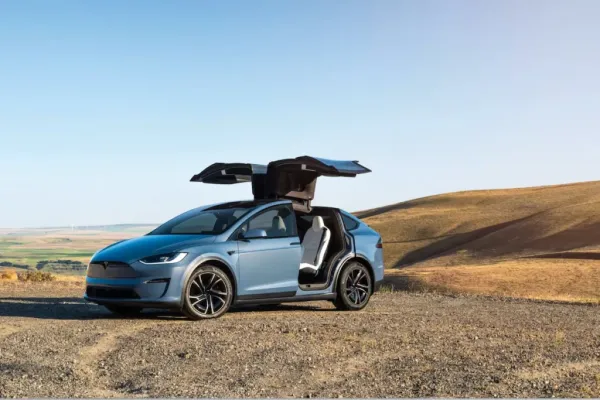
Tesla could soon retire two of its most iconic vehicles. The company is considering ending production of the Model S sedan and the Model X SUV as it shifts attention toward newer technologies and upcoming products.
During Tesla’s fourth-quarter earnings call earlier this year, CEO Elon Musk said the company is looking at discontinuing both models in the near future. The goal is to free up factory space and resources for projects that are becoming central to Tesla’s long-term plans.
Among those projects is Optimus, the humanoid robot Tesla is developing, along with a new generation of autonomous vehicles.
For many Tesla followers, the move would mark the end of an important era. The Model S was the car that proved electric vehicles could be fast, luxurious, and practical at the same time. The Model X later followed with its distinctive Falcon-wing doors and family-friendly design.
Referral Program Change Signals the Shift
Another clue that Tesla is preparing for the transition has quietly appeared on its website.
The company recently removed the Model S and Model X from its referral program. Under the program, Tesla owners can share a referral link with friends or family. When someone buys a qualifying Tesla using that link, both the buyer and the referrer receive certain benefits.
Now those rewards apply only to purchases of the Model 3, Model Y and the Cybertruck.
In simple terms, Tesla appears to be steering customers toward the models that currently drive most of its sales.
Sales Numbers Tell the Story
The decision also reflects changing demand within Tesla’s lineup.
In 2025, Tesla delivered 50,850 vehicles across the Model S, Model X and Cybertruck combined. That sounds like a healthy number at first glance, but it accounted for only about three percent of Tesla’s total deliveries for the year, which stood at 1.63 million vehicles.
Most of those deliveries came from the Model 3 and Model Y, which remain Tesla’s global best-sellers and the backbone of its growth strategy.
Despite the modest sales figures, Musk has made it clear that the Cybertruck will remain part of Tesla’s plans. The company still sees the pickup as an important addition to its lineup.
New Vehicles Are on the Way
While Tesla prepares to wind down older models, it is also lining up several new products.
One of the most anticipated is the next-generation Tesla Roadster. Musk has said the company plans to unveil the vehicle in April, bringing back the brand’s high-performance electric sports car in a completely new form.
Tesla is also working on a fully autonomous robotaxi known as the Cybercab. The vehicle is designed without a steering wheel or pedals and is intended to operate as part of an autonomous ride-hailing network.
Production of the Cybercab is expected to begin sometime this year.
Alongside these projects, Tesla is continuing work on the Tesla Semi truck, aimed at electrifying freight transportation.
A Changing Direction for Tesla
If the Model S and Model X do reach the end of their production run, they will leave behind a strong legacy.
Both vehicles played a major role in establishing Tesla as a leader in electric mobility. They helped convince drivers that EVs could compete with — and often outperform — traditional luxury cars.
But Tesla today is very different from the company that introduced the Model S more than a decade ago.
Its ambitions now stretch far beyond electric cars. From robotics to autonomous driving and AI-powered mobility, Tesla is positioning itself for a future where transportation looks very different from today.
Contact to : xlf550402@gmail.com
Copyright © boyuanhulian 2020 - 2023. All Right Reserved.