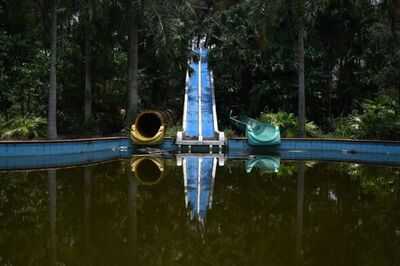
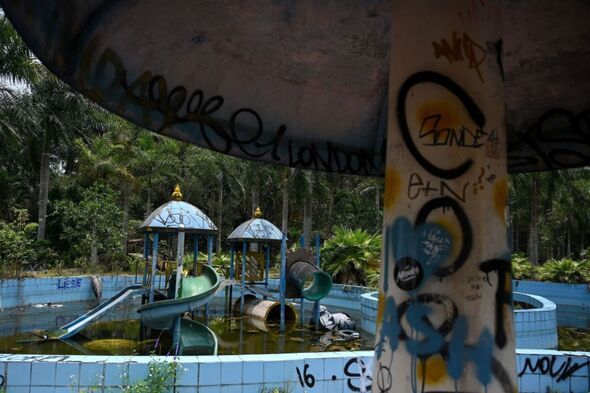
Hidden within pine forests stands one of Vietnam's most intriguing attractions, though not in the way its creators intended. The water park's towering dragon-shaped aquarium still looms over the lake, and the rides remain standing, but there are no guests or laughter. Instead, travellers now visit to wander the decaying grounds, to photograph the ghost of what once was.
When H Thy Tiên Water Park opened in 2004, developers envisioned a bustling park with pools, water slides and lakeside attractions that would draw in crowds of tourists visiting Vietnam's province of Hu. But the project struggled almost immediately.
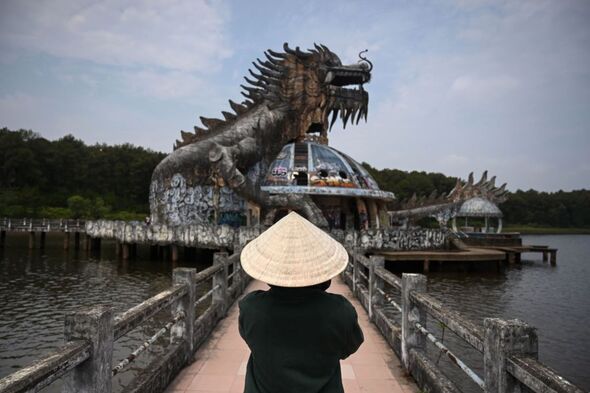
Despite costing around 70 billion Vietnamese ng (about £2.2million at the time), it opened before construction was fully complete, so visitors felt little need to return, and numbers never reached the levels needed to sustain it. Located several kilometres outside the city centre, it was also relatively difficult to reach and lacked strong promotion.
Within a few years, operations collapsed and the park shut down. Under pressure from banks, the original developer sold the site to a Hanoi-based investment and trading company, HACO.
There were hopes that a new investor might revive the large and unusual project. In 2012, HACO announced plans to invest a further $1.5 million to complete construction and expand the complex with office spaces and spa facilities, according to Abandoned Spaces.
However, those plans never materialised, and in the meantime, the condition of the water park continued to deteriorate.
What remained were empty pools, rusting slides and the large dragon structure overlooking the lake. Over time, nature began reclaiming the area. Moss spread across the walkways, trees pushed through cracked concrete, and graffiti gradually covered the interior walls of the dragon.
Despite its abandoned state, the site began attracting a different kind of visitor. Photographers, backpackers and explorers started travelling to Hu specifically to see the dilapidated ruins.
The abandoned theme park gained attention online, and it is now tagged on Google as a tourist attraction in its own right, with nearly 300 reviews.
It may be considered "dark tourism" or "ghost tourism" due the pull of its eerie, post-apocalyptic atmosphere and rumoured hauntings.
"The place is incredible. A post-apocalyptic setting straight out of a movie," said one visitor. "It's really a place worth visiting."
However, the park differs from many classic dark tourism sites, such as battlefields or disaster locations, because no tragedy occurred there. Instead, visitors are drawn by the eerie setting.
A second enthused: "We went into the Waterpark in the evening. It had eerie vibes in the dark but that was the fun part."
A third said: "We explored this truly wonderous place and had so much fun. Great grafitti, dilapitated sea creatures covering the walls, such lovely details."
In recent years, authorities in Hue have reportedly begun redeveloping the area around Thy Tiên Lake as a public park. Cleanup work and redevelopment plans aim to turn the former water park into a recreational area.
Whether the famous dragon will remain a landmark or eventually be removed remains uncertain.
Contact to : xlf550402@gmail.com
Copyright © boyuanhulian 2020 - 2023. All Right Reserved.