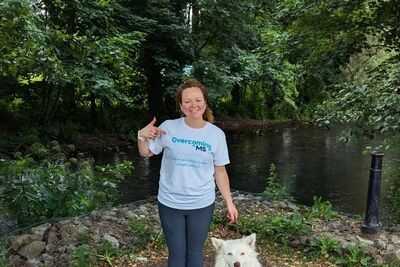
Yasmin Neves believed she was in the best physical condition of her life when peculiar symptoms suddenly struck her down. In her 20s, eagerly anticipating her wedding and having shed 10st through a complete dietary overhaul, she felt bewildered and frightened when she ended up in hospital awaiting answers.
"I woke up one morning and the vision in my left eye was blurry," HR consultant Yasmin from the Brecon Beacons says. "I continued going to work, but after five days, my vision went from slightly blurry to the point where I couldn't see the hand in front of my face," Yasmin, now 37, remembers.
After informing her boss, he immediately directed her to hospital, where she endured a week of anxiety and confusion whilst undergoing scans, examinations and high-dose intravenous steroids, with doctors initially suggesting she might have suffered a stroke. Then a consultant arrived on the ward and enquired whether she knew anything about Multiple Sclerosis (MS).
- Woman who moved to 'world's safest country' fled 7 months later for surprising reason
- Countryfile star announces she's expecting her first child
Having battled with her weight throughout much of her younger years, Yasmine had dropped approximately 10st, going from a size 26 down to a size 12. When her vision troubles began, she was working out consistently and felt immensely proud of her transformation.
Therefore, she was utterly stunned when the consultant mentioned MS. "I was like, 'No, what the hell is that? I'm fit, I'm healthy, I'm young, what are you talking about?' I was just in a state of shock," she says.
Yasmin was juggling her wedding preparations to husband Matthew, developing a property business and managing a challenging HR position while simultaneously setting up her own consultancy venture. Falling ill simply wasn't an option.

However, as Matthew started investigating the condition, he recognised several symptoms that rang alarm bells. MS is a chronic autoimmune disease that impacts the central nervous system, causing the breakdown of the protective myelin sheath surrounding nerve fibres, which interferes with communication between the brain and the body.
The condition impacts roughly 150,000 people across the UK, with approximately 7,100 fresh diagnoses annually - averaging 135 individuals weekly and this figure is climbing. Yet Yasmin, in total denial, discharged herself from hospital prematurely to attend a Beyoncé concert and a friend's wedding.
Whilst her vision got better, fresh complications surfaced. Whenever she became even marginally overheated, her eyesight would deteriorate once more. She began stumbling, bumping into things and inadvertently cutting her fingers whilst making meals. She also experienced bladder difficulties, meaning she frequently needed the toilet urgently and regularly and exhaustion was an issue.
"I was having a great night's sleep, getting up the next day and just feeling that brain fog and not being able to make decisions or move through the day," she explains. She also experienced something called the 'MS hug' where "every time you breathe in, it's like someone tightens a belt around the top of your chest".
Under the diagnostic criteria in place at that time, medics needed to witness several relapses before confirming the diagnosis officially, leaving Yasmin facing two years of limbo. Throughout that stretch, the symptoms mounted and her psychological wellbeing declined.
"I just thought my life was over and I ended up in a very dark place," she recalls. She finally received the diagnosis in 2018, when she heard the term "incurable" and was told to "go and live your life". It proved a deeply upsetting comment for Yasmin who instantly feared the worst.
"I said, 'is there anything that I can do? What about changing my diet?' and they said, 'not really' and handed me a leaflet of treatment options."
Yasmin began a medication regime that actually made her feel considerably worse with digestive problems and additional side effects. Yet that very same week, the pair finalised the acquisition of a smallholding in the Brecon Beacons and relocated from their home in Cwmbran in Wales with the aim of lowering their stress levels.
Mates questioned whether it was sensible to move to such an isolated location following a serious diagnosis. "I was like, 'bloody can. I'm going to'," Yasmin recalls.
So Yasmin abandoned her full-time corporate position and concentrated on her HR consultancy, whilst investigating lifestyle modifications after finding a programme championed by charity Overcoming MS that advocated meditation, exercise like yoga and walking and a nutritious diet. Previously, she had depended heavily on ultra-processed meals.
"I thought I was cooking, but I wasn't. I was taking stuff out of the freezer and putting it in the oven," she recalls.
She then traded ready meals for a whole food plant-based diet brimming with fresh ingredients. A high-quality diet has been associated with a 50 per cent reduction in disability progression over 7.5 years, as per Overcoming MS, and recent research suggests that regular exercise or physical activity may help decrease the likelihood of MS relapse in some individuals.
According to the charity, thousands living with this life-limiting condition could be taking measures to manage pain, lessen fatigue and potentially slow the disease's progression, but a lack of information and awareness is hindering them. Three months after starting the medication, Yasmin quietly stopped taking her prescription without even informing Matthew, only to be scolded by her neurology nurse for doing so.
However, astonishingly, Yasmin began to feel better. Two years into her new routine, she recalls waking up one day feeling "like a fog had been lifted". Since then, many of her symptoms have subsided.
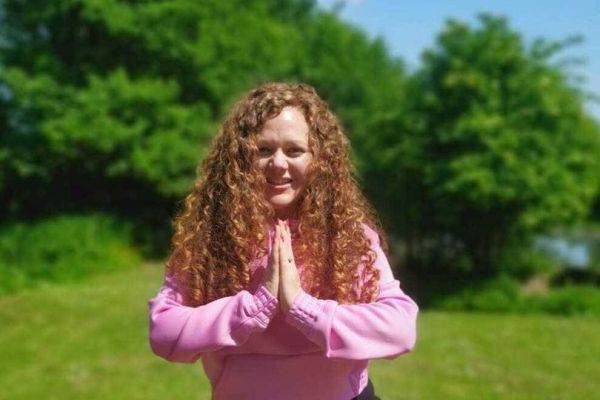
The heat-induced vision issues have disappeared to the extent that she now regularly enjoys saunas. Her fatigue has eased and her balance has improved so significantly that she now instructs yoga. Today, Yasmin claims she feels better than she did prior to her diagnosis.
While she no longer takes medication, she acknowledges that this isn't an option for everyone. She is cautious not to suggest that her methods will be effective for everyone. MS impacts each individual differently and the condition remains unpredictable, but she hopes her experience provides comfort to others confronting the same alarming diagnosis.
"I feel the fittest, the healthiest and the most content that I ever have," she says. "I would say that you have to take one day at a time and be really gentle and kind to yourself. It is terrifying, and we don't like the unknown, and it's one of these conditions where you just don't know where it's going to go, because it affects everyone so differently.
"But I try and show by living my life, a diagnosis doesn't mean you're going to be completely reliant on other people and you can continue to live a full life. No one wants the diagnosis. It's an awful thing to have. But there is hope and choice and you can do positive things to help yourself live well with it."
Dr Kate Petheram, consultant neurologist at South Tyneside and Sunderland NHS Foundation Trust, said: "Alongside medical interventions, providing patients with the knowledge about proven ways that lifestyle changes can help manage their specific symptoms and give them a greater sense of agency in their treatment, can be hugely empowering. With a growing body of evidence about the positive impact of lifestyle changes on those living with MS, it's essential that these discussions are had with more people as part of their clinical care."
Contact to : xlf550402@gmail.com
Copyright © boyuanhulian 2020 - 2023. All Right Reserved.