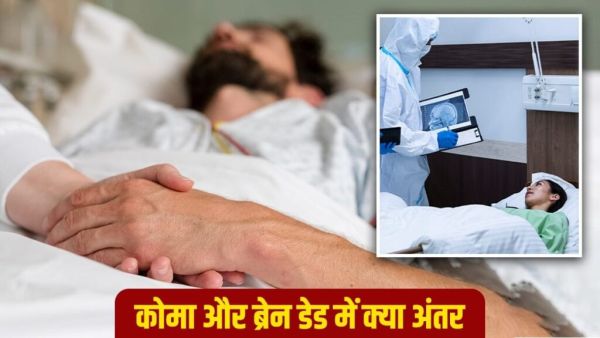
New Delhi: A long wait of 13 years and an unconscious body—the recent decision of the Supreme Court in the Harish Rana case has shocked the entire country. The court has given him permission to remove the life support system, allowing ‘passive euthanasia’ (euthanasia). But this emotional decision has raised a big legal and medical question: When doctors can themselves remove the ventilator after being declared ‘brain dead’, why does a ‘coma’ patient have to go to court? Let us understand the fine line between these two conditions, which decides life and death, with the inputs of Dr. Daljeet Singh, former HOD, Department of Neurosurgery, GB Pant Hospital, Delhi. Coma: The extinguished flame, which can rekindle. Coma is a condition in which a person is in deep unconsciousness, but he is ‘alive’. State of the brain: In coma, the brain is not completely dead. Parts of the brain continue to function, allowing the heart to beat and the lungs to breathe (often without support). Hope for recovery: Medical science believes that there is always a chance of coming out of a coma. The patient may regain consciousness after weeks, months or, like Harish Rana, even years. Legal status: A coma patient cannot be considered dead. Therefore, removing his life support without the permission of the court can legally amount to ‘murder’. Brain Death: When the engine stops completely. Brain death is the condition which is medically and legally considered as ‘complete death’. In this condition, the brain and brain stem stop working completely and irreversibly. That is, there is no electrical activity left inside the brain. Condition of the body: With the help of a ventilator, the heart can beat for some time and the organs can get oxygen, but the brain is dead. Legal status: A special board of doctors declares the person ‘brain dead’ after several tests. After this, court permission is not required to remove the ventilator, because the person has already been declared dead. In this situation, ‘Organ Donation’ is possible. How do doctors identify? Dr. According to Daljit Singh, doctors decide whether the patient is in coma or brain dead through ‘apnea test’ and several neurological tests. “A brain dead person is legally dead, his organs can be transplanted. But a coma patient is a ‘living’ person. Removing the ventilator in a coma is a very sensitive matter, because the chances of life there have not reduced to zero. That is why in cases like Harish Rana, the court has to intervene to ensure that a dignified death is achieved. Dignified death can be ensured.” Legal issue: Why is court permission necessary? There are strict guidelines regarding ‘passive euthanasia’ in India. In cases of coma, only when a medical board like AIIMS certifies that there is 0% chance of improvement, the court orders removal of life support on the basis of ‘living will’ or on the request of family members. This process has been kept complex so that this law cannot be misused.
Contact to : xlf550402@gmail.com
Copyright © boyuanhulian 2020 - 2023. All Right Reserved.