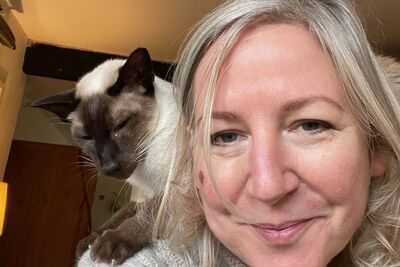
A woman from Somerset is urging others to trust their instincts and to continue pushing for medical appointments after an uneasy feeling about her family medical history and a “niggly” cough led to the discovery of an incurable tumour in her lung. Melanie Lucas, 49, said when she originally asked her GP for a precautionary lung X-ray following her mother’s death from small-cell lung cancer and COPD, she was dismissed and turned away.
However, when she returned with a nasty persistent but unproductive cough six months later, a different doctor’s X-ray request led to the discovery of a 5cm tumour in her lung and eventually a neuroendocrine cancer diagnosis. “A friend had come to stay and gave me her cough. It wasn’t anything to write home about, it was just niggly,” Melanie told PA Real Life.
“However, I went back to see my GP because the cough had hung around for a week or two, and I started to get some discomfort and pain in my chest, which turned out to me muscular strain from coughing. I was about to start a new job where I was going to be working with the public, so I wanted to make sure that I wasn’t going to pass anything onto anyone.“
- NHS dental charges to increase in just a few weeks - see new price list
- Dr Xand alert for anyone with sleep issues taking common drug
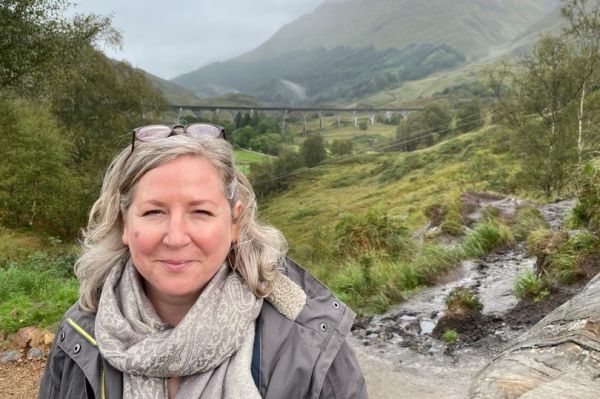
Due to her raised concerns and family history, the second doctor sent Melanie for an X-ray to close the door on her worries, but instead flagged up something suspicious. " When the doctor called me, he said: ‘it doesn’t look like good news, I’m afraid you’ve got this large mass on your lung’,” recollected Melanie.
“I was utterly shocked. I felt so well – the cough went the same day as my X-ray – nothing really made sense.”
Initially, the doctors thought that it was advanced lung cancer. “I remember getting home from a weekend away and receiving a call from the doctor. He said I had advanced lung cancer and would need a biopsy to determine what would come next treatment wise. All of a sudden my life became very different and very small,” said Melanie.
However, following a biopsy, Melanie was told that that she actually had neuroendocrine cancer, which is often a much slower-growing cancer. According to Cancer Research UK, neuroendocrine cancers are a group of cancers that start in nerve and gland cells (neuroendocrine cells) and develop in different parts of the body such as the pancreas, lungs, bowel or stomach.
Alongside the large tumour in her lung, she also has a few small metastases which sit along the lung lining. Neuroendocrine cancer is not generally curable, and the disease Melanie has was already at stage 4 which – along with the precise location of the cancer – means it is inoperable too.
“It’s likely that I have had it for around seven to 10 years before diagnosis, completely without knowing,” said Melanie. So far, Melanie has received oral chemotherapy to try and stabilise the tumours, to which there has been some success in slowing the disease progression.
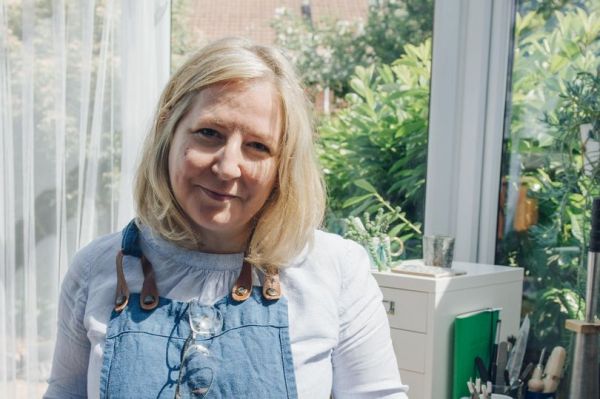
She is currently on a regular hormone injection and also receives twice-weekly Mistletoe Therapy from the Camphill Wellbeing Trust – which she says helps with side effects from treatments, boosts her immune system and generally helps improves her quality of life.
“There’s very few days when I don’t wake up and my first thought is: ‘I’ve still got cancer’,” said Melanie. " It can be really hard to shift into a positive mindset.”
She used to work as a gardener for the National Trust, a job she loved, but said she recently had to give this up. “Initially I thought I had just trapped a nerve, but the symptoms started to get a lot worse, and this was the beginning of me being symptomatic,” said Melanie.
“The cancer I have isn’t operable so I have to have lifelong monitoring, scans, blood tests and regular treatments, and I couldn’t see a way, particularly when I was working as part of team in a physical environment, of how this job was going to work for me in the long term.
“Although I’m no longer doing a physical job, I’m still working and have gone back to some freelance work.”
The former National Trust gardener highlighted that it can be difficult when people comment on how “well” she looks. “Sometimes people will say ‘You look amazing. How can you have cancer?’ and I think this is something a lot of people with neuroendocrine cancer experience,” said Melanie.
“We look completely normal, just like anyone else you see out on the street, so sometimes people can forget that we have cancer. Sometimes I say ‘I might look good on the outside but you should see the inside’. There’s pain and discomfort from the tumours pressing on nerves, and that’s something you can’t see.”
Prioritising daily acts of self-care has become a non-negotiable for Melanie.
“I’ve been doing lots of positive things myself to look after myself such as regular Reiki sessions, daily meditations, saunas and acupuncture which really help me stay on the sunny side of life,” shared Melanie. “It makes me feel like I’m looking after myself and helps me feel like I have a bit more control over my healthcare.”
She added that finding out about the charity Neuroendocrine Cancer UK has also been extremely beneficial. “Through their website and support groups, I was able to find out more about this unusual cancer. Despite the number of healthcare professionals I have met on this journey, only two have been able to tell me about the disease in detail. I had to wait for five months post diagnosis for that conversation,” said Melanie.
“For those of us with this type of cancer, there isn’t a standard of care pathway and very little in the way of treatments for us too, so having people around to talk to who understand what you are going through and can relate, and provide support is invaluable.”
She hopes that her sharing her journey will encourage more people to advocate for themselves when they have a hunch about their health. “If you feel something isn’t quite right, you don’t feel well and have a myriad of different symptoms, don’t just necessarily assume that it’s not connected,” advised Melanie.
“Keep going back to the doctor and keep pushing to be a part of your diagnostic pathway.”
To find out more about neuroendocrine cancer, visit https://www.neuroendocrinecancer.org.uk/
Contact to : xlf550402@gmail.com
Copyright © boyuanhulian 2020 - 2023. All Right Reserved.