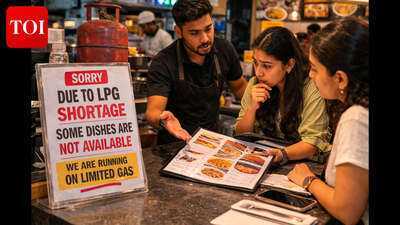
Restos on the hotseat, minus the gas
At Aniket Atram’s restaurants in the city, built around high-flame cooking , LPG burners power almost everything that comes out of the kitchens. But in the last few days, the flames are being watched a little more carefully, courtesy the shortage of commercial LPG cylinders across the country.
“We are down to only two days' worth of gas supply now, and there is no confirmation about when new cylinders will arrive,” shares Atram, explaining that the uncertainty has already started showing up on the menu. "Dishes that require prolonged cooking on a high flame, including several Indian mains, have temporarily been removed so the kitchen can conserve fuel. We have tried experimenting with induction equipment, but it cannot fully replicate the consistent high heat required for many preparations," says the owner of Highland and Neighbourhud. The situation is similar across multiple restaurants and street food outlets in the city.
Shrinking menus
At Malvan Samudraa, which specialises in coastal Maharashtrian cuisine, owner Nikhil Kadam says the menu has been scaled back significantly. Gravies that simmer for long periods were the first to be removed. “We have cut down our menu by almost 70–75%,” Kadam says, explaining that the remaining menu now focuses on items that can be prepared quickly or require shorter cooking cycles. Even with those changes, Kadam says that if fresh cylinders do not arrive soon, the restaurant may have to temporarily shut operations. To stretch the remaining supply of LPG cylinders, the kitchen has started using induction stoves for staff meals and minor preparations.
Alternative options or compromise on flavours?
At Noorani Hotel, which serves Lebanese and Mughlai cuisine, the shortage presents a different challenge. Much of the restaurant’s menu, from kebabs and shawarma to slow-cooked gravies, depends heavily on steady high-flame cooking. Owner Sachin Kuchekar says the restaurant is currently operating on whatever stock it has left. “For Lebanese and Mughlai dishes it is difficult to recreate the same taste and flavour on induction stoves,” says Kuchekar, adding that almost 90% of the restaurant’s menu relies directly on gas burners. He adds that scaling the menu down is a better option than experimenting with cooking methods that change the flavour profile of the dishes.
Delivery operations scaled back
Some restaurants are also adjusting how they serve customers. At Zeeshan Restaurant, known for its biryani and haleem, owner Nishant Gunjan says the shortage has forced them to rethink operations. With supplies tightening, the restaurant has temporarily switched off its presence on food delivery platforms and reduced its menu so that order volumes decrease. Their three outlets in the city are also prioritising dine-in customers. “The timing of the shortage is particularly bad for business. Ramzan is usually the peak season for us when people come here to have the specialties, especially haleem. On an average weekend, we generate around Rs25 lakh in revenue across our three restaurants,” says Gunjan, adding that they may face losses in lakhs if the situation persists.
The current LPG situation in Pune
A call for rationing
Restaurant associations say the disruption has already begun affecting businesses across the city. Ganesh Shetty from the Pune Hoteliers Association shares that many establishments have not received any fresh cylinders for several days. “The deliveries have stopped since March 5,” he says, adding that the shortage has already forced some small food vendors to shut shop temporarily. The association has requested authorities not to halt supply completely but instead ration the available stock so that more businesses can continue operating. Shetty also says alternatives such as induction stoves are not practical for most professional kitchens.
Daily mess, college and office canteens bear the brunt
According to Shetty, the first establishments to shut during such shortages are often student mess kitchens, which rely entirely on LPG for daily cooking. When mess kitchens close, students are left with very limited options. Similarly, office canteens that serve meals to employees daily have been affected. According to reports, companies are advising employees to bring food from home and avoid events requiring catering.
“We are down to only two days' worth of gas supply now, and there is no confirmation about when new cylinders will arrive,” shares Atram, explaining that the uncertainty has already started showing up on the menu. "Dishes that require prolonged cooking on a high flame, including several Indian mains, have temporarily been removed so the kitchen can conserve fuel. We have tried experimenting with induction equipment, but it cannot fully replicate the consistent high heat required for many preparations," says the owner of Highland and Neighbourhud. The situation is similar across multiple restaurants and street food outlets in the city.
Shrinking menus
At Malvan Samudraa, which specialises in coastal Maharashtrian cuisine, owner Nikhil Kadam says the menu has been scaled back significantly. Gravies that simmer for long periods were the first to be removed. “We have cut down our menu by almost 70–75%,” Kadam says, explaining that the remaining menu now focuses on items that can be prepared quickly or require shorter cooking cycles. Even with those changes, Kadam says that if fresh cylinders do not arrive soon, the restaurant may have to temporarily shut operations. To stretch the remaining supply of LPG cylinders, the kitchen has started using induction stoves for staff meals and minor preparations.
Alternative options or compromise on flavours?
At Noorani Hotel, which serves Lebanese and Mughlai cuisine, the shortage presents a different challenge. Much of the restaurant’s menu, from kebabs and shawarma to slow-cooked gravies, depends heavily on steady high-flame cooking. Owner Sachin Kuchekar says the restaurant is currently operating on whatever stock it has left. “For Lebanese and Mughlai dishes it is difficult to recreate the same taste and flavour on induction stoves,” says Kuchekar, adding that almost 90% of the restaurant’s menu relies directly on gas burners. He adds that scaling the menu down is a better option than experimenting with cooking methods that change the flavour profile of the dishes.
Delivery operations scaled back
Some restaurants are also adjusting how they serve customers. At Zeeshan Restaurant, known for its biryani and haleem, owner Nishant Gunjan says the shortage has forced them to rethink operations. With supplies tightening, the restaurant has temporarily switched off its presence on food delivery platforms and reduced its menu so that order volumes decrease. Their three outlets in the city are also prioritising dine-in customers. “The timing of the shortage is particularly bad for business. Ramzan is usually the peak season for us when people come here to have the specialties, especially haleem. On an average weekend, we generate around Rs25 lakh in revenue across our three restaurants,” says Gunjan, adding that they may face losses in lakhs if the situation persists.
The current LPG situation in Pune
- 100+ eateries affected so far
- Only 2–3 days of LPG stock left with many restaurants
- ₹1,800 → ₹5,000+ spike in commercial cylinder prices in the black market
- 50% capacity operations reported at several outlets
A call for rationing
Restaurant associations say the disruption has already begun affecting businesses across the city. Ganesh Shetty from the Pune Hoteliers Association shares that many establishments have not received any fresh cylinders for several days. “The deliveries have stopped since March 5,” he says, adding that the shortage has already forced some small food vendors to shut shop temporarily. The association has requested authorities not to halt supply completely but instead ration the available stock so that more businesses can continue operating. Shetty also says alternatives such as induction stoves are not practical for most professional kitchens.
Daily mess, college and office canteens bear the brunt
According to Shetty, the first establishments to shut during such shortages are often student mess kitchens, which rely entirely on LPG for daily cooking. When mess kitchens close, students are left with very limited options. Similarly, office canteens that serve meals to employees daily have been affected. According to reports, companies are advising employees to bring food from home and avoid events requiring catering.
Contact to : xlf550402@gmail.com
Copyright © boyuanhulian 2020 - 2023. All Right Reserved.