The Malaysian ringgit was Asia’s best-performing currency last year and has retained the position so far this year, rising 2.8% against the U.S. dollar on a year-to-date basis even as it gave up some of its gains over the recent Middle East conflict, according to Bloomberg.
Against the Singapore dollar, the ringgit is trading at around RM3.10 to S$1, compared with RM3.30 a year earlier and RM3.50 in early 2024. It might eventually strengthen to RM3.00, according to some analysts.
For Lee, a 31-year-old financial adviser, and her boyfriend, the ringgit’s appreciation has increased the monthly cost of living in Johor, a southern Malaysian state bordering Singapore, by about S$200 (US$157).
While the costs, comprising rent, a car loan and daily expenses, now amount to RM5,700 (US$1,450), a stronger ringgit has not caused major concern and any changes they have made so far have focused more on managing their budget than reacting to exchange rate movements, she told Channel News Asia.
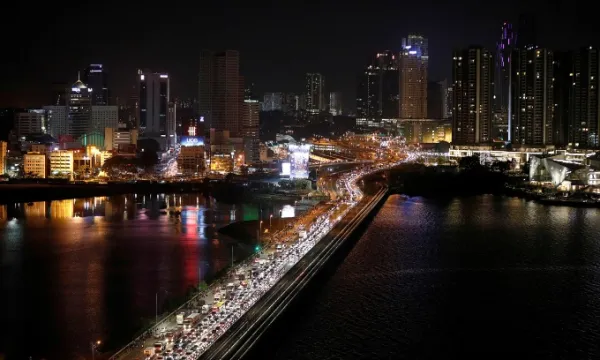
Singapore is connected to Johor by the Johor–Singapore Causeway, one of the world’s busiest land crossings, which sees more than 350,000 travelers each day from Malaysians commuting to work to Singaporeans seeking cheaper goods and services.
Vehicles line up to enter Singapore from Johor on the Woodlands Causeway, March 17, 2020. Photo by Reuters |
A report last week by The Star suggested that trips to the Malaysian state’s Johor Bahru city remain worthwhile for many Singaporeans crossing the border.
Muhammad Rafig Irwan Sahh Sahhiran, a 30-year-old Singaporean who often crosses into Johor Bahru, said he maintains the same routine whenever he travels there.
This consists of a motorbike wash, which costs RM27 and includes restoring black plastic surfaces, and a meal at his usual eatery.
“In Singapore, a basic wash ranges from S$25 to S$30 (RM76.90 to RM92.20), with plastic restoration charged separately,” he told the Malaysian newspaper.
Christina Zhang, a 50-year-old finance executive, said she and her husband cross the Causeway once or twice a month, usually taking a weekday off for the trip.
They typically start the day with dim sum before heading to a popular mall in the city. In a recent trip, she dyed her hair while her husband went for a massage.
“We usually spend about RM500 to RM600 on meals and services per trip, which is bang for our buck,” she said.
Trader Kenny Ng, 29, who sells traditional Malaysian Chinese snacks, said Singaporeans made up more than half of his customers at the Johor Jaya Chinese New Year market early last month, when the ringgit was trading between RM3.10 and RM3.13 against the Singapore dollar.
The stronger ringgit has had little effect on local business, he said.
Data from multi-currency e-wallet providers also indicates that cross-border spending by Singaporeans remains resilient.
Digital banking platform Revolut said conversions from Singapore dollars to the ringgit rose steadily last year while the volumes this January were nearly 42% higher than a year earlier.
Kelvin Lam, COO of travel wallet YouTrip, said both transaction volumes and average transaction sizes have increased from previous years.
“The data shows that the stronger ringgit hasn’t stopped Singaporeans from heading across the Causeway, it has simply made them strategic,” he told CNA.
Lam added that some users are converting funds even when the rate is less favorable due to “fear of missing out,” or concerns that rates could weaken before their next trip.
“While the MYR (Malaysian) is stronger, Singaporeans are still drawn to Malaysia,” he said.
Contact to : xlf550402@gmail.com
Copyright © boyuanhulian 2020 - 2023. All Right Reserved.