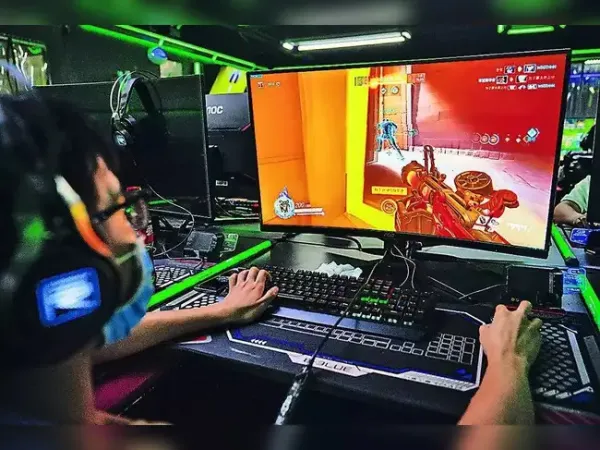
Proposals by several Indian states to restrict social media access for users under 16 could disrupt the gaming industry’s marketing playbook while reshaping how young users interact online.
Industry executives say the move may raise customer acquisition costs for gaming companies and force publishers to rethink how they reach younger audiences.
At the same time, it could accelerate an ongoing shift, turning games into social platforms where teenagers interact, collaborate, and build communities.
For gaming firms, social media sits at the centre of their user acquisition strategies. Platforms such as Instagram, YouTube, and short-video apps function as discovery engines and community hubs where players learn about new titles, watch creators, and share gameplay content.
Shrenik Gandhi, cofounder and CEO of digital creative agency White Rivers Media, said restrictions could lead to a rise in marketing costs. “Customer acquisition costs could rise 15–30% in the short term as gaming companies experiment with alternative channels,” he said.
Performance marketing and creator partnerships dominate gaming marketing budgets. According to White Rivers Media estimates, performance marketing accounts for roughly 30–50% of the marketing spend for gaming firms, while influencer and creator partnerships make up 15–30%.
These play a critical role in game discovery. Industry executives estimate 50–70% of young gamers first encounter new titles through social media, influencer videos, or creator-led communities.
If younger users lose access to such platforms, discovery of new games could slow by 20–40% in the short term, particularly for smaller titles that rely on viral visibility rather than large ad budgets.
Publishers are therefore expected to direct marketing spends towards alternative channels such as search advertising, in-app ad networks, esports integrations, and brand-led campaigns.
“Restrictions for younger users would have ripple effects across the gaming ecosystem since social platforms today act as the discovery and community layer for most games,” Gandhi said.
Also Read: ETtech Explainer: Karnataka ban spotlights growing list of countries restricting social media for children
Gaming as a digital hangout
The shift could also reinforce another trend already underway: gaming platforms evolving into social spaces even as traditional social media still dominates the overall interaction time.
Rohit Agarwal, founder and director of Mumbai-based marketing agency Alpha Zegus, said gaming environments increasingly replicate social media interactions. Multiplayer titles offer communication tools, community groups, and shared experiences that allow players to socialise even when they are not actively playing.
“If social media access becomes restricted for younger users, gaming platforms could naturally absorb some of that social behaviour,” Agarwal said.
Research suggests this transition is already happening. Studies show 40–50% of teenage gamers spend time socialising within games through voice chats, multiplayer sessions, and community groups.
Vishal Parekh, chief operating officer at CyberPowerPC India, said developers are strengthening community-building features within games to encourage longer engagement.
Many modern games already mirror social media dynamics through voice and text chat, teams or guilds, livestream integrations, creator events, and in-game communities. Some titles host shared quests, virtual concerts, and collaborative play sessions, creating social loops that bring players back not just for gameplay but for the community around it.
For developers and investors, this shift could also open opportunities to design experiences that extend beyond gameplay.
Sagar Nair, head of incubation at LVL Zero Incubator, said companies may increasingly build community-driven ecosystems focussed on long-term engagement. Chennai-based LVL Zero supports early-stage gaming studios with mentorship, market testing, and access to publishers and investors.
“Social media bans could create opportunities to design community-driven experiences that go beyond gameplay and focus on live operations, social features, and creator integrations,” Nair said.
Also Read: Indian gaming companies enter big league with rising monetisation, global acquisitions
Parental controls and teen wellbeing
The potential migration of younger users from social media to gaming platforms also raises concerns among mental health experts.
India has more than 750 million smartphone users, and children are entering the digital ecosystem earlier than ever.
Available estimates suggest that about 60% of children aged 9–17 spend more than three hours a day on social media or gaming platforms, while nearly 90% of Indian teenagers aged 14–16 have access to a smartphone at home.
Jothi Neeraja, founder and CEO of People Tree Hospitals and Maarga Mind Care, said the aim of any restriction should be to encourage healthier digital habits rather than deny access to technology.
“Gaming may become an even stronger digital hangout for teens,” she said. “Regulation should focus on setting healthy limits during crucial stages of emotional and cognitive development.”
Counsellors say the issue lies less in the medium and more in the nature and duration of engagement.
“It is not gaming or social media per se that is harmful,” said Bengaluru-based counsellor Anuja Mudur. “What matters is the kind of content children engage with and how much time they spend on it.”
Psychiatrists also warn that banning social media may not necessarily reduce digital dependence among teenagers.
Suhas Chandran, head of the child and adolescent psychiatry unit at St John’s Medical College, said gaming already functions as the primary social network for many teenagers.
“The kids we see in clinics aren’t choosing between gaming and social media — gaming is their social life,” he said. “If you take away platforms like Instagram or Snapchat, that interaction could simply intensify inside gaming spaces. The social needs of a 14-year-old don’t vanish because a policy is passed.”
Also Read: Budget 2026: Gaming industry welcomes proposal for creator labs in schools, colleges
Child safety
Experts also highlight risks in poorly moderated gaming environments. Voice chats and multiplayer communities can expose young users to abusive language, explicit content, etc., if safeguards are weak.
Practitioners estimate that `gaming disorder’ affects about 8–9% of adolescent gamers, with common warning signs including sleep deprivation, late-night gaming, school absenteeism, and behavioural problems.
Child psychologists say parental awareness remains a major gap, with many parents struggling to understand the digital platforms their children use. “We often say parents should monitor screen time,” Chandran said. “But that means little if parents don’t understand what children are actually doing online.”
Aahna Mehrotra, founder, AM Sports Law and Management, said limiting social media access may push young users towards less regulated online spaces such as anonymous chat rooms, potentially creating new risks. It could also affect streaming, influencer-led marketing, and investor sentiment in the gaming sector.
As policymakers consider regulating internet use while simultaneously promoting the country’s AVGC (animation, visual effects, gaming, and comics) sector, Charan said funding rigorous research into children’s digital behaviour will be critical to shaping effective policy.
Also Read: ETtech In-depth: Banned in India, but it’s business as usual for offshore real money gaming firms
Industry executives say the move may raise customer acquisition costs for gaming companies and force publishers to rethink how they reach younger audiences.
At the same time, it could accelerate an ongoing shift, turning games into social platforms where teenagers interact, collaborate, and build communities.
For gaming firms, social media sits at the centre of their user acquisition strategies. Platforms such as Instagram, YouTube, and short-video apps function as discovery engines and community hubs where players learn about new titles, watch creators, and share gameplay content.
Shrenik Gandhi, cofounder and CEO of digital creative agency White Rivers Media, said restrictions could lead to a rise in marketing costs. “Customer acquisition costs could rise 15–30% in the short term as gaming companies experiment with alternative channels,” he said.
Performance marketing and creator partnerships dominate gaming marketing budgets. According to White Rivers Media estimates, performance marketing accounts for roughly 30–50% of the marketing spend for gaming firms, while influencer and creator partnerships make up 15–30%.
These play a critical role in game discovery. Industry executives estimate 50–70% of young gamers first encounter new titles through social media, influencer videos, or creator-led communities.
If younger users lose access to such platforms, discovery of new games could slow by 20–40% in the short term, particularly for smaller titles that rely on viral visibility rather than large ad budgets.
Publishers are therefore expected to direct marketing spends towards alternative channels such as search advertising, in-app ad networks, esports integrations, and brand-led campaigns.
“Restrictions for younger users would have ripple effects across the gaming ecosystem since social platforms today act as the discovery and community layer for most games,” Gandhi said.
Also Read: ETtech Explainer: Karnataka ban spotlights growing list of countries restricting social media for children
Gaming as a digital hangout
The shift could also reinforce another trend already underway: gaming platforms evolving into social spaces even as traditional social media still dominates the overall interaction time.
Rohit Agarwal, founder and director of Mumbai-based marketing agency Alpha Zegus, said gaming environments increasingly replicate social media interactions. Multiplayer titles offer communication tools, community groups, and shared experiences that allow players to socialise even when they are not actively playing.
“If social media access becomes restricted for younger users, gaming platforms could naturally absorb some of that social behaviour,” Agarwal said.
Research suggests this transition is already happening. Studies show 40–50% of teenage gamers spend time socialising within games through voice chats, multiplayer sessions, and community groups.
Vishal Parekh, chief operating officer at CyberPowerPC India, said developers are strengthening community-building features within games to encourage longer engagement.
Many modern games already mirror social media dynamics through voice and text chat, teams or guilds, livestream integrations, creator events, and in-game communities. Some titles host shared quests, virtual concerts, and collaborative play sessions, creating social loops that bring players back not just for gameplay but for the community around it.
For developers and investors, this shift could also open opportunities to design experiences that extend beyond gameplay.
Sagar Nair, head of incubation at LVL Zero Incubator, said companies may increasingly build community-driven ecosystems focussed on long-term engagement. Chennai-based LVL Zero supports early-stage gaming studios with mentorship, market testing, and access to publishers and investors.
“Social media bans could create opportunities to design community-driven experiences that go beyond gameplay and focus on live operations, social features, and creator integrations,” Nair said.
Also Read: Indian gaming companies enter big league with rising monetisation, global acquisitions
Parental controls and teen wellbeing
The potential migration of younger users from social media to gaming platforms also raises concerns among mental health experts.
India has more than 750 million smartphone users, and children are entering the digital ecosystem earlier than ever.
Available estimates suggest that about 60% of children aged 9–17 spend more than three hours a day on social media or gaming platforms, while nearly 90% of Indian teenagers aged 14–16 have access to a smartphone at home.
Jothi Neeraja, founder and CEO of People Tree Hospitals and Maarga Mind Care, said the aim of any restriction should be to encourage healthier digital habits rather than deny access to technology.
“Gaming may become an even stronger digital hangout for teens,” she said. “Regulation should focus on setting healthy limits during crucial stages of emotional and cognitive development.”
Counsellors say the issue lies less in the medium and more in the nature and duration of engagement.
“It is not gaming or social media per se that is harmful,” said Bengaluru-based counsellor Anuja Mudur. “What matters is the kind of content children engage with and how much time they spend on it.”
Psychiatrists also warn that banning social media may not necessarily reduce digital dependence among teenagers.
Suhas Chandran, head of the child and adolescent psychiatry unit at St John’s Medical College, said gaming already functions as the primary social network for many teenagers.
“The kids we see in clinics aren’t choosing between gaming and social media — gaming is their social life,” he said. “If you take away platforms like Instagram or Snapchat, that interaction could simply intensify inside gaming spaces. The social needs of a 14-year-old don’t vanish because a policy is passed.”
Also Read: Budget 2026: Gaming industry welcomes proposal for creator labs in schools, colleges
Child safety
Experts also highlight risks in poorly moderated gaming environments. Voice chats and multiplayer communities can expose young users to abusive language, explicit content, etc., if safeguards are weak.
Practitioners estimate that `gaming disorder’ affects about 8–9% of adolescent gamers, with common warning signs including sleep deprivation, late-night gaming, school absenteeism, and behavioural problems.
Child psychologists say parental awareness remains a major gap, with many parents struggling to understand the digital platforms their children use. “We often say parents should monitor screen time,” Chandran said. “But that means little if parents don’t understand what children are actually doing online.”
Aahna Mehrotra, founder, AM Sports Law and Management, said limiting social media access may push young users towards less regulated online spaces such as anonymous chat rooms, potentially creating new risks. It could also affect streaming, influencer-led marketing, and investor sentiment in the gaming sector.
As policymakers consider regulating internet use while simultaneously promoting the country’s AVGC (animation, visual effects, gaming, and comics) sector, Charan said funding rigorous research into children’s digital behaviour will be critical to shaping effective policy.
Also Read: ETtech In-depth: Banned in India, but it’s business as usual for offshore real money gaming firms