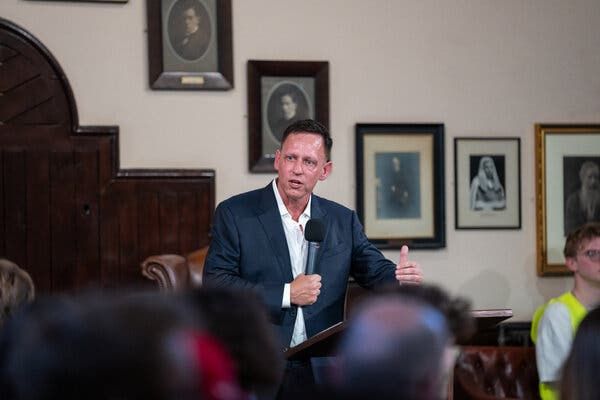
Billionaire entrepreneur and investor Peter Thiel has intensified his criticism of The Giving Pledge, raising fresh doubts about the long-term relevance of one of the most high-profile efforts to encourage wealth redistribution among the ultra-rich. His comments suggest a growing divide in how billionaires view philanthropy, particularly when it comes to structured commitments tied to public expectations.
Thiel has indicated that his opposition is not limited to public statements. He has privately advised some wealthy individuals against joining the initiative and, in certain cases, has encouraged existing participants to reconsider their involvement. His stance reflects a broader skepticism about whether organized philanthropic movements still hold the same appeal they once did.
Momentum Slows After Early Success
Launched in 2010, The Giving Pledge was created by Bill Gates, Melinda French Gates, and Warren Buffett. The initiative aimed to inspire the world’s wealthiest individuals to commit at least half of their fortunes to charitable causes, either during their lifetimes or through their estates.
In its early years, the campaign gained considerable traction, attracting hundreds of billionaires from around the world. Signing the pledge became a symbol of both social responsibility and status among elite circles. However, recent trends suggest that this momentum has slowed.
Fewer billionaires have joined in the past couple of years, even as global wealth has surged and the number of billionaires continues to climb. This slowdown has raised questions about whether the concept of public philanthropic commitments is losing its influence among a new generation of wealthy individuals.
Inequality and the Changing Role of Philanthropy
Thiel’s remarks come at a time when economic inequality in the United States remains a major concern. Data from the Federal Reserve indicates that the top 10% of households control a dominant share of the nation’s wealth, while middle-income groups have seen comparatively slower growth over the past few decades.
Philanthropy has often been viewed as an informal mechanism to address such imbalances. Large donations from billionaires have historically supported initiatives in education, healthcare, and poverty alleviation. In this context, The Giving Pledge has been seen as a coordinated attempt to encourage wealth redistribution on a massive scale.
However, if participation in such initiatives continues to decline, it could point to a shift in how the ultra-wealthy approach giving. Some may prefer more independent or strategic methods of philanthropy rather than aligning themselves with collective campaigns.
Inside Thiel’s Opposition to the Pledge
Beyond his general criticism, Thiel has taken an active role in influencing others within his network. He has suggested that some individuals who signed the pledge have later expressed uncertainty about their decision.
Among those he reportedly engaged in discussions with is Elon Musk. Thiel has argued that large, structured philanthropic commitments may not always align with an individual’s long-term priorities, particularly if decision-making over funds becomes influenced by external organizations or figures.
His comments highlight a key tension within modern philanthropy: whether wealth should be distributed through coordinated global initiatives or through more personalized, independently directed efforts.
Giving Pledge Leadership Defends Its Impact
Despite the criticism, representatives of The Giving Pledge maintain that the initiative continues to play a meaningful role in shaping philanthropic behavior. Taryn Jensen, who currently serves in a leadership capacity within the organization, has emphasized that conversations about the purpose and effectiveness of philanthropy are both expected and necessary.
According to Jensen, the pledge helped establish a culture of large-scale giving at a time when such commitments were far less common. She also pointed out that many participants have already fulfilled significant portions of their pledges, while others remain actively engaged in charitable work.
The organization continues to host events and discussions aimed at guiding members on how to deploy their wealth effectively to address global challenges.
Alternative Models of Philanthropy Emerge
While Thiel has distanced himself from The Giving Pledge, he has pursued his own approach to philanthropy through initiatives like the Thiel Fellowship. Founded in 2011, the program provides financial support to young innovators, encouraging them to pursue entrepreneurial ventures instead of traditional higher education.
The fellowship offers selected participants substantial funding to develop ideas and build companies, reflecting Thiel’s belief in investing directly in individuals and innovation rather than large institutional frameworks. Several alumni have gone on to create highly valued startups, reinforcing the appeal of this more targeted approach.
This model represents a broader trend among some wealthy individuals who prefer hands-on, results-driven philanthropy that aligns closely with their personal interests and philosophies.
Billionaire Giving Still Holds Strong
Despite debates over the effectiveness of initiatives like The Giving Pledge, overall charitable contributions from the ultra-wealthy remain significant. In recent years, billions of dollars have been directed toward various causes, demonstrating that philanthropy continues to be an important part of how many billionaires engage with society.
High-profile donors such as MacKenzie Scott have drawn attention for their large and relatively unrestricted donations to hundreds of organizations. Her approach has been widely noted for its speed and flexibility, offering an alternative to more structured philanthropic models.
At the same time, figures like Jeff Bezos and Warren Buffett have contributed substantial portions of their wealth to charitable initiatives, reinforcing the continued importance of giving among the world’s richest individuals.
Contact to : xlf550402@gmail.com
Copyright © boyuanhulian 2020 - 2023. All Right Reserved.